Best Smart Lock Types for uPVC Doors in the UK: Compatibility First

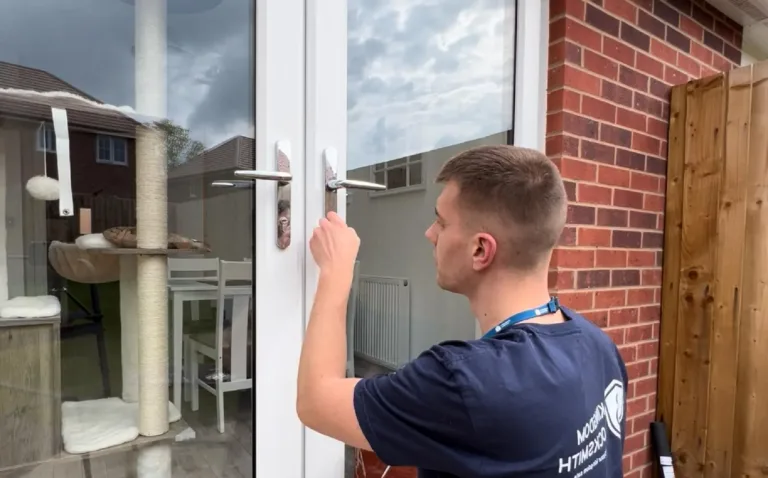
The best smart lock types for uPVC doors in the UK are the ones that match the door’s existing cylinder and multipoint mechanism. A feature-rich smart lock is a poor choice if it cannot operate the hardware already fitted to the door.
Most modern uPVC entrance doors use a euro-profile cylinder connected to a multipoint locking mechanism. That makes them different from the single-deadbolt doors shown in many international smart-lock guides, so compatibility should come before fingerprints, Wi-Fi, apps or voice control.
This guide explains the main smart-lock types that may work on a UK uPVC door, what each one changes and what should be checked before buying.
Why Are uPVC Doors Different?
A typical uPVC entrance door uses a long multipoint locking strip containing hooks, rollers or bolts that engage with keeps around the frame. On many doors, lifting the handle moves those locking points into position before the cylinder is turned to secure them.
The euro cylinder and multipoint mechanism are connected but separate components. ERA's guide to euro cylinder multipoint locks confirms that euro-profile cylinders are widely used with multipoint systems on PVCu doors and can often be changed independently of the main locking strip.
That distinction is important when choosing a smart lock. Some devices operate the existing cylinder, others replace it, while another category replaces more of the handle and access hardware.
Type 1: Retrofit Smart Locks That Turn the Existing Cylinder
A retrofit smart lock is usually mounted on the inside of the door and motorises the existing key or cylinder operation. The external appearance of the door may change very little, and the existing multipoint mechanism can remain in place.
This can be one of the least invasive options for a compatible uPVC door. Yale and Nuki both offer compatibility guidance for smart locks that work with euro-profile cylinders, although the exact cylinder, internal key arrangement and available clearance still need checking (see Yale's Linus L2 FAQ).
Best suited to:
- homeowners wanting minimal alteration to the existing door;
- properties where the current multipoint mechanism is healthy;
- households that want app, keypad or temporary-access options;
- situations where retaining an external physical-key option is desirable.
The important limitation is that motorising the cylinder does not necessarily motorise the door handle. If your existing door requires the handle to be lifted before the cylinder can lock the multipoint mechanism, check exactly how the proposed smart system handles that sequence.
Example: Yale Linus L2 Lite
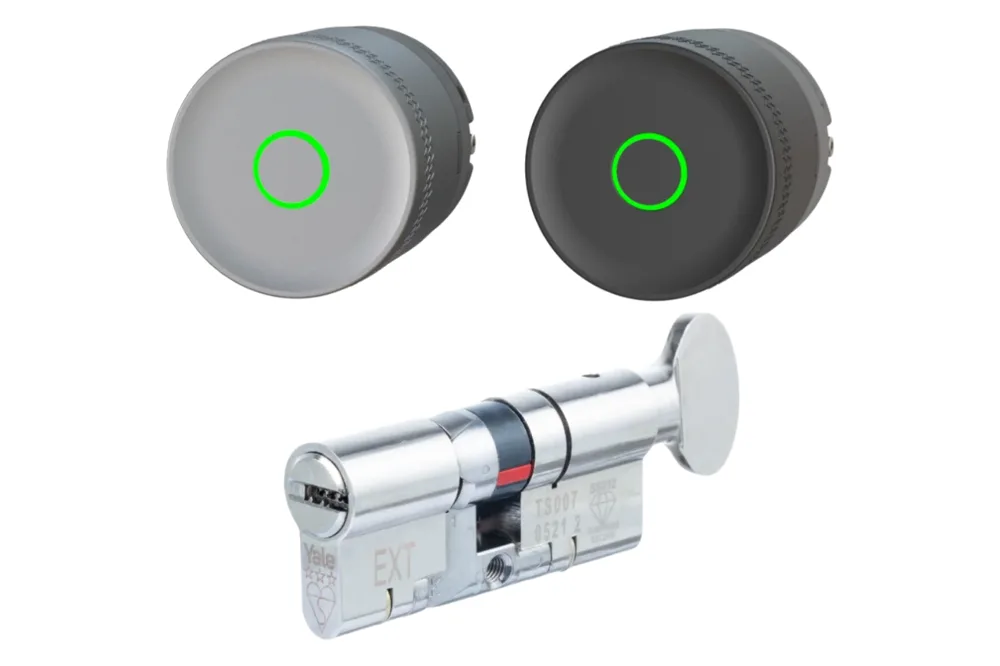
The Yale Linus L2 Lite with a TS007 3-star cylinder. Image: Yale.
The Yale Linus L2 Lite is a retrofit smart lock of this type, sold with a TS007 3-star cylinder. We have not fitted one ourselves yet, but on paper it looks doable on many uPVC doors. Check Yale's limits first: it works on lift-to-lock doors only, the cylinder must stick out at least 3mm from the inside handle, and it does not suit split spindles or auto-engage multipoint locks. You still lift the handle as you leave; if you forget, the lock cannot secure the door.
Type 2: Smart Euro-Cylinder Systems
Another approach is to replace the existing cylinder with an electronically controlled or smart-compatible euro cylinder. The multipoint mechanism can remain in the door while the access component changes.
This can provide a cleaner integration than fitting a device over an unsuitable existing cylinder, but cylinder dimensions and security still matter. A replacement that protrudes excessively or does not suit the door furniture should not be selected merely because its electronic features are attractive.
Some smart-lock manufacturers also provide dedicated replacement cylinders when the existing cylinder is unsuitable. Yale, for example, offers an adjustable euro cylinder for its Linus range, while Nuki provides compatible cylinder options for installations where the existing hardware does not meet the required configuration.
Type 3: Multipoint-Compatible Smart Handle Systems
Some systems replace more of the existing door furniture and combine electronic access with a handle-based arrangement. These can be useful where the smart hardware has been designed specifically around lever-operated or multipoint doors.
Compatibility is more involved because the handle, spindle, cylinder position, fixing centres, door thickness and lock case all need to work together. A product being advertised as a “smart handle” does not prove that it will fit a particular uPVC door.
This type can make sense when the existing handle arrangement is already being changed or when a more integrated keypad or biometric interface is wanted. The existing multipoint mechanism should still operate smoothly before smart hardware is fitted.
Our Choice for a Smart Handle: Yale Conexis L2
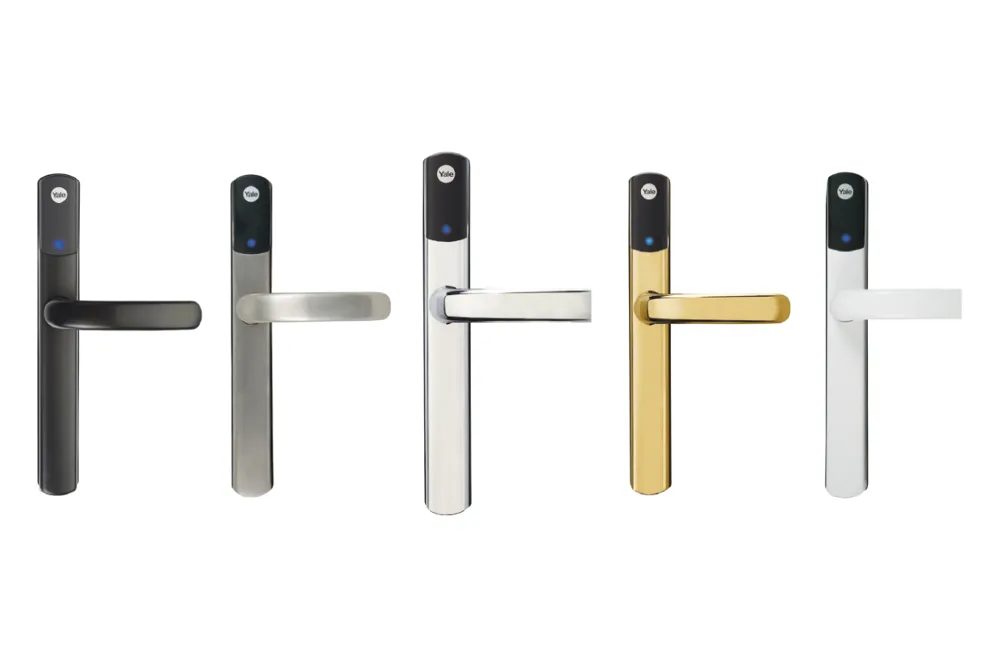
The Yale Conexis L2 smart handle. Image: Yale.
If you want a smart handle, the Yale Conexis L2 is the one we choose. It costs more than simpler smart handles, but in our experience it is by far the safest option.
The difference is how the door gets locked. The Conexis L2 still uses the door's euro cylinder slot: you lift the handle as normal, and the smart lock itself turns the mechanism to lock the door, just as a key would. So even if someone snaps the smart handle off, they still cannot get in.
Simpler smart handles lock by stopping the handle from operating the latch and hooks. Snap that handle off and the spindle is exposed: an attacker can grab it with pliers and twist it to open the door. Against a brute-force attack that is a serious weakness, and the Conexis L2 has avoided it for years.
It is also independently tested. Yale states that the Conexis L2 holds the BSI IoT Kitemark for connected products and is accredited by Secured by Design under the Police Preferred Specification.
What Smart Locks Usually Do Not Suit a Standard uPVC Door?
A smart lock designed only for an American-style single deadbolt should not be assumed to fit a UK uPVC multipoint door. The mounting arrangement and locking sequence may be completely different.
The same applies to digital locks designed around a timber-door mortice or tubular latch. Rather than shopping by features first, identify what part of the existing uPVC locking system the proposed device is designed to operate or replace.
uPVC Smart Lock Compatibility Checklist
| Check | Why It Matters |
|---|---|
| Existing lock type | Confirms whether the door uses a euro cylinder and multipoint mechanism |
| Lift-to-lock operation | Determines whether the handle must be raised before the cylinder can secure the door |
| Cylinder type | Some retrofit devices require specific cylinder functions |
| Cylinder dimensions | Replacement hardware must fit the door and furniture correctly |
| Internal clearance | The smart unit needs enough room beside the handle and frame |
| Door opening direction | Some products specify different clearances for inward and outward opening |
| Handle and spindle layout | Important for handle-based smart systems |
| Door alignment | A motor should not be used to fight an already stiff mechanism |
| Backup access | Check what happens if the battery, phone or network is unavailable |
| Software support | Connected locks need ongoing security and firmware support |
The compatibility check should happen before a particular model is ordered. When we install a smart lock, we check the existing door and mechanism before choosing the hardware.
Make Sure the Door Works Properly First
A smart motor does not fix a stiff or misaligned multipoint door. If the handle already needs excessive force, the key is difficult to turn or the lock works properly only while the door is open, the underlying fault should be diagnosed first.
Fitting a motorised device to a mechanism with excessive resistance can create unreliable operation and unnecessary load on the smart lock. Our uPVC door lock mechanism guide explains how alignment, keeps, handles, cylinders and gearboxes can affect the complete locking sequence.
Where the door needs repair before any upgrade, book a uPVC door repair first rather than treating the smart lock as the repair itself.
Do Not Ignore the Mechanical Security
Adding an app or fingerprint reader does not automatically make the physical door stronger. The cylinder, handles, multipoint mechanism, keeps, frame and overall doorset still determine how well the entrance resists physical attack.
If a new smart setup requires replacing an existing security cylinder, compare the mechanical protection of the proposed replacement with what is already fitted. Our high-security locks service covers anti-snap cylinders and other physical-security upgrades where appropriate.
Your insurance requirements should also be checked rather than assumed. The appropriate lock standard depends on the door, fitted hardware and wording of the individual policy.
Bluetooth, Wi-Fi or Matter: Which Connectivity Do You Need?
Connectivity should come after mechanical compatibility. Bluetooth can provide local phone control, while Wi-Fi or a bridge can enable remote management; some newer products may also integrate with wider smart-home platforms.
Remote access is useful for households that need to manage guests, carers or authorised visitors, but it also adds account and network security considerations. The National Cyber Security Centre's guidance on smart devices in the home recommends protecting connected devices with strong unique credentials, enabling two-step verification where available and keeping software updated.
For more detail on the digital-security side, see our guide Can Smart Door Locks Be Hacked?
What Happens if the Battery or Internet Fails?
There is no universal answer because fallback behaviour varies between products. Before choosing a smart lock, check its low-battery warnings, emergency-power method, physical-key provision and which functions still operate without an internet connection.
A smart lock should not be selected solely because its normal app experience looks convenient. Understanding the backup route is just as important as understanding how the door is unlocked on an ordinary day.
Which Smart Lock Type Is Best for Your uPVC Door?
For many compatible uPVC doors, a retrofit cylinder-turning smart lock is attractive because it can leave much of the existing mechanism unchanged. A smart or smart-compatible euro cylinder can be useful where the existing cylinder needs changing, while an integrated multipoint-compatible handle system may suit doors where a more complete hardware change is appropriate.
If you want a smart handle, our choice is the Yale Conexis L2, for the security reason explained above. None of these categories is automatically best for every uPVC door. The correct choice depends on the mechanism, cylinder, handle arrangement, dimensions, door condition, security requirements and the access features the household actually needs.
When Is Professional Installation Worth Considering?
Professional assessment is useful when the existing multipoint mechanism is stiff, the cylinder type is unclear, measurements are uncertain or the proposed smart lock requires changes to the cylinder or handle arrangement. It is also sensible when the installation needs to preserve existing physical-security performance.
If you decide smart access is right for you, our smart lock installation service starts with the door rather than with a particular gadget.
Frequently Asked Questions
Can You Put a Smart Lock on a uPVC Door?
Yes, many uPVC doors can accept a compatible smart lock, particularly where a euro-profile cylinder and multipoint mechanism are fitted. The exact smart-lock type still depends on the cylinder, handle arrangement, dimensions and locking sequence.
Does a Smart Lock Automatically Lift a uPVC Door Handle?
Not necessarily. Many uPVC multipoint mechanisms require the user to lift the handle before the cylinder can fully secure the door, while the smart device may only control the cylinder. Some systems use different locking arrangements, so the manufacturer’s intended operating sequence should be checked. Automatic locking should never be assumed simply because a product has an auto-lock setting.
Do I Need to Replace My Euro Cylinder?
Sometimes, but not always. Retrofit products may work with an existing compatible cylinder, while other installations require a replacement cylinder with the correct dimensions or operating function.
Will a Smart Lock Work Without Wi-Fi?
It depends on the product and the function being used. Some locks support local Bluetooth, keypad or physical-key access without an active internet connection, while remote features may require Wi-Fi or a connected bridge.
Final Thoughts
The best smart lock for a uPVC door is not necessarily the model with the longest feature list. It is the one that fits the existing cylinder and multipoint mechanism, operates without forcing the door and preserves an appropriate level of physical security.
Start by identifying the locking system, checking whether the handle must be lifted, confirming the cylinder and available clearances, and making sure the door already operates smoothly. Only then compare app control, keypads, fingerprints, Wi-Fi, Matter or other smart features.
If compatibility is uncertain, our smart lock installation service can check your door first. A compatibility-first assessment can prevent buying a smart lock that does not fit the door it was meant to improve.