
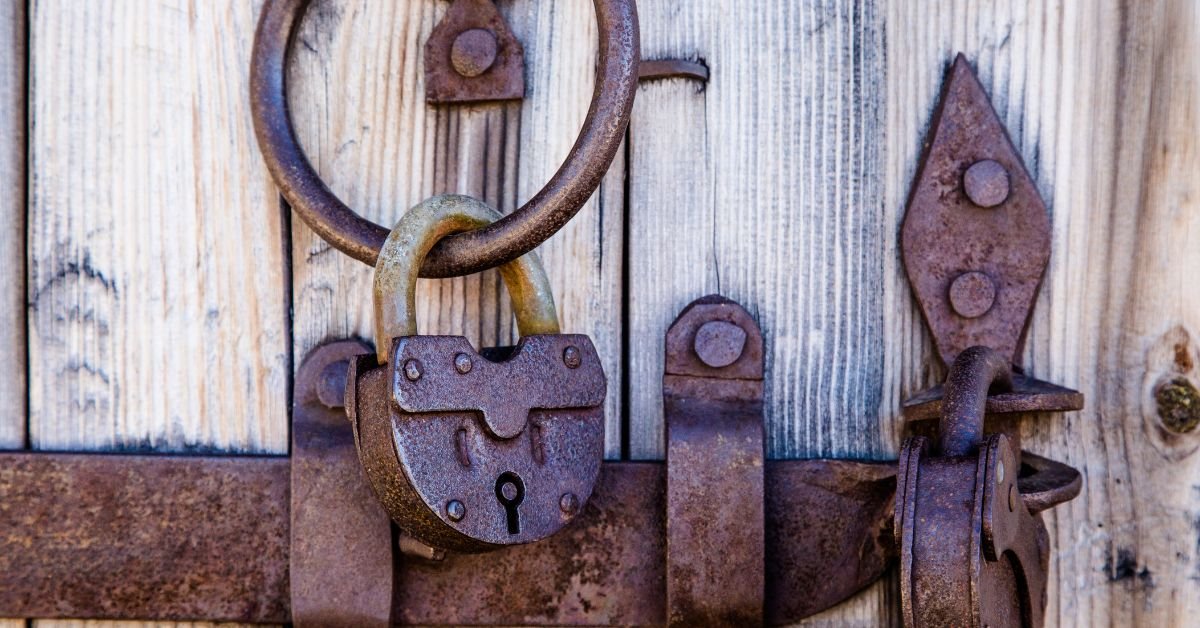
An old lock seized won’t turn is usually locked solid by internal rust and corrosion. Free it with a penetrating lubricant and gentle movement, never force. A heavily corroded lock is often safer to replace than revive.
A seized lock is common on older and exterior doors that face the British weather. The good news is that patience and the right lubricant free many of them. The warning is that a brittle, rusted lock snaps keys when forced. This guide covers the signs of a seized lock, how to free a corroded one safely, and whether to revive or replace an old lock seized won’t turn.
What are the signs of a seized lock?
An old lock seized won’t turn when the key will not turn, or only moves a little, and the action feels gritty or solid. Telltale signs are visible rust, a key that comes out with orange or green residue, growing stiffness over weeks, and a grinding feel that lubrication no longer fixes.
A seized lock is a lock whose internal parts have been locked solid by rust or corrosion. Moisture works into the cylinder or lever pack, the metal corrodes, and the pins, levers, or bolt stop moving. Exterior locks suffer most, because rain, damp, and coastal salt air all speed up corrosion, especially on a lock that has never been maintained. This is why an old lock seized won’t turn is a common problem on older exterior doors.
| Sign | What it points to |
| Key won’t turn, or only part way | Corrosion seizing the cylinder or levers |
| Gritty, grinding feel | Rust between the moving parts |
| Orange or green residue on the key | Rust or brass corrosion inside |
| Visible rust on the lock face | Long-term moisture damage |
| Stiffness lubrication no longer fixes | Internal corrosion, not just dryness |
If the signs point to corrosion rather than simple dirt, the lock needs freeing carefully rather than forcing.
How to free a seized or corroded lock

You can sometimes free an old lock seized won’t turn with a penetrating lubricant and patience. Spray a penetrating release into the keyhole, give it time to work, then move the key gently back and forth. Clean out the rust, then re-lubricate with a dry product. Never force the key. Never force the key, as doing so can snap it inside an old lock seized won’t turn and make the problem much more expensive to fix.
What you will need:
- A penetrating release spray made for locks
- A dry graphite or silicone (PTFE) lubricant for afterwards
- A clean cloth and an old toothbrush
- A hairdryer, optional, to warm the lock
Then work through these steps:
- Stop forcing the key. A corroded lock is brittle, and forcing it snaps keys.
- Apply a penetrating lubricant into the keyhole and around the bolt, then let it soak for several minutes.
- Insert the key and rock it gently a few degrees each way. Do not force a full turn.
- Warm the lock. A hairdryer on low helps the penetrant work into the corrosion.
- Repeat the soak and gentle movement until the key starts to move further.
- Clean out the loosened rust with the brush and cloth, then re-lubricate with dry graphite or silicone.
- Stop if it stays solid. Heavy internal corrosion will not free up and needs a locksmith.
“With a seized lock, patience beats force every time,” says a Kingdom Locksmith locksmith. “We soak it with a penetrant, work the key a few degrees at a time, and let the corrosion release. Forcing a rusted lock just snaps the key and leaves a worse job.”
Should you revive or replace a seized lock?
Revive a lock if the seizure is light and it frees up cleanly. Replace it if the corrosion is heavy, the lock is on an exterior security door, or it seizes again soon after. A badly corroded lock is a weak point that will fail again, so replacement is usually the safer choice.
Surface stiffness on an internal lock is often worth reviving. Deep internal corrosion is different, because the rust keeps spreading and the lock will seize again. A lock that has rusted solid once on an exposed door has already shown it cannot cope with the conditions. On a final exit door, that is a security risk as well as an inconvenience, so fitting a weather-resistant lock to British Standard BS3621 is the lasting fix. Homes near the coast benefit from corrosion-resistant hardware.
| Option | Typical UK cost (guide) |
| Penetrating lube and dry lubricant (DIY) | £10–£20 |
| Lock repair or service | £50–£100 |
| Replacement cylinder or night latch (part) | £15–£60 |
| BS3621 mortice lock (part) | £20–£60+ |
| Locksmith labour, standard hours | £65–£96 per hour |
These are guide prices and vary by lock type, location, and time of day, so ask before work starts. If the lock is badly corroded or on a security door, a professional lock replacement fits a weather-resistant, insurance-approved lock that will not seize again.
When should you call a locksmith?
Call a locksmith if the lock stays seized after soaking, the key has snapped, or you are locked out. A lock corroded solid needs opening and replacing, and forcing a brittle, rusted lock risks a snapped key and a bigger repair.
A seized lock on your only entry door is a safety issue, so do not keep straining the key. The Master Locksmiths Association recommends using an approved, vetted locksmith, who can open the lock without damaging the door in most cases and fit a corrosion-resistant replacement. Acting before the lock seizes completely keeps the job small.
Frequently asked questions
Question: Can a seized lock be fixed?
Answer: Light cases can be freed with a penetrating lubricant and gentle movement. Heavy internal corrosion rarely frees up for long and usually needs replacing, especially on an exterior security door.
Question: What is the best lubricant for a rusty lock?
Answer: Use a penetrating release spray to free the rust, then clean the lock and finish with a dry graphite or silicone lubricant. Avoid leaving wet oil inside, because it attracts dirt and traps moisture.
Question: Why does my old lock keep seizing?
Answer: Moisture and corrosion are working into the mechanism, usually from weather exposure or age. Reviving it is temporary. A weather-resistant replacement and regular dry lubrication is the lasting fix.
Question: Can I use WD-40 on a seized lock?
Answer: A penetrating spray can free rust in the short term, but standard oil left inside attracts dust and gums up the lock. Clean it out afterwards and re-lubricate with a dry product.
Question: How much does it cost to replace a seized lock?
Answer: A replacement lock part costs from around £15 to £60, plus labour. The total depends on the lock type, your location, and the time of day, so ask for a quote first.
Bringing a seized lock back to life, safely
An old lock that has seized and won’t turn is locked solid by rust, and patience with a penetrating lubricant frees many of them. The golden rule is never to force it, because a corroded lock is brittle and a snapped key makes the job worse. A lock that has seized once on an exposed door will often do it again, so replacement is frequently the safer, longer-lasting fix. At Kingdom Locksmith, we free seized locks and fit weather-resistant, insurance-approved replacements for homes and businesses across the UK. Sort a stiff, rusting lock before it traps you outside. If your lock stays seized, book a lock replacement and have it sorted safely.