
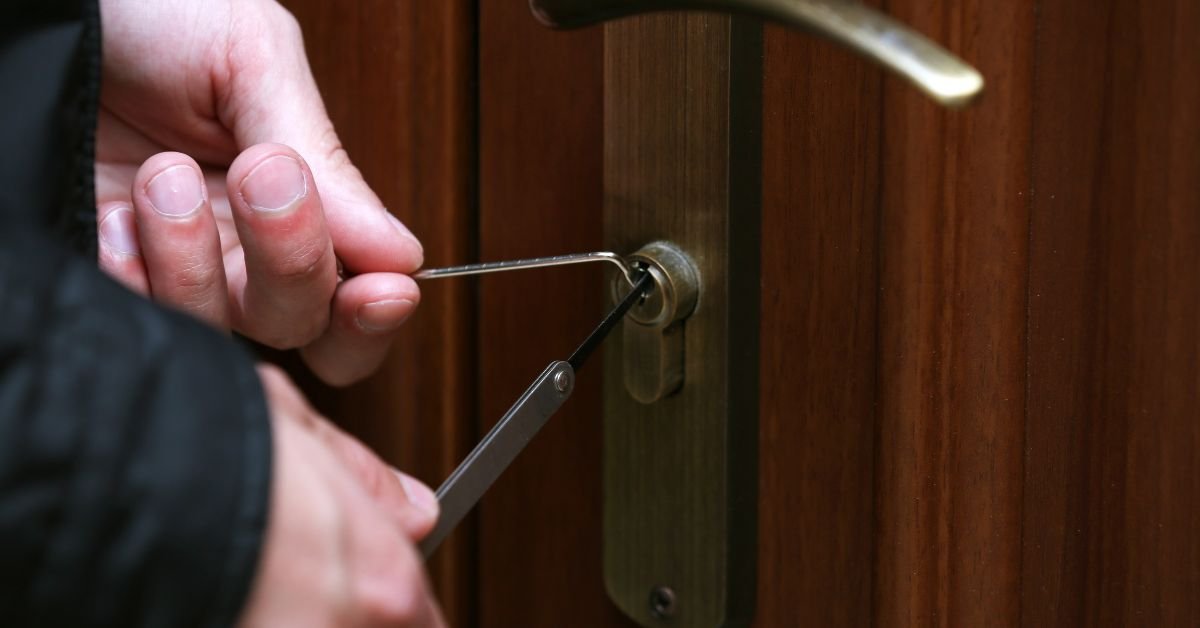
Burglars break into houses mainly through doors, which account for around 70% of break-ins in England and Wales. Most exploit weak or unlocked locks, force a euro cylinder, or simply walk in through an unlocked door or window.
Knowing how burglars actually get in is the first step to stopping them. If you are asking how do burglars break into houses, most break-ins are not the dramatic, forced-entry scenes people imagine. They are quick, opportunistic, and target the easiest weak point, usually a door lock. This guide sets out the most common entry points and methods across the UK, then shows the simple upgrades that close the gaps.
How do burglars get into most homes?

Most burglars get in through a door, not a window. According to the Office for National Statistics, offenders enter through a door in around 70% of domestic burglaries and through a window in around 30%. Doors are the focus because they are the fastest, quietest way in.
If you are asking how do burglars break into houses, the door lock is usually the first place to look. It is the mechanism that secures a door, and it is the single point most burglars test first. The Crime Survey for England and Wales recorded more than 245,000 domestic burglaries in the year to March 2025, so this is a common, real risk rather than a rare one.
| Entry point | Share of break-ins (approx.) |
| Front door | Most common, over half of door entries |
| Back or patio door | Around a quarter |
| Ground-floor window | Around 30% overall via windows |
| Side door or garage | Smaller share, but often overlooked |
The pattern is clear. Doors, and the locks on them, are where burglars concentrate, so that is where your security should focus too.
What are the most common entry points?
The most common entry points are the front door, the back or patio door, ground-floor windows, and the garage. Front doors are used most often, because a burglar at the front simply looks like a resident. Back and patio doors are next, since they are hidden from the street.
If you are asking how do burglars break into houses, front doors are targeted despite being visible, because a person standing at a front door rarely draws attention. Back and patio doors are attractive for the opposite reason: they are out of sight, so a burglar can work on the lock without being seen. Older patio doors are a particular weak point.
Ground-floor windows account for most window entries, especially at the side or rear. Garages and sheds are a quieter weak spot, because they often have weaker locks and store tools that help force the main house door. Securing every one of these points matters, but the doors come first.
What methods do burglars use to get in?

Burglars use a mix of force and opportunity. Around a quarter of break-ins involve forcing the lock, and roughly one in five simply walk in through an unlocked door. Others snap the cylinder, break a panel, use deception at the door, or, in a small share of cases, use a key.
If you are asking how do burglars break into houses, lock snapping is the method locksmiths worry about most on uPVC and composite doors. Lock snapping is an attack where a burglar breaks a euro cylinder in two to release the mechanism, and on a cheap cylinder it takes seconds with basic tools. A protruding cylinder makes it even easier.
The other big factor is simple opportunity. A large share of burglaries involve no forced entry at all, because a door or window was left unlocked. Over half of domestic burglaries happen while someone is at home, often through a door left on the latch. Understanding these methods shows exactly what to defend against.
How can you close the gaps?
You close the gaps by fixing the weak points burglars target: upgrade to a strong, rated door lock, lock up every time, and secure windows and the garage. A TS007 3-star anti-snap cylinder, plus the simple habit of locking doors, removes the two most common ways in.
Focus on these practical steps:
- Fit an anti-snap euro cylinder rated to TS007 3-star, or a 1-star cylinder with a 2-star security handle, so the lock cannot be snapped.
- Make sure your cylinder sits flush, not proud, because a protruding barrel is easy to grip and snap.
- Lock doors and windows every time, even when you are at home, and remove keys from the latch.
- Fit a mortice deadlock to British Standard BS3621 on final exit doors, as most insurers require.
- Secure ground-floor windows with locks, and lock the garage and shed.
- Keep valuables and car keys out of sight of windows, and keep the front of the house visible from the street.
“The single biggest thing we see is a cheap euro cylinder on a uPVC door,” says a Kingdom Locksmith Ltd . “Lock snapping takes seconds and no skill. An anti-snap cylinder rated to TS007 3-star stops that attack cold, and it is the cheapest security upgrade most homes can make.” An anti-snap lock upgrade is quick to fit and closes the gap that most break-ins exploit.
How much does better door security cost?
Improving your door security is inexpensive compared to the cost of a break-in. An anti-snap cylinder upgrade typically costs from around £80 to £150 fitted, while the average damage from a burglary runs into hundreds or over a thousand pounds, before the loss of belongings.
If you are asking how do burglars break into houses, the answer often comes down to weak or outdated locks. An anti-snap cylinder part costs from about £25 to £60, plus fitting. A BS3621 mortice lock is similar. Set against the disruption, replacement locks, and stolen items after a break-in, these are small, worthwhile sums. Prices vary by lock type, location, and time of day, so ask your locksmith to confirm before work starts.
Secured by Design, the police-backed security scheme, recommends locks tested to recognised standards, and a locksmith can advise which suits your doors. Spending a little now on the right lock is far cheaper than recovering from a burglary later.
Frequently asked questions
How do most burglars break into a house?
Most break in through a door, which the ONS links to around 70% of domestic burglaries. They either force the lock, snap a cheap euro cylinder, or walk in through a door left unlocked. Windows account for the rest.
What is the most common entry point for burglars?
The front door is the most common entry point, because a burglar there looks like a resident. Back and patio doors are next, as they are hidden from the street, followed by ground-floor windows.
What is lock snapping?
Lock snapping is a method where a burglar breaks a euro cylinder in two to open a uPVC or composite door. A cheap cylinder snaps in seconds. An anti-snap cylinder rated to TS007 3-star prevents it.
Do burglars break in when people are home?
Yes. The ONS reports that over half of domestic burglaries happen while someone is at home, often through a door left unlocked or on the latch. Locking up even when in is an easy safeguard.
What is the best lock to stop burglars?
A euro cylinder rated to TS007 3-star, or a 1-star cylinder paired with a 2-star handle, resists snapping. On timber doors, a BS3621 mortice deadlock meets most insurers’ requirements.
Closing the door on burglars
Burglars break into houses mainly through doors, and most rely on a weak lock or an unlocked door rather than skill or force. That is good news, because the fixes are simple: a rated anti-snap cylinder, a BS3621 deadlock, and the habit of locking up every time close the gaps that most break-ins exploit. Acting now matters, because the cheapest moment to improve your security is before anything happens, not after. At Kingdom Locksmith, we assess door and lock weak points and fit anti-snap and insurance-approved locks for homes and businesses across the UK. Make your home the one burglars pass by. Book an anti-snap lock upgrade and shut off the easiest way in.