


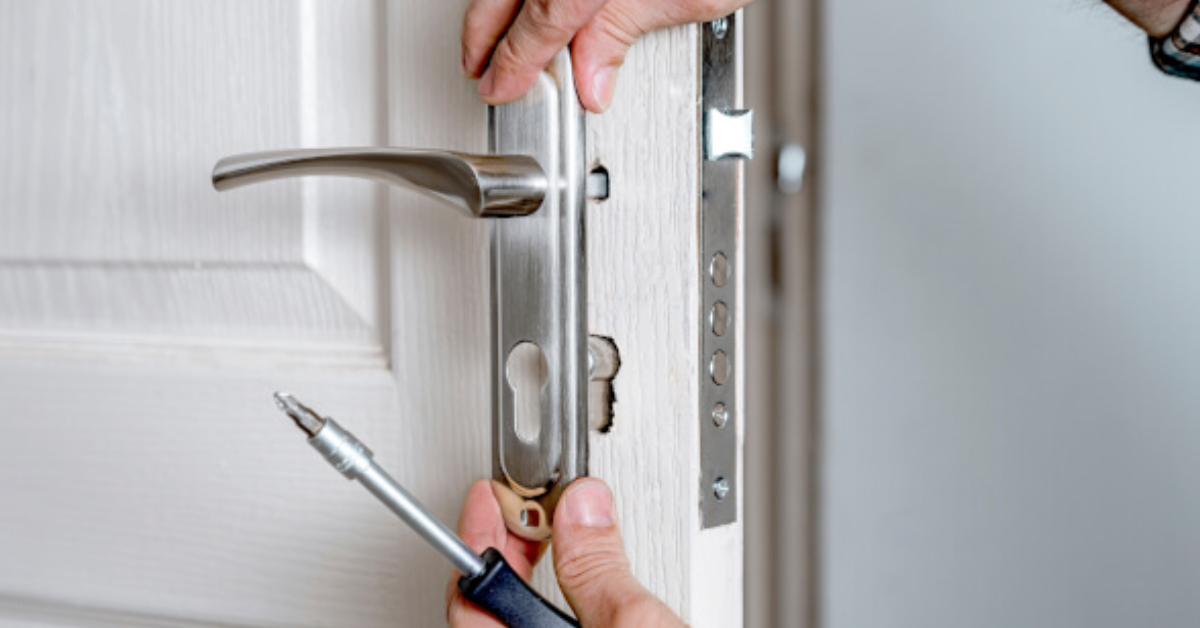
How to adjust multipoint door lock for smooth closing issues usually comes down to door alignment, hinge position, or locking point compression. If your door feels stiff, needs force to close, or the handle is hard to lift, the lock often just needs proper adjustment, not replacement.
At Kingdom Locksmith, we see this daily across homes and businesses in the UK. Many uPVC and composite doors drop slightly over time due to weather changes, regular use, or seal pressure. This causes multipoint locking systems, including rollers, hooks, and keeps, to fall out of alignment. The good news is that smooth closing can often be restored with simple, safe adjustments using basic tools like Allen keys and screwdrivers.
In this guide, we clearly explain what adjusting a multipoint door lock actually means, when it works, and when it does not. We show how to identify the real cause, adjust hinges, realign keeps, and fine tune locking points step by step. Our goal is to help you fix the problem confidently, avoid damage, and know exactly when it is time to call a professional locksmith service in the UK.
What Is A Multipoint Door Lock And How It Works
If you have ever lifted your door handle and felt several locking points engage at once, you are already using a multipoint door lock. At Kingdom Locksmith, we explain this to homeowners across the UK every week because understanding how it works makes adjustment much easier and safer. A multipoint lock is designed to secure your door at more than one point along the frame. Instead of relying on a single latch, it spreads pressure evenly, improves security, and helps the door seal tightly against drafts and noise. This is why it is now standard on most modern residential doors.
How a multipoint locking system secures your door
When you lift the handle, the multipoint locking system activates several components at the same time. Each part plays a specific role in keeping the door secure and aligned.
- Central gearbox: This is the heart of the system. It connects the handle to all locking points and controls their movement.
- Locking points along the frame: These can include hooks, rollers, or mushroom cams. As the handle lifts, they slide into metal and keep fixed to the door frame.
- Compression and alignment control: Rollers and cams help pull the door tight against the seals. Correct compression is essential. Too tight causes a stiff handle. Too loose causes drafts and poor locking.
- Key locking mechanism: Once the handle is fully lifted, turning the key locks the gearbox and holds all points in place.
From our experience as a residential locksmith, most problems happen when the door drops slightly or the compression becomes uneven. That is why multipoint lock adjustment usually focuses on alignment first, not replacing the lock.
Doors commonly using multipoint locks in the UK
In the UK, multipoint locks are widely used because they meet modern security and insulation standards. At Kingdom Locksmith, we regularly work on the following door types.
- uPVC doors: The most common type. Almost every uPVC front or back door uses a multipoint lock, making uPVC door repair and adjustment a frequent service call.
- Composite doors: These heavier doors also rely on multipoint locking for strength and weather resistance. Correct adjustment is important to prevent premature wear.
- Aluminium doors: Often used in modern homes and commercial properties. They use similar locking systems but require precise adjustment due to tighter tolerances.
- Patio and French doors: Many multi panel doors use slim multipoint mechanisms to secure the full height of the door.
A multipoint door lock secures your door at several points using a central gearbox and multiple locking components. It improves security, sealing, and stability. When problems occur, they are usually related to alignment or compression, not failure. Understanding how the system works helps you adjust it correctly and know when professional locksmith service in the UK is needed.
Why Multipoint Door Locks Stop Closing Smoothly
If a door used to close quietly and now needs force, something has changed. At Kingdom Locksmith, we often tell homeowners this in simple terms, doors do not fail suddenly, they drift. Most multipoint lock issues build up slowly through daily use, weather, and pressure on the frame. Understanding the cause makes adjustment safer and more effective.
Door misalignment from daily use and weather
Every time a door opens and closes, small forces act on the hinges and frame. Over months and years, this adds up. In the UK, temperature changes, rain, and wind cause doors and frames to expand and contract. uPVC and composite doors are especially sensitive to this movement. Even a few millimetres of door drop is enough to throw the locking points out of line.
Common signs we see during residential locksmith visits include:
- Door rubbing at the top or bottom
- Handle smooth when door is open, stiff when closed
- Locking points missing the keeps slightly
This misalignment is one of the most common reasons people search how to adjust uPVC door locks, and it is usually fixable without replacing parts.
Seal compression and seasonal movement
Modern doors are designed to seal tightly for insulation and security. The problem starts when compression becomes uneven. During colder months, door seals stiffen and frames contract. In warmer weather, materials expand. This seasonal movement increases pressure between the door and frame, making the multipoint lock stiff to operate. At Kingdom Locksmith, we regularly adjust compression on multipoint lock rollers and cams to:
- Reduce handle resistance
- Improve smooth closing
- Prevent long term strain on the gearbox
Too much compression is one of the main reasons a multipoint lock stiff handle develops over time.
Locking points and keeps falling out of alignment
Locking points rely on precise alignment with the keeps fixed to the frame. When the door shifts, these points no longer enter cleanly. This causes:
- Grinding or resistance when lifting the handle
- Hooks or rollers not engaging fully
- The need to force the door to lock
In most cases, this is not a lock failure. It is a positioning issue that can be corrected with careful multipoint lock adjustment.
Quick Answer for Common Multipoint Lock Problems
If your door suddenly feels harder to close than yesterday, you are not alone. In the UK, most uPVC and composite doors with a multipoint locking system go out of alignment gradually, not overnight. At Kingdom Locksmith, we adjust these doors every single day, and in most cases the lock itself is not broken. It just needs proper adjustment.
According to guidance from Checkatrade, door misalignment and compression issues are among the most common causes of stiff handles and poor locking on uPVC doors. That means many homeowners can restore smooth closing without full lock replacement services, if the adjustment is done correctly.Below is the fast, practical answer most people are looking for.
The fastest way to adjust a multipoint door lock
In real homes across the UK, the quickest fix usually follows this order. We use the same logic during residential callouts.
- Check door alignment first: Open the door slightly and lift the handle. If it feels smooth when open but stiff when closed, the door has likely dropped. This is common with uPVC door repair jobs.
- Adjust the hinges, not the lock yet: Small hinge adjustments often solve 70 percent of multipoint lock stiff handle issues. This brings the locking points back in line with the keeps.
- Adjust compression on the multipoint lock: Roller cams or mushroom cams can be turned with an Allen key to reduce pressure. Too much compression causes hard closing and handling resistance.
- Test before making further changes: Close the door gently, lift the handle, and turn the key. Smooth movement means the multipoint lock adjustment is working.
At Kingdom Locksmith, we always follow this order because adjusting the lock before the door is aligned often makes the problem worse.
Signs your door needs adjustment, not replacement
Many customers worry they need a new lock. In reality, these signs usually mean adjustment is enough.
- The handle is stiff but not loose or floppy
- The key turns smoothly when the door is open
- The door closes but needs force to lift the handle
- Locking points almost engage but feel tight
- The issue appeared gradually, not suddenly
If you hear grinding noises, the handle drops, or the key spins without resistance, that is different. Those symptoms may indicate gearbox failure or the need for lock replacement services. In those cases, our 24/7 emergency locksmith services are the safer option, especially after forced entry or emergency burglary repair situations. Most multipoint door lock problems come from alignment and compression, not broken parts. A careful adjustment can restore smooth closing, improve security, and save money. When done early, it also helps avoid urgent calls to a locksmith service in the UK, including residential locksmith or Coventry locksmith services.
Before You Start Adjusting the Lock
Before making any changes, preparation matters. At Kingdom Locksmith, we see many doors damaged not by faults, but by rushed adjustments. Taking a few minutes to prepare can prevent costly mistakes and unnecessary calls to emergency locksmith services.
Tools you need to adjust a multipoint door lock
Most adjustments can be done with basic household tools. You do not need specialist equipment for standard uPVC door repairs. Have these ready:
- Allen keys, usually 4mm or 5mm
- Flathead and Phillips screwdrivers
- Silicone based lubricant, non grease
- A cloth or marker to spot contact points
Using the correct size Allen key is important. Rounded screws can turn a simple adjustment into a lock replacement job.
Important safety checks before adjusting
Before you touch the lock or hinges, carry out these checks. We follow the same steps on residential and Coventry locksmith services calls.
- Never force the handle or key
- Support the door when adjusting hinges
- Make small adjustments, quarter turns only
- Test the door after each change
- Stop if you hear grinding or cracking sounds
If the handle drops, spins freely, or the key will not engage at all, adjustment may not be enough. In those cases, contacting a locksmith service in the UK is the safer option, especially after forced entry or emergency burglary repair situations.
Diagnose the Problem First (Most Skipped Step)
Let me tell you what we see all the time at Kingdom Locksmith. Someone searches “how to adjust multipoint door lock for smooth closing,” turns a few screws, and the door feels worse. Not because they did something silly, but because they adjusted the wrong part first. A multipoint locking system is like a chain, hinges, keeps, cams, and hooks all depend on alignment. If one piece is off by a few millimetres, everything feels stiff. So, before you touch anything, do this quick rule. Always test the handle and key with the door open, then again with the door closed. That one check usually tells you where the real fault is.
If the handle is stiff but the door closes
This is one of the most common scenarios in UK homes with uPVC and composite doors. What it usually means:
- The door is slightly misaligned, so locking points are dragging into the keeps.
- Compression is too tight, so the rollers or mushroom cams are pulling the door too hard against seals.
Fast checks
- Handle test: Lift the handle with the door open. If it is smooth, but stiff when closed, it is alignment or compression.
- Paper test: Close the door on a strip of paper near the locking side. If the paper is very hard to pull out, compression may be too high.
- Witness marks: Look for shiny rub marks on the keeps, that usually indicates friction.
This is classic multipoint lock stiff handle behavior, and in many cases it is fixable without lock replacement services.
If the door catches at the top or bottom
If the door physically rubs the frame, adjustment should focus on hinges first. The lock is often innocent. What it usually means:
- The door has dropped or shifted on the hinge side.
- Weather and seasonal movement have changed the gap around the door.
Fast checks
- Look at the gap around the door. If it is tight at the top latch side and wider at the bottom, the door has likely dropped.
- Open and close slowly. Note exactly where it catches, top corner, bottom corner, or latch side.
- Check if it gets worse in winter, seal stiffness can increase resistance.
If the key turns poorly after lifting the handle
This one is important. A key that resists turning can be a simple alignment issue, or a warning sign of internal damage. What it usually means
- The handle is not lifting fully because locking points are binding.
- The cylinder is under stress because the cam is not lining up cleanly.
- In some cases, gearbox wear is starting.
Fast checks
- Lift the handle fully and hold it up, then try the key gently.
- Try locking with the door open. If it locks smoothly open but not closed, it is alignment.
- If the key is stiff even when open, stop forcing it, you risk snapping the key in the cylinder.
Symptom to cause quick reference table
| Symptom you feel | Most likely cause | Best first adjustment |
| Handle stiff only when door is closed | Misalignment or compression too tight | Hinges, then roller/cam compression |
| Door rubs top or bottom | Door dropped on hinges, frame movement | Hinge alignment |
| Key hard to turn after handle lift | Locking points binding, cylinder under stress | Hinges and keeps, then compression |
| Hooks or rollers do not engage | Keeps misaligned or door not pulling in | Keeps and alignment |
| Drafts or rattling door | Compression too loose, worn seals | Adjust roller cams, check seals |
Diagnose first, then adjust. It saves time, avoids damage, and gives you the fastest path to smooth closing.
Step-by-Step How to Adjust Multipoint Door Lock
Below is the same safe approach we use at Kingdom Locksmith for residential callouts. The goal is not to “tighten everything.” The goal is to restore smooth alignment, so locking points engage without friction.
Step 1: Adjust uPVC door hinges for alignment
Hinge alignment is the foundation. If the door is not sitting correctly, every other adjustment becomes guesswork. What you are fixing
- Door drop
- Uneven gaps
- Rubbing corners
- Locking points missing keeps
How to do it
- Inspect the gap around the door. You want an even gap on all sides.
- Locate hinge adjustment points. Most modern uPVC hinges have Allen key adjustments for height, side-to-side, and compression.
- Make small changes only. Start with a quarter turn.
- Test after each change. Close the door, lift the handle, and check for smoothness.
Step 2: Adjust keeps and strike plates
Keeps and strike plates guide the latch, hooks, or rollers into position. If they are off by a few millimetres, the handle becomes stiff. What you are fixing
- Locking points rubbing
- Hooks not entering cleanly
- Door needs pushing to lock
How to do it
- Find witness marks on the keeps, shiny rub points tell you where it is catching.
- Loosen screws slightly on the keep, do not remove them.
- Shift the keep a tiny amount toward the direction needed, usually 1 to 2 mm.
- Tighten and test after each micro adjustment.
Step 3: Adjust roller cams for compression
Roller cams or mushroom cams control how tightly the door pulls into the frame. Too tight causes stiffness. Too loose causes drafts and poor locking feel. What you are fixing
- Hard closing
- Tight handle lift
- Poor sealing or rattling
How to do it
- Locate the rollers or cams along the lock strip.
- Use an Allen key to rotate them in small increments.
- Test closing pressure. You want firm contact, but not forced.
This is the safest way to adjust compression on multipoint lock systems without changing the whole lock.
Step 4: Adjust hooks and locking points
Hooks and locking points must enter their keeps smoothly. When they scrape, the handle feels heavy and you can wear out the gearbox faster. What you are fixing
- Hooks not engaging
- Grinding during handle lift
- Locking feels “half way”
How to do it
- Close the door gently and lift the handle slowly.
- Watch and listen for where the resistance begins.
- Adjust the specific keep for the hook that is catching, not all keeps.
- Retest until the hook engages without scraping..
When Adjustment Will Not Fix the Problem
Most alignment and stiffness issues can be solved with careful adjustment. However, at Kingdom Locksmith, we also see many cases where adjustment is no longer enough. Knowing when to stop is just as important as knowing how to adjust, because forcing a failing lock often turns a small issue into a costly emergency.
Signs of gearbox failure
The gearbox is the core of the multipoint locking system. When it fails, adjustment will not restore smooth operation.Common warning signs include:
- The handle lifts halfway and then jams
- Grinding or crunching noises when lifting the handle
- The handle lifts but locking points do not move
- The key turns but does not lock the door
- Sudden failure, not gradual stiffness
Gearbox failure often happens after months of operating a stiff lock. This is why early multipoint lock adjustment matters. Once the gearbox teeth are damaged, replacement is the only safe solution.
Dropped handles and broken spring cassettes
If the handle drops down and does not spring back, the issue is usually not alignment. This typically indicates:
- A broken spring cassette inside the handle
- Excess strain from misalignment or over compression
- Wear caused by forcing the handle over time
In these cases, adjusting hinges or keeps will not help. Continuing to use the door can cause further damage to the multipoint locking system or the cylinder. Handle or lock replacement services are usually required to restore safe operation.
When to call a professional locksmith in the UK
You should stop adjusting and contact a locksmith service in the UK if you notice any of the following:
- The key is very hard to turn or feels like it may snap
- The handle spins freely or will not lift at all
- The door will not lock even when perfectly aligned
- There are signs of forced entry or emergency burglary repair is needed
- The door secures a rental, commercial, or high security property
Our team provides 24/7 emergency locksmith services and residential locksmith support across the UK. Calling early often prevents full lock replacement and avoids being locked out later.
Maintenance Tips to Keep the Door Closing Smoothly
Once your door is closing properly again, simple maintenance can keep it that way. At Kingdom Locksmith, we advise homeowners to treat multipoint locks like any mechanical system, small care prevents big problems.
How often to lubricate a multipoint lock
Lubrication reduces friction and protects internal components.
Best practice:
- Lubricate every 6 to 12 months
- Increase frequency in coastal or high moisture areas
- Lubricate immediately if the handle starts to feel dry or squeaky
Focus on locking points, latch areas, and the cylinder keyway using the correct product.
What products to avoid using on locks
Using the wrong lubricant is one of the fastest ways to damage a multipoint lock.
Avoid:
- WD-40 or penetrating oils
- Thick grease or petroleum based products
- Household oils
These products attract dirt and can gum up the gearbox over time. Use only silicone based or PTFE lock lubricants designed for door locks.
How often alignment should be checked
Alignment checks take minutes and can save hundreds in repairs. We recommend:
- A visual gap check every 6 months
- A handle smoothness test seasonally
- Immediate inspection after extreme weather or heavy use
If you notice changes early, a simple hinge or compression adjustment usually prevents stiffness, gearbox strain, and emergency callouts.
Conclusion
Adjusting a multipoint door lock is often about understanding the cause, not forcing the fix. When alignment, compression, and locking points are set correctly, doors close smoothly, handles lift easily, and long term damage is avoided. At Kingdom Locksmith, we see that early adjustment saves homeowners and landlords time, stress, and unnecessary replacement costs. We always encourage careful diagnosis first, small adjustments second, and professional help only when it is truly needed.
Our goal with this guide is to help you feel confident about what your door needs and when adjustment is enough. If your door still feels stiff, the handle drops, or the lock will not engage properly, it may be time for expert support. For trusted advice, fast response, and reliable locksmith services across the UK, contact Kingdom Locksmith to speak with our team and keep your property secure and compliant.
Frequently Asked Questions
Question: Can I adjust a multipoint lock without removing it?
Yes, in most cases. Standard multipoint lock adjustment is done with the lock fully installed. Hinges, keeps, and compression points are designed to be adjusted in place. If removal is required, it usually indicates a deeper mechanical issue rather than a simple alignment problem.
Question: Why is my door worse in cold weather?
Cold weather causes frames, seals, and door materials to contract. This increases pressure between the door and frame, making handles feel heavier and locking points bind. Seasonal movement is a common reason people search how to adjust multipoint door lock for smooth closing during winter in the UK.
Question: Should I adjust the lock or replace it?
If the problem develops gradually and the handle and key work smoothly when the door is open, adjustment is usually enough. Replacement is more likely if the handle drops, the lock jams suddenly, or the key will not turn even with the door open.
Question: Is adjusting a multipoint lock a DIY job?
Basic alignment and compression adjustments can be DIY if done carefully with the right tools. However, forcing components or guessing adjustments can cause damage. If you are unsure or notice warning signs of internal failure, contacting a locksmith service in the UK is the safest option.