


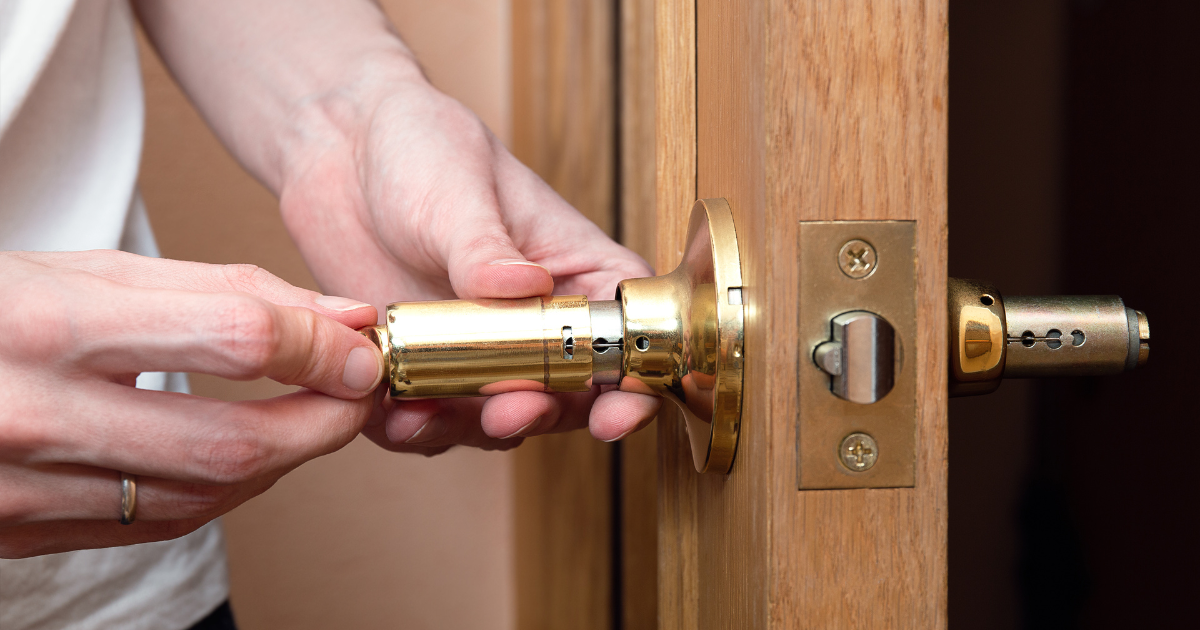
A properly installed lock is your first line of defense against intruders. Whether you’re upgrading outdated hardware or responding to a security concern, knowing how to change a door lock puts you in control of your property’s safety.
Here’s what you need to do:
Remove the existing lockset by unscrewing both interior and exterior components, measure the lock hole to ensure your new lock fits properly, align and secure the new lock with screws, then test it to make sure it operates smoothly and locks securely.
At Kingdom Locksmith, our DBS-checked locksmiths bring nearly a decade of experience to every job. We offer 24/7 emergency lock installation and replacement services across the UK for all your residential and commercial security needs.
Essential Tools You Will Need To Change A Door Lock
If you’re wondering how much to change locks on a door, it’s important to factor in the tools required for installation. Here’s a list of tools you’ll need for an efficient lock replacement:
- Screwdriver Set
- Measuring Tape
- Level
- Drill
- Router
- Hammer
- Lock Installation Kit
- Lubricant
- Key Extractor Tool
- Torque Screwdriver
How To Change A Door Lock? Step-by-Step Process
Upgrading an old lock or replacing a malfunctioning one involves precision and technical know-how. Below is a professional, step-by-step guide on how to change a lock on a locked door.
Step 1: Select the Right Lock
Before replacing any lock, assess the door type (wood, metal, fiberglass) and security needs.
- For residential properties, choose Grade 1 deadbolts or smart locks for advanced security features.
- For commercial doors, choose for high-security locks like Medeco or Mul-T-Lock.
Ensure the new lockset matches the existing hole dimensions to avoid door modifications.
Step 2: Remove the Old Lock
Start by unscrewing the lockset using a Phillips screwdriver. If the lock is stuck, use penetrating oil to loosen rust or old fasteners. Carefully detach both the interior and exterior lock components, noting the screw placement for reinstallation.
Note: Don’t forget to remove the strike plate from the door frame. Ensure the surface remains intact for a secure fit.
Step 3: Prepare the Door
After removing the old lock, inspect the door and frame alignment. Misalignment can cause the new lock to malfunction. If needed, use a router or drill to adjust the lock hole.
Clean any debris to ensure the new deadbolt or keyless entry system fits snugly. For mortise locks, verify that the mortise pocket is cut to the correct depth to ensure proper alignment.
Step 4: Install the New Lock
Insert the latch mechanism and ensure it’s properly seated. For smart locks or keypad entry systems, follow the manufacturer’s guidelines for wiring or battery installation.
Tighten all screws, securing the lockset without over-tightening to avoid damage. Install the strike plate at the door frame, ensuring proper alignment with the latch and deadbolt.
Step 5: Test the Lock
After securing the lockset, check the deadbolt and latch operation. Insert the key to test smooth extension and retraction.
If the lock resists, adjust the strike plate or door alignment. For keyless locks or smart locks, ensure the Wi-Fi connection or Bluetooth pairing works correctly, and the lock responds to remote commands.
Step 6: Finalize Installation
Tighten all screws and ensure the lock is securely fastened. Double-check for any door gaps or misalignments that could affect security. Use a torque screwdriver for precision to avoid stripping screws.
Clean the area and ensure there is no debris around the lock. Finally, perform a thorough security test to confirm everything operates as expected.
Replacing a Dual Key Deadbolt Lock
Dual-key deadbolt locks require a key to lock and unlock the door from both the inside and outside. This lock type is typically used for added security in high-risk areas, where it cannot be accessed from the inside in an emergency. It’s often used in commercial properties, as well as in areas where security is a top priority.
Changing Process:
- Unscrew both interior and exterior lock components. Use a keyhole saw if needed to remove any old debris or rust.
- Verify the depth and width of the lock hole. If the new cylinder doesn’t fit, use a drill bit or bore to adjust.
- Insert the cylinder, ensuring it’s seated properly and the tailpiece is aligned with the bolt mechanism.
- Secure both the interior and exterior parts by tightening the mounting screws. Avoid over-tightening to prevent damaging the lock.
- Align the strike plate with the bolt throw and check for any misalignment by testing the deadbolt.
- Insert the key, ensuring the deadbolt moves freely. Adjust the strike plate or cylinder if there’s resistance or misalignment.
Replacing Keyless Entry Locks (Keypad Locks)
Keyless entry locks provide secure, convenient access without the need for traditional keys. These locks use a numeric code entered on a keypad to unlock the door, making them ideal for homes, offices, and high-traffic areas. Commonly used in residential security, commercial buildings, and smart home systems, they eliminate the risk of lost keys while enhancing access control.
Changing Process:
- Unscrew both interior and exterior components. Disconnect any wiring or battery connections.
- Ensure the lock mounting holes are aligned and the door frame is in good condition. Use a level to check proper alignment.
- Mount the new lockset, ensuring all electrical connections (if applicable) are securely attached to the power source.
- Attach both interior and exterior parts, tightening screws without over-tightening to avoid damaging the lock.
- Program the new access code on the keypad and ensure the system is properly synced with any associated smart home systems or access control systems.
- Enter the new code to ensure the lock responds promptly and the door opens and closes smoothly. Adjust settings if needed.
Replacing Smart Locks
Smart locks provide advanced security by integrating with Wi-Fi, Bluetooth, or other smart home systems. They allow remote access control through smartphones, voice assistants, or key fobs. Popular in home automation, office security, and smart home ecosystems, they offer keyless entry, temporary access codes, and activity tracking. These locks provide convenience and enhanced protection for modern security needs.
Changing Process:
- Unscrew interior and exterior components. Disconnect any wires or power sources.
- Ensure the holes are aligned with the new smart lock’s mounting system. Adjust if needed.
- Mount the new lock. Connect the power source (battery or wired) and align the latch and bolt.
- Sync the lock with your smartphone app, Wi-Fi network, or smart home system.
- Tighten screws on both interior and exterior components. Avoid over-tightening.
- Verify the lock works remotely via the app or voice assistant. Test auto-locking and other features. Adjust settings as needed.
Replacing Mortise Locks:
Mortise locks are complex, high-security locks often used in commercial buildings and older homes. These locks are installed inside a pocket or “mortise” cut into the door, offering superior strength and resistance to tampering. Mortise locks often include a deadbolt for added security and provide a durable, long-lasting solution.
Changing Process:
- Unscrew the interior and exterior parts of the mortise lock. Carefully remove the lockset from the mortise pocket.
- Inspect the pocket for any debris or damage. Clean the area and ensure it’s deep and wide enough for the new lock.
- Insert the new lockset into the mortise pocket. Align the deadbolt, latch, and handles with the cutout and door frame.
- Tighten screws to secure the lock into the mortise. Ensure the lock components are properly aligned and flush with the door surface.
- Align the strike plate with the deadbolt and latch. Secure it tightly to the doorframe.
- Check the smooth operation of the lock, deadbolt, and latch. Make adjustments to the strike plate or mortise pocket if necessary.
Replacing Rim Locks:
Rim locks are surface-mounted locks, commonly used on older doors or for additional security on exterior doors. These locks are installed on the door’s surface rather than within the door’s edge, making them easier to install and replace. Rim locks often include a latch and deadbolt for added security and can be used in both residential and commercial applications.
Changing Process:
- Unscrew the lock from the door’s surface. Carefully detach both the interior and exterior components.
- Clean the mounting area and check for any damage. Ensure the door surface is smooth for the new lock installation
- Position the new lock on the door’s surface. Align the latch and bolt with the doorframe and mark the screw holes.
- Drill pilot holes and tighten the screws to mount the new lock securely. Ensure the lock is flush with the door and operates smoothly.
- Align the strike plate with the deadbolt or latch and install it on the doorframe. Tighten the screws to hold it in place.
- Operate the latch and deadbolt to ensure smooth functionality. Make any adjustments to the strike plate or lock alignment as needed.
Common problems when replacing front door locks
Replacing a front door lock is a common DIY task, but many homeowners encounter issues during the process. Below are some common problems faced and simple solutions to fix them.
Misaligned Door or Strike Plate
If your lock doesn’t engage properly, it’s likely due to a misaligned strike plate. Simply adjust the strike plate or file the recess to ensure the bolt seats fully, providing smooth locking.
Sticky or Jammed Lock Mechanism
Having trouble turning the key? Debris or dirt inside the lock could be the culprit. Apply graphite lubricant and cycle the key a few times to clear any blockages and restore smooth function.
Key Breaks Inside the Lock Cylinder
If the key breaks inside the lock, don’t worry! Use needle-nose pliers or a broken-key extractor to remove fragments. Clean the lock thoroughly before inserting a new key.
Lock Cylinder Spins Instead of Engaging
If the cylinder spins without engaging the deadbolt, it’s likely due to loose set screws. Tighten the screws securely to ensure the lock engages correctly every time you turn the key.
Deadbolt Won’t Fully Extend
If the deadbolt won’t fully extend, misalignment is the usual cause. Tighten door hinges to fix sagging, or adjust the strike plate or deadbolt pocket for smooth operation.
Loose Locks or Handles After Installation
If your new lock feels loose, it’s often because the screws weren’t tightened properly. Simply replace the screws with longer ones and secure them, but avoid over-tightening to prevent damage.
Key Won’t Turn Easily
Struggling to turn the key? This could be due to internal friction. Lubricate the lock with graphite powder and check alignment. If it persists, professional rekeying might be needed.
Door Won’t Close Properly After Lock Change
Is your door no longer closing properly after replacing the lock? Adjust the hinges and reposition the strike plate to restore proper alignment and ensure a smooth, secure closure.
Key Considerations for a Smooth Door Lock Installation
- Ensure the lock meets your security needs, considering features like Grade 1 deadbolts, smart locks, or high-security cylinders that resist tampering and picking.
- Use a level to verify both the door and strike plate are aligned properly. Even a slight misalignment can cause the lock to malfunction or wear out prematurely.
- If the existing hole is too tight or misaligned, use a mortise chisel or router to adjust the pocket size to avoid unnecessary friction during lock engagement.
- Tighten screws to the correct torque. Use a torque screwdriver to avoid over-tightening, which can strip the threads or warp the lock housing.
- After installing the lock, test the bolt for full extension and retraction. Adjust the deadbolt mechanism if it doesn’t extend fully, ensuring smooth locking.
- Ensure the strike plate is not only aligned with the bolt but also sits flush against the doorframe. Use a shim or file to correct small gaps.
- Apply graphite lubricant inside the keyway and bolt to reduce friction. .
Replacing vs. Re-Keying Your Locks: Which Option is Right for You?
Choose to replace your locks if they are outdated, damaged, or if you need enhanced security features like a smart lock. Opt for re-keying if you’ve lost a key, experienced a break-in, or want to restrict access without replacing the entire lock system. Below is a quick comparison to help you decide.
| Criteria | Replacing the Lock | Re-Keying the Lock |
| When to Choose | Locks are damaged or outdated. Need more security features. | Lost keys, want to restrict access without full replacement. |
| Cost | Higher (new lock installation required). | Lower (just the cost of re-keying service). |
| Security | Highest security with a new, upgraded system. | Moderate security, changes the key but not the lock mechanism. |
| Time Required | Longer (installation and setup). | Quicker (usually under 30 minutes). |
| Customization | Full customization with a new lock (e.g., smart locks). | Limited to changing the lock pins or key access. |
| Effectiveness | Full security as old keys no longer work. | Effective for lost keys, but lock remains the same. |
| Long-Term Use | Long-term investment for high security. | Short-term solution to control key access. |
| Emergency Situations | Best if the lock is compromised (e.g., after a break-in). | Ideal for when keys are lost or stolen but lock is intact. |
DIY Lock Installation vs. Professional Help
When deciding between DIY lock installation and hiring a professional locksmith, consider time, cost, and skill level. DIY offers cost savings but requires precision, while professionals ensure accuracy and security.
Choose DIY Installation When:
- You have basic tools and knowledge.
- The lock is simple (e.g., knob lock, deadbolt).
- You need a quick solution and can follow instructions.
- You want to save money on installation fees.
- The door/frame is in good condition without major adjustments needed.
Choose Professional Help When:
- The lock is complex (e.g., smart locks, high-security systems).
- You’re dealing with commercial properties or high-risk areas.
- You’ve encountered problems like door/frame misalignment.
- You need a guarantee of proper installation and warranty.
- You’re in an emergency, like a lockout or compromised security.
To Conclude
In conclusion, changing a door lock is an essential task that enhances the security of your property, and it’s something Kingdom Locksmith can assist you with every step of the way. Whether you’re upgrading an old lock, replacing a faulty one, or installing a smart lock, our expert locksmiths ensure a seamless installation process. We guarantee that your new lock will be fully functional, providing the highest level of security for your home or business.
At Kingdom Locksmith, we pride ourselves on offering professional, reliable lock installation and replacement services. Our experienced, DBS-checked locksmiths are available 24/7 for all your security needs, whether it’s a simple residential lock change or a complex commercial lock installation. For peace of mind and top-notch service, trust Kingdom Locksmith to keep your property safe and secure.
Frequently Asked Questions
Question: How do I know if my lock is high security?
Answer: High-security locks have features such as anti-pick pins, hardened steel components, and multi-point locking systems. Medeco and Mul-T-Lock are trusted brands that meet high-security standards like UL437.
Question: Can I install a smart lock on any door?
Answer: Smart locks are compatible with most doors, but ensure the door has the right backset and thickness. Popular brands like August, Schlage, and Yale offer models that fit various door types.
Question: Should I choose a keyed or keyless lock for my home?
Answer: Keyed locks are reliable and secure, while keyless locks like keypad or smart locks offer convenience and remote control. Keyless systems are ideal for high-traffic areas or those seeking keyless entry.
Question: How do I maintain my door lock for optimal security?
Answer: Regularly lubricate your lock with graphite powder to prevent jamming. Ensure the strike plate is aligned and tighten all screws. For long-term security, rekey or replace your locks every 5-7 years.
Question: How do I change a door lock without a key?
Answer: If you don’t have the key, start by removing the screws on the interior side of the lock. Use a flathead screwdriver to pry apart the lock components if necessary. You can then replace the lock or rekey it if you need a new key. If the lock is jammed or difficult to remove, you might need to call a professional locksmith.