Why Is My uPVC Door Not Locking in Derby?

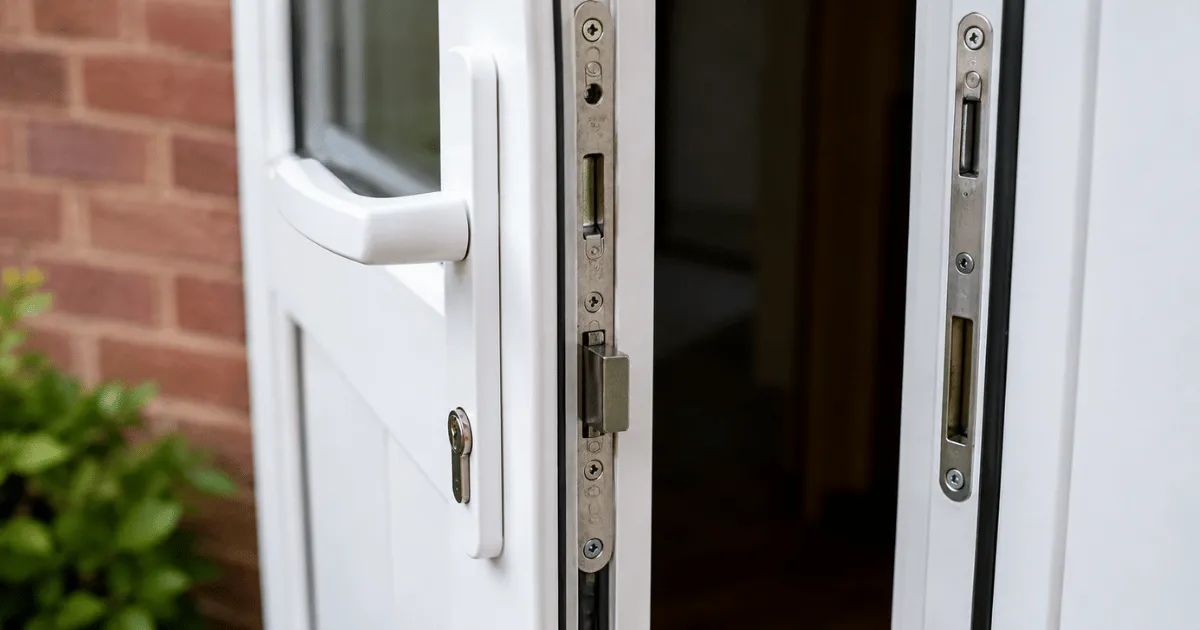
A uPVC door that will not lock may have an alignment issue, worn handles, a cylinder fault or a problem within a multipoint mechanism. Similar symptoms can have different causes, so avoid forcing the key or handle. Extra force can bend a key, damage connected parts or leave the door stuck.
If the door cannot be secured, keep people safe and use another secure entrance if one is available. Do not leave an accessible property unattended. For a current address-level enquiry in Derby, use the contact page; availability and the repair required can only be confirmed for the individual job.
How a multipoint door may work
Many uPVC doors use a centre case, sometimes called a gearbox, connected to a locking strip with hooks, rollers, bolts or other locking points. The arrangement varies. On common lift-to-lock systems, lifting the handle moves parts of the strip and turning the key deadlocks or releases the system through the centre case. Other designs operate differently.
The euro cylinder is one component, not the whole mechanism. A key that turns poorly does not prove the cylinder is solely at fault, and a moving handle does not prove the strip is sound. The door mechanism repair page gives more context on connected components.
Safe observations you can make
First check for an obvious obstruction around the threshold and frame. Remove only loose debris that can be lifted away safely; do not dismantle the lock or force the door against an obstruction. Look for visible movement, loose trim or signs that the door has dropped.
If the door is already open and can be kept safely under control, you can compare its operation with the door open and closed. Keep fingers and clothing away from moving locking points, and never shut the door if there is a risk it will jam. Operate the handle and key gently.
If operation is easier while open but difficult when closed, alignment or pressure against the keeps may be involved. That is an indicator, not a diagnosis: hinges, keeps, door shape, weather seals and mechanism wear can interact. If it is difficult both open and closed, possibilities include the cylinder, key, spindle, handles, centre case or locking strip. An inspection is still needed.
Try a known-good key only if the cylinder is unobstructed and the key enters normally. Stop if it catches or needs force. A copied or worn key can create symptoms similar to an internal fault, but two stiff keys do not conclusively identify the cylinder.
What common symptoms may indicate
A handle that will not lift can result from the door pressing against keeps, a failed internal component or resistance along the strip. A floppy or non-returning handle can involve the handle spring cassette, spindle, lock case, friction or alignment. A key that turns with the door open but not closed may point towards load or alignment, while a key that spins, stops abruptly or will not withdraw needs prompt assessment.
Do not rely on a single online test to decide that the gearbox has failed. Replacing the wrong component can waste money and may introduce compatibility or security problems. The uPVC door repair service outlines the types of assessment and repair that may be discussed.
Avoid common DIY mistakes
Do not repeatedly slam the door, lean on the handle or use tools to increase leverage. Do not file keeps, pack hinges or alter the frame unless you have the competence and the doorset instructions. Those changes can affect weather sealing, security and, where relevant, fire performance.
There is no universal spray or maintenance interval for every cylinder and multipoint strip. Use only the product, location and quantity specified by the exact hardware manufacturer, and do not mix products. Lubricating an alignment or broken-component fault will not repair it.
Cylinder dimensions, profile and cam must match the lock and door. Projection can affect security and handle protection. Do not buy a replacement from an external measurement or photograph alone; have the full configuration measured and check any relevant certification.
Repair, adjustment or replacement?
An inspection should identify whether adjustment, a handle or spindle repair, cylinder work, centre-case replacement, a compatible strip or wider door work is appropriate. Obsolete parts, previous alterations and door damage may limit the options. Completion and the need for a return visit depend on diagnosis and compatible-part availability.
Ask for an itemised estimate after assessment. It should distinguish attendance and labour from any cylinder, handles, centre case, strip or other parts, and state whether VAT applies. There is no reliable Derby-wide price for “a uPVC lock repair” because that phrase covers materially different work.
If a security upgrade is being considered, compare the tested rating of the exact component and its required protective hardware. A rated cylinder can resist specified test attacks, but it cannot guarantee that a complete door will remain secure after every attack. Check the proposed configuration against your own insurer, landlord and any fire or escape requirements.
For further preparation, read the door lock repair guide. Stop using the door if operation is worsening, the key is bending, or the door may trap someone; arrange a case-specific assessment rather than forcing it.