
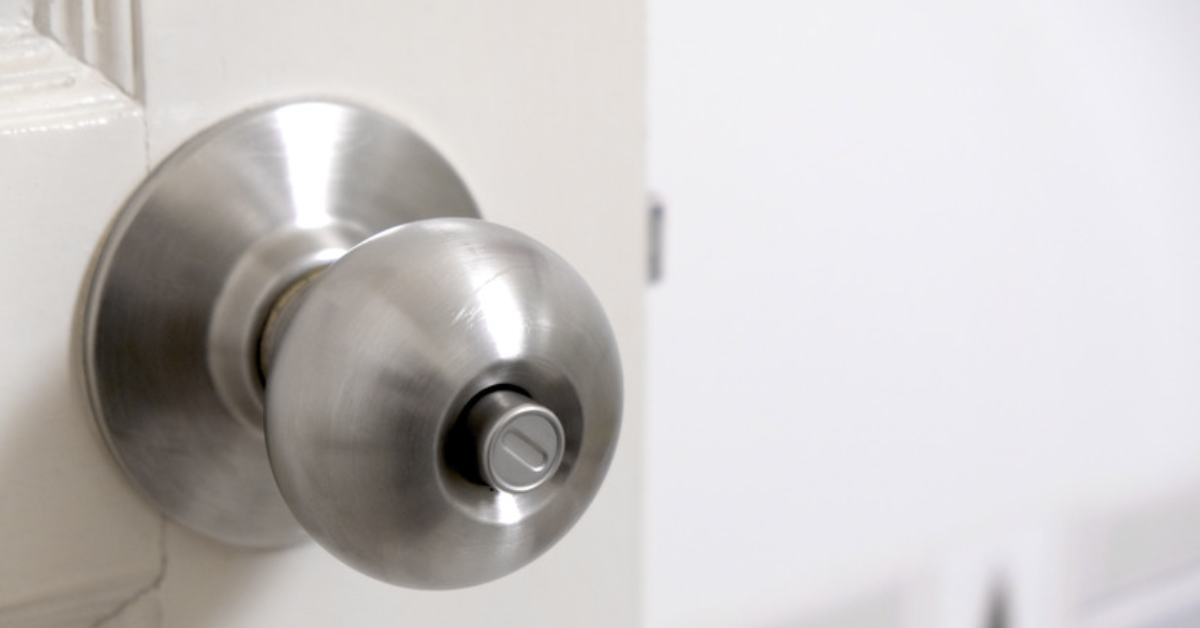
How to Fix a Push Lock Door Handle That Won’t Lock usually comes down to one of three issues, a stuck push button, a worn latch, or loose internal screws. If your privacy door handle clicks but does not stay locked, or unlocks as soon as you turn the handle, you are in the right place.
At Kingdom Locksmith, we fix this problem daily in UK homes, flats, and rental properties. A push lock door handle, also known as a push button privacy lock, is designed to give simple, non key locking for bedrooms and bathrooms. Over time, normal use, door movement, or internal wear can stop the button from engaging properly. The good news is that many cases can be fixed without replacing the handle. According to guidance shared by Checkatrade, internal door handle faults are among the most common household hardware problems, especially in rental properties where handles see heavy daily use. Left unfixed, these small issues can turn into lockouts or forced entry damage.
What you’ll gain from this guide
- Clear diagnosis before touching screws
- Safe, step-by-step fixes that actually work
- When to fix vs when to replace a privacy door handle set
- UK-specific advice from a residential locksmith’s point of view
At Kingdom Locksmith, we believe good fixes start with good understanding. Follow the steps below, and you’ll know exactly how to fix a push lock door handle that won’t lock, or when it’s smarter to call for help.
What Is a Push Lock Door Handle and How It Works
Before fixing anything, it helps to know exactly what you are working with. At Kingdom Locksmith, we always start here because many people search for a fix while picturing the wrong type of lock. A clear definition saves time and prevents damage.
What does “push lock door handle” mean?
A push lock door handle is a privacy locking handle commonly used on bedroom and bathroom doors. It locks by pressing a button on the inside handle and unlocks by turning the handle from the inside or using an emergency release from the outside. There are two common styles you will see in UK homes:
- Push button privacy knob
A round knob with a button you press to lock. This is the most common style in older homes and rentals. - Push button privacy lever
A lever handle with a push button or turn button on the inside. More common in newer builds and accessibility focused homes.
What this guide does not cover:
- Cabinet push locks
- Commercial panic bars or emergency exit hardware
- Key operated internal locks
If your door uses a key, this is a different system and needs a different approach.
Internal parts of a push-button privacy lock
Even though it looks simple from the outside, a push-button privacy lock has several moving parts inside. When one part wears or shifts, the lock stops working properly.
- Button mechanism: The internal catch that holds the lock in the “locked” position. When worn, the privacy door knob button won’t stay in.
- Tubular latch: The spring loaded latch that moves in and out of the door edge. If this sticks or binds, the door may lock but not stay locked.
- Spindle: The square metal bar connecting both handles. If misaligned, the lock may unlock as soon as the handle turns.
- Spring cassette: Returns the handle to its neutral position. A broken spring causes drooping handles and unreliable locking.
- Emergency release pinhole: A safety feature that allows unlocking from outside using a pin or paperclip. This is essential for bathrooms and child safety.
At Kingdom Locksmith, most push lock door handle stuck cases come down to one of these parts being loose, dirty, or worn, not the entire handle failing.
Why a Push Lock Door Handle Stops Locking
When a push lock door handle won’t lock, it is rarely random. At Kingdom Locksmith, we see the same patterns again and again in UK homes. These handles are designed for light privacy use, not heavy force. Over time, small mechanical changes stop the button from engaging properly. Understanding the real cause helps you fix it faster and avoid unnecessary replacement.
Worn internal springs and button mechanisms
Inside every push button privacy lock is a small spring and catch that holds the button in place. With daily use, this mechanism wears down. What this looks like in real life:
- The privacy door knob button won’t stay in
- The button clicks but pops back out
- The lock works sometimes, then fails again
This wear is common in bathrooms and rental properties where the handle is used many times a day. Once the internal spring loses tension, the lock cannot hold the locked position consistently.
Loose handle screws and spindle movement
This is one of the most overlooked causes, and also one of the easiest fixes. When screws loosen:
- The spindle shifts slightly when the handle turns
- The lock engages but unlocks as soon as pressure is applied
- The push button door handle not locking becomes intermittent
We often fix this in minutes by tightening fixings and realigning the spindle. Left unchecked, loose handles put extra strain on the internal parts and speed up failure.
Latch or strike plate misalignment
A push lock relies on the latch lining up cleanly with the strike plate on the frame. If the door moves or settles, alignment changes. Common signs include:
- The door locks but will not stay locked
- You need to pull or push the door to make it work
- A tubular latch stuck feeling when turning the handle
Even a few millimetres of misalignment can stop the lock from holding properly. This is especially common after seasonal movement or door adjustments.
Cheap or non serviceable privacy locksets
Not all push lock handles are designed to be repaired. Lower quality or sealed units often:
- Use thin internal components
- Cannot be opened without damage
- Are cheaper to replace than fix
In these cases, attempting repair usually wastes time. At Kingdom Locksmith, we are upfront when a replacement privacy door handle set is the smarter and safer option.
Diagnose the Problem First (Most Skipped Step)
Before reaching for a screwdriver, pause for a moment. At Kingdom Locksmith, we always say this part saves the most time and prevents damage. Many push lock door handle issues look the same on the surface, but the cause underneath can be very different. If you fix the wrong thing first, the lock often feels worse, not better.
If the push button will not stay in
This is one of the most common complaints we hear. What it usually means:
- The internal button spring is worn.
- The button catch is no longer holding tension.
- The handle screws or spindle are slightly loose.
Quick checks
- Press the button and gently turn the handle. If it pops out immediately, the internal mechanism is slipping.
- Check for handle movement when you wiggle it side to side.
If the button is stuck and won’t pop out
A button that stays pushed in is a safety issue, especially on bathroom doors. What it usually means:
- Dirt or old lubricant inside the mechanism.
- A jammed internal catch.
- A bent or damaged button shaft.
Quick checks
- Try turning the handle fully. Many push locks auto release when the handle turns.
- Use the emergency release pinhole from the outside to reset it.
If the lock engages but unlocks when turning the handle
This issue often confuses homeowners because it feels like the lock works, then instantly fails. What it usually means:
- Loose screws allowing spindle movement.
- The spindle is not centred correctly.
- Internal wear allows rotation to override the lock.
Quick checks
- Lock the door, then gently apply turning pressure.
- If the lock releases without resistance, internal parts are slipping.
This is a classic push button door handle not locking symptom caused by movement, not alignment.
If the door locks but won’t open
This feels alarming, but there is usually a logical cause. What it usually means:
- The latch is binding inside the door.
- The spindle is misaligned.
- The internal button mechanism has jammed.
What to do first
- Use the emergency release pinhole if accessible.
- Keep the handle supported while turning to avoid snapping parts.
If the door remains jammed, stop and call for help. Forcing the handle can turn a simple fix into a full replacement job. Diagnosing the symptom first tells you where the real problem is. Whether the button won’t stay in, won’t pop out, unlocks too easily, or traps the door shut, each symptom points to a different fix. At Kingdom Locksmith, this step alone prevents most DIY mistakes and helps you fix the push lock door handle safely and correctly.
Tools You Need to Fix a Push Lock Door Handle
Preparation matters more than people think. At Kingdom Locksmith, we see many simple push lock problems turn into bigger repairs just because the wrong tool or product was used. Taking two minutes to gather the right tools keeps the job safe, clean, and effective.
Basic tools for push lock repair
Most push button privacy lock issues can be fixed with basic household tools. You do not need specialist locksmith equipment. Have these ready before you start:
- Screwdrivers: A Phillips screwdriver is the most common. Some handles also use a flathead screw for roses or cover plates.
- Allen key, if applicable: Some lever style privacy handles use a small Allen screw to secure the handle to the spindle.
- Silicone or PTFE lubricant: These lubricants reduce friction without attracting dirt. They are safe for internal springs and latch mechanisms.
- Paperclip or pin for emergency release: Used gently in the emergency release pinhole to unlock a stuck bathroom or bedroom door from the outside.
Using the correct size screwdriver and key is important. Stripped screws are one of the main reasons a simple fix becomes a handle replacement.
Tools you should not use
This is where many DIY fixes go wrong. Avoid the following completely:
- WD-40: It is a water displacer, not a long term lubricant. It washes away internal grease and attracts dust, which causes future sticking.
- Heavy grease or oil: Thick products gum up the button mechanism and tubular latch. Over time, they make the push lock door handle stuck again.
At Kingdom Locksmith, we regularly clean out locks that were “fixed” with the wrong products. Using the right lubricant once is better than repeated cleaning later.
Step-by-Step How to Fix a Push Lock Door Handle That Won’t Lock
At Kingdom Locksmith, we fix push-button privacy locks in UK homes every week. The biggest difference between a clean fix and a frustrating one is order. Do not jump straight to replacing the handle. Follow these steps from simplest to most technical, and test after each step. That is how you get a fast result without causing damage.
Step 1: Tighten loose handle screws and roses
Loose fixings are one of the top reasons a push button door handle not locking becomes intermittent. What to do:
- Hold the handle steady and check for wobble.
- Remove any decorative cover plate or rose if it hides screws.
- Tighten the visible screws evenly, alternate sides like tightening a wheel.
- Press the push button again and test.
What you should notice
- Less movement in the handle.
- The lock button feels firmer.
- The button is more likely to stay in.
If the privacy door knob button won’t stay in after tightening, move to Step 2.
Step 2: Check spindle alignment and handle return
A misaligned spindle can cause the lock to engage, then unlock the moment you turn the handle. What to check:
- Does the handle return to a neutral position smoothly?
- Does the handle droop slightly instead of springing back?
- Does the lock release too easily when turning the handle?
How to fix
- Remove the handle screws enough to pull the handle slightly away.
- Re-seat the spindle so it sits centered through both sides.
- Re-tighten screws evenly and test handle return again.
If the handle does not spring back properly, the spring cassette may be worn. That is usually a replacement job, not an adjustment job.
Step 3: Clean and lubricate the button mechanism
If the button feels gritty or sticks, dirt and dry friction are often the cause. Do this carefully:
- With the door open, press and release the button a few times.
- Apply a small amount of silicone or PTFE lubricant around the moving areas, not heavy oil.
- Work the button and handle repeatedly to distribute lubricant.
Avoid
- Flooding the mechanism with spray.
- Using WD-40 or thick grease, it often creates a sticky buildup later.
This step often solves a door handle lock button stuck situation.
Step 4: Inspect and adjust the tubular latch
A tubular latch stuck or binding latch can stop the lock from holding properly. Quick inspection:
- With the door open, press the latch in with your finger.
- It should move smoothly and spring back fully.
Fix steps
- Check the latch faceplate screws on the door edge, tighten if loose.
- If the latch is stiff, apply a small amount of PTFE or silicone lubricant to the latch bolt.
- Ensure the latch is installed the right way, some latches have a sloped side that must face the strike plate direction.
If the latch does not spring back reliably even after cleaning, it is usually worn and needs replacement.
Step 5: Check strike plate alignment
Even if the lock works perfectly, a misaligned strike plate can make it feel like it “won’t lock.” What to look for:
- Scrape marks on the strike plate.
- The latch hits the edge instead of entering smoothly.
- Needing to lift or push the door to lock it.
How to correct
- Close the door slowly and watch where the latch meets the strike plate.
- Tighten strike plate screws first.
- If needed, adjust the strike plate position slightly so the latch enters centrally.
This is one of the most common hidden causes in UK properties where doors shift slightly with seasonal movement.
Step 6: Test the emergency release correctly
Every privacy lock should have a safe override, especially for bathrooms. How to test:
- Close the door but keep it unlatched if possible.
- Lock the door using the push button.
- From the outside, insert a straightened paperclip or pin into the emergency release hole.
- Apply gentle pressure until the lock releases.
Important safety notes
- Never use sharp tools that can widen or damage the hole.
- If the emergency release does not work at all, the internal mechanism may be damaged.
At Kingdom Locksmith, we treat emergency release failure as a priority issue because it can become a lock-in risk for children or vulnerable occupants.
When a Push Lock Door Handle Cannot Be Fixed
Most push lock problems are minor. But at Kingdom Locksmith, we’re upfront when a repair will not last. Knowing the limits protects your door, your safety, and your budget.
Signs the privacy lock is not serviceable
Some push button privacy locks are built as sealed units. Once internal parts wear, they are not designed to be repaired. Watch for these signs:
- The button will not hold even after tightening and cleaning
- The handle body flexes or creaks when pressed
- The casing is crimped or riveted shut with no access points
- The lock works briefly, then fails again within days
In these cases, time spent “trying one more fix” usually leads to repeat failures. Replacement is the reliable option.
Broken spring cassette symptoms
The spring cassette returns the handle to neutral and supports the lock action. When it fails, adjustment won’t help. Common symptoms:
- Handle droops or does not spring back
- Lock engages but releases when the handle turns
- Uneven resistance between inside and outside handles
Once the spring cassette breaks, the mechanism cannot hold tension. Continuing to use it accelerates wear on the latch and spindle.
When forcing the handle causes more damage
Forcing a stiff or failing lock is the fastest way to turn a small issue into a full replacement job. Stop immediately if:
- You hear grinding or cracking
- The handle jams halfway through a turn
- The button sticks hard and won’t release
Forcing can snap internal parts, strip screws, or crack the handle body. At that point, even a simple handle swap becomes harder.
Replace or Repair, What Is the Better Option?
This is the question we get most. At Kingdom Locksmith, the answer depends on cost, safety, and how the door is used.
When repair is cost effective
Repair usually makes sense when:
- Screws were loose or alignment was off
- The button was dirty or dry, not worn
- The latch or strike plate needed minor adjustment
If the handle is solid, the button holds after cleaning, and the latch springs back cleanly, repair can restore years of use at very low cost.
When replacement is the smarter choice
Replacement service is the better option when:
- The button won’t stay in due to internal wear
- The handle droops from a failed spring cassette
- The lock is non-serviceable or low quality
- The door is in a rental or shared property where reliability matters
In these cases, a new privacy handle is safer, more reliable, and often cheaper than repeated fixes.
UK door handle standards to consider
When replacing a push lock handle in the UK, choosing the right standard avoids fitting problems.
Key points to check:
- Backset: Common sizes are 60mm and 70mm
- Door thickness: Ensure the spindle length matches
- Bathroom and bedroom privacy use: Emergency release pinhole is essential
- Quality: Look for handles aligned with guidance from the Master Locksmiths Association or reputable UK suppliers
How to Replace a Push Lock Door Handle
Sometimes repair is no longer reliable. When internal parts are worn or the handle is non-serviceable, replacement is the safest and longest-lasting solution. At Kingdom Locksmith, this is a routine job in UK homes, flats, and rental properties, and when done correctly, it restores smooth locking immediately.
Removing the old privacy handle safely
Start with the door open to avoid accidental lock-ins. Steps we follow on site:
- Locate and loosen the fixing screws on the handle roses.
- Hold both sides of the handle while removing screws to prevent dropping parts.
- Slide the handles and spindle out gently.
- Remove the tubular latch from the door edge if it is being replaced.
Choosing the correct replacement handle
Choosing the wrong handle is a common mistake. UK internal doors are not all the same. What to check before buying:
- Type: Push button privacy knob or lever, like for like
- Backset: Usually 60mm or 70mm
- Door thickness: Ensure spindle length fits
- Emergency release: Required for bathrooms and bedrooms
- Build quality: Avoid sealed, ultra-cheap units that cannot be serviced
For long-term reliability, we advise using products aligned with guidance from the Master Locksmiths Association or trusted UK hardware suppliers.
Fitting and testing the new lock
Once the new handle is ready, fitting is straightforward. Fitting steps
- Insert the new tubular latch, check orientation.
- Slide the spindle through the latch.
- Fit both handles and tighten screws evenly.
- Test the push button several times with the door open.
- Close the door and confirm smooth locking and unlocking.
A correctly fitted privacy handle should lock cleanly, unlock instantly on handle turn, and release with the emergency pinhole.
When to Call a Locksmith Service in the UK
DIY fixes work in many cases, but there are times when professional help is the safer option. At Kingdom Locksmith, we step in when safety, access, or legal responsibility is involved.
Locked room emergencies
Call a locksmith immediately if:
- A bathroom or bedroom door is locked and will not open
- The emergency release does not work
- Someone is trapped inside
These situations need non-destructive entry to avoid door damage.
Rental and landlord safety responsibilities
Landlords have a duty to ensure doors are safe and usable. Professional help is advised when:
- A tenant reports repeated lock failures
- A privacy lock jams or traps occupants
- Replacement must meet safety and inspection standards
Prompt repair reduces risk and protects compliance.
Child safety and bathroom lock failures
Bathroom locks are a common risk point. If:
- A child locks themselves in
- The push button jams regularly
- The handle fails to release reliably
A locksmith service in the UK can resolve the issue quickly and safely, often without replacing the entire door.
Maintenance Tips to Prevent Push Lock Failures
Most push lock problems are preventable. At Kingdom Locksmith, we often say a few minutes of routine care can save a late night lockout or an urgent replacement. Push button privacy locks are simple mechanisms, but they rely on small springs and precise movement, so light maintenance goes a long way.
How often to check and tighten handles
Loose fixings are one of the leading causes of push lock door handle failure. Our recommendation
- Check handle screws every 6 months
- Tighten immediately if you notice wobble or movement
- Pay extra attention in rental properties and busy bathrooms
Regular tightening keeps the spindle aligned and reduces strain on the internal locking parts.
Proper lubrication schedule
Lubrication prevents friction and wear inside the lock and latch. Best practice:
- Lubricate every 6 to 12 months
- Use only silicone or PTFE-based lubricants
- Apply lightly to the latch bolt and button mechanism
Avoid
- WD-40 or penetrating sprays
- Heavy grease or oil
Wrong products attract dust and cause the lock to stick again over time.
Early warning signs to watch for
Catching problems early prevents failure. Watch for:
- The push button needing more force than usual
- The handle not returning smoothly
- Intermittent locking or unlocking
- Gritty or dry feeling when pressing the button
If any of these appear, address them immediately. At Kingdom Locksmith, we find that early attention often avoids replacement and keeps doors safe and functional.
Quick Answer: Fix a Push Lock That Won’t Lock
If you are standing next to the door right now wondering what to do, start here. At Kingdom Locksmith, this is the same quick logic we use on real callouts across UK homes. Most push lock door handle problems are simple. The key is knowing what to try first and when to stop.
The fastest way to fix a push lock door handle
In most cases, a push lock that won’t lock fails for basic mechanical reasons, not because it is broken beyond repair. Try these fixes in order.
- Tighten the handle screws first: Loose screws cause the spindle to shift, which makes the button release when the handle turns. This alone fixes a large number of cases.
- Test the handle return: Turn the handle and let go. If it does not spring back cleanly, the lock will not hold properly.
- Clean and lightly lubricate the button mechanism: Use silicone or PTFE spray only. Dirt and dryness often cause a push lock door handle stuck issue.
- Check the tubular latch movement: Press the latch in with your finger. It should move freely and spring back fully.
- Confirm strike plate alignment: If the latch hits the edge of the strike plate, the lock may engage briefly and then fail.
When a push lock can be fixed vs replaced
Knowing this early saves time and frustration. A push lock can usually be fixed if:
- The button clicks but feels loose or inconsistent
- The handle wobbles or feels misaligned
- The lock works sometimes but not always
- The latch sticks but springs back after cleaning
Replacement is the better option if:
- The privacy door knob button won’t stay in even after tightening
- The handle droops due to a broken spring cassette
- The lock is sealed or very low quality
- The door locks people inside or will not release safely
At Kingdom Locksmith, we are always honest about this point. If a lock is worn internally, repair attempts rarely last. Replacing the handle is often quicker, safer, and more reliable.
Conclusion
Fixing a push lock door handle that won’t lock is usually about understanding the cause, not forcing the mechanism. At Kingdom Locksmith, we see that most problems come from loose fixings, worn button springs, latch misalignment, or poor quality handles. When these issues are identified early, simple steps like tightening, cleaning, and alignment can restore safe, smooth locking without replacement. Our guide is designed to help you diagnose the fault correctly, choose the right fix, and know when replacement or professional help is the safer option.
If your lock still fails to hold, the handle droops, or safety is a concern, it may be time to involve an expert. We encourage you to explore our other lock repair resources or contact our team for clear, honest advice. For reliable support, fast response, and trusted locksmith services across the UK, visit Kingdom Locksmith and let us help keep your property secure.
Frequently Asked Questions
Question: Can I fix a push lock without removing it?
Yes, in many cases you can. Loose screws, minor spindle misalignment, light dirt inside the button mechanism, or a slightly sticking latch can often be fixed with the handle still fitted. At Kingdom Locksmith, we usually try in-place fixes first because they are faster and lower risk. If internal parts are worn or the handle is sealed, removal or replacement may be necessary.
Question: Why does my push lock unlock when I turn the handle?
This usually happens when the handle screws are loose, the spindle is shifting, or the internal spring mechanism is worn. Turning the handle overrides the lock because parts are no longer held firmly in place. Tightening and realigning often solves this, but persistent unlocking can mean the privacy lock is reaching the end of its life.
Question: Are push button locks safe for bathrooms?
Yes, when they are working correctly. Push button privacy locks are designed with an emergency release pinhole so they can be opened from outside if needed. If the button jams, the handle droops, or the emergency release fails, it becomes a safety risk and should be repaired or replaced immediately.
Question: Is this a DIY job or should I call a locksmith?
Basic fixes like tightening screws, light lubrication, and latch checks are suitable DIY tasks if you work carefully. You should call a locksmith if the door is stuck closed, someone is locked inside, the handle will not return properly, or the lock fails repeatedly. Safety should always come first.
Question: How much does it usually cost to replace a push lock door handle in the UK?
Replacement costs are generally modest compared to external locks. The price depends on handle quality, door type, and fitting time. At Kingdom Locksmith, we often find that replacing a worn privacy handle is quicker and more cost-effective than repeated repairs, especially in rental or shared properties.