
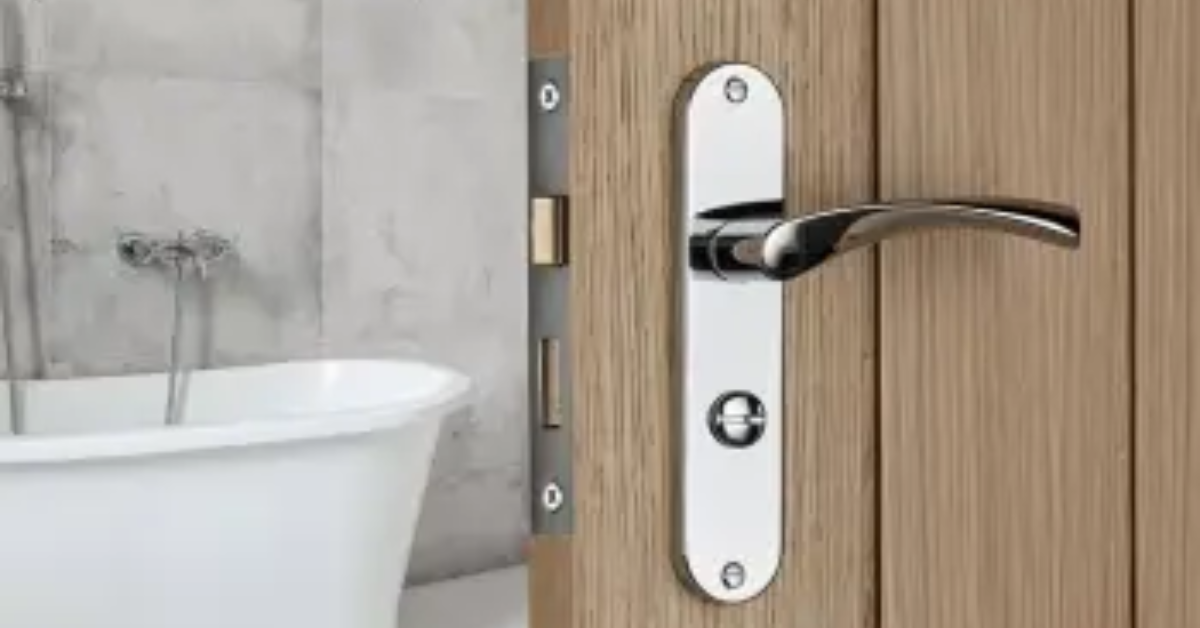
How to fit a bathroom door lock safely with pro measurement starts with one thing, measure first. If your bathroom lock feels stiff, won’t line up, or you are worried about drilling the wrong spot, this guide fixes that with clear steps. It also helps if you are fitting a new privacy thumbturn on a timber door or working around a uPVC door lock mechanism where alignment and spindle position matter.
At Kingdom Locksmith, we help homeowners across the UK with bathroom locks, uPVC door lock mechanism faults, and fast emergency callouts when a door will not secure. Our tips help you do it right the first time, or know when to call a professional.
In this article you will learn how to measure backset and case size, mark the centre line, drill and chisel neatly, fit the faceplate and keep, and test the mechanism so it turns without scraping.
How To Fit A Bathroom Door Lock In 7 Steps
Ever marked a door, drilled once, then realised the thumbturn sits 5mm too high and the bolt scrapes the keep? I see that mistake a lot on real callouts. The fix is simple, measure first, then drill and chisel with control.
In most UK homes, a bathroom privacy lock is a mortice bathroom lock case paired with a thumbturn and release. The common case sizes you will see are 64mm or 76mm, and they typically match standard backsets (often 44mm for 64mm and 57mm for 76mm style cases).
If you are working on a uPVC door lock mechanism, the principle is the same, but alignment matters even more. At Kingdom Locksmith, we fit and repair bathroom locks across the UK. Our goal here is to help you get a smooth privacy lock install, without damaging the door, frame, or lock case.
The 30-second checklist before you drill
- Confirm the lock type: mortice bathroom lock plus thumbturn and release, or a simple bathroom bolt.
- Check door construction: solid timber is easiest. The hollow core needs extra care and correct fixings.
- Pick the right size: 64mm or 76mm lock case, then confirm the backset matches your handle position.
- Mark a centre line: draw a straight centre line on the door edge and transfer it to both faces.
- Confirm the keep position: close the door and lightly mark where the bolt will land on the frame, so you do not guess later.
- Safety check: if this is a fire door in a building with common parts, do not swap hardware casually, fire door rules can apply.
- Quality check: locks and latches are commonly assessed against standards like BS EN 12209 for durability and performance, so buy decent hardware, it lasts longer.
The 7-step overview
- Choose the height and mark it: Pick a comfortable handle height, mark it on the door edge, then square the marks across both sides.
- Mark the lock case depth and backset: Hold the lock case against the door edge, mark the case height, and mark the spindle centre position.
- Drill the mortice pocket door recess: Drill a series of holes to depth inside your outline, keep the drill straight, use tape on the bit as a depth stop.
- Chisel the pocket clean: Chisel out the waste between holes so the lock body slides in snug, without forcing.
- Chisel the faceplate recess: Trace the faceplate on the door edge, then chisel a shallow recess so the faceplate sits flush.
- Drill the spindle and thumbturn holes: Drill from both sides to avoid breakout, then fit the thumbturn and handles, tighten evenly.
- Fit the keep and test the lock: Close the door, mark the bolt position on the frame, fit the keep, then test. If it binds, adjust the keep position rather than forcing the bolt.
What Bathroom Door Lock Are You Fitting
The quickest way to avoid a bad fit is to identify the lock type first. On jobs around the UK, we often get called after someone buys the right-looking handle set, but the wrong lock case size or the wrong privacy hardware for the door. At Kingdom Locksmith, we see the same pattern; most issues come down to measurement and choosing the correct setup before drilling.
Thumbturn and release, best for most UK bathrooms
If you want simple privacy with safe emergency access, a thumbturn and release is usually the best choice for UK bathrooms. The thumbturn sits inside the bathroom and the outside typically has an emergency coin release, so someone can open the door in an emergency without breaking it. Choose thumbturn and release when:
- You want a clean, modern look with a privacy function.
- You want an emergency access option from outside (coin slot release).
- You are pairing it with a bathroom mortice lock or privacy lock case.
Mortice bathroom lock case, for lever handles and a bolt
A mortice bathroom lock case is the part that sits inside the door edge. It usually includes a latch (for the handle) and a deadbolt (for privacy). This is the most common “proper” bathroom privacy lock setup for timber internal doors. Why it matters:
- It keeps the bolt strong and neat because it is housed inside the door.
- It works well with lever handles plus a thumbturn.
- It gives a more solid feel than surface bolts on many doors.
Sizing tip that saves mistakes:
If you already have handles fitted, your lock case choice is mostly decided by measurement. A 64mm case commonly aligns with an around 44mm backset, a 76mm case commonly aligns with an around 57mm backset. If you choose the wrong one, the spindle and thumbturn holes can end up awkwardly placed.
Bathroom bolt and indicator bolt, when privacy needs a visual cue
A bathroom bolt is a simple privacy solution, often fitted on the inside only. An indicator bolt adds a clear “vacant/engaged” display, which is popular in offices, salons, cafes, clinics, and HMOs where you want a quick occupancy signal.
Choose an indicator bolt when:
- You need a visible “vacant/engaged” sign for shared toilets.
- You want a fast install on a thin or partition style door.
- You want a simple, surface mounted option in commercial settings.
Pro Measurement Guide, Backset, Case Size, Spindle, Door Thickness
We still remember a Coventry callout where the customer had done everything “right”, neat chisels, tidy screws, but the thumbturn felt stiff and the bolt scraped every time. The cause was not the lock. It was the measurement. The keep was a few millimetres off and the lock case size did not match the backset. If you want a smooth bathroom privacy lock installation, measurement is the skill that wins. Once backset, case size, spindle, and door thickness are correct, fitting becomes predictable. It also helps you avoid the most common DIY problem, drilling a perfect hole in the wrong place.
Backset explained, why 64mm and 76mm are common
Backset is the distance from the door edge to the centre of the handle spindle, and it determines where the handle and thumbturn sit. In UK internal doors, bathroom mortice locks are commonly sold in 64mm and 76mm case sizes because they match common backsets and typical lever handle layouts:
- The 64mm case often pairs with a 44mm backset (to the spindle centre).
- The 76mm case often pairs with a 57mm backset (to the spindle centre).
How to measure backset in 20 seconds
- Open the door.
- Measure from the door edge to the centre of the handle spindle hole.
- Match your lock case size to that measurement (do not guess).
Case size and forend plate, how to match the lock body
The case size is the depth of the lock body that sits inside the door. The forend plate (also called faceplate) is the metal strip you see on the door edge once the lock is fitted. To match a new bathroom lock to an existing cutout, measure these before buying:
- Case depth (64mm or 76mm are the common options).
- Forend length and width (so it covers the old outline neatly).
- Forend end shape (square or rounded ends), otherwise you will be chiselling extra to make it fit,
Spindle sizing, 8mm handle spindle and 5mm thumbturn spindle
Most UK bathroom lock setups use two different spindle sizes:
- 8mm x 8mm follower for the lever handle spindle.
- 5mm x 5mm follower for the bathroom thumbturn spindle (turn and release).
Marking the centre line for straight drilling
This is the step that makes your drilling look professional.
How to mark a centre line that stays true
- Measure the door thickness. Divide by two.
- On the door edge, mark that halfway point in a few places.
- Use a square to draw a straight centre line along the door edge.
- Transfer that line onto both faces of the door where the lock and thumbturn will sit.
Two pro tips that prevent messy holes
- Use masking tape where you will drill. Mark on the tape. It reduces tear-out and keeps pencil lines clear.
- Drill from both sides for handle and thumbturn holes. Meet in the middle. This massively reduces breakout on the face of the door.
If you are in the UK and you want the fastest, least stressful path, Our Kingdom Locksmith team can measure, fit, align the keep, and test the privacy bolt properly, especially if the frame is slightly out or the door has moved with seasons.
Step By Step: How To Fit A Bathroom Door Lock Safely
We have been to plenty of UK jobs where someone did a beautiful chisel recess, then the lock still felt “gritty” when the door closed. Nearly every time, it was not the lock, it was measurement or keep alignment. Follow the steps below and you will get a clean fit, smooth turning thumbturn, and a bolt that lands perfectly in the keep. A quick note before you start, most UK bathroom mortice locks come in common case sizes like 64mm (44mm backset) and 76mm (57mm backset), and many have an 8mm follower for the handle spindle plus a 5mm follower for the bathroom turn. Check your product spec before drilling.
If you are unsure, or you are fitting into a door that must meet building safety rules (for example certain shared building fire doors), it is safer to get a professional to confirm compliant hardware. Our Kingdom Locksmith team can do that quickly on site across the UK.
Step 1: Choose the lock height and mark both sides
- Pick a comfortable height for the handle, then keep the thumbturn above or aligned depending on your furniture set.
- Put masking tape where you will mark, it keeps pencil lines visible and reduces splintering around drill holes.
- Use a square to draw a clean line across the door face from the edge marks.
- Mark the centre line on the door edge (half the door thickness), this is your accuracy line for drilling and chiselling.
Step 2: drill the mortice pocket to the correct depth
This is where most damage happens, so go slow.
- Hold the lock case against the door edge and trace the lock body height and the faceplate.
- Measure the lock case depth, then wrap tape around your drill bit as a depth stop.
- Drill a row of holes inside your outline, keeping the drill straight.
- Do not drill outside your pencil lines, it makes the mortice loose and the lock can rattle.
Step 3: Chisel the faceplate recess so it sits flush
A flush faceplate is what makes the job look professional.
- Slide the lock into the pocket and trace around the faceplate.
- Score the outline lightly with a sharp chisel to reduce tear out.
- Chisel a shallow recess so the faceplate sits level with the door edge, not proud and not sunk.
- Test fit again, do not over-chisel. You want a snug, square fit.
Step 4: Drill the handle and thumbturn holes accurately
This step decides whether the thumbturn feels smooth or awkward.
- Use the lock case to locate the spindle centres. Many UK sets use 8mm for the handle spindle and 5mm for the bathroom turn.
- Drill pilot holes first.
- Drill halfway from one side, then finish from the other side to prevent breakout.
- Dry fit the spindle, thumbturn, and handle, check the turn and throw the bolt cleanly.
If the thumbturn is stiff at this stage, stop and check you are not forcing the spindle at an angle.
Step 5: Fix the lock case and test the bolt movement
- Screw the lock case into the door edge using the faceplate holes.
- Fit the handle and thumbturn furniture, then tighten gradually and evenly.
- With the door still open, test:
- handle retracts latch smoothly
- thumbturn throws bolt fully
- bolt retracts fully without sticking.
Step 6: Align and fit the keep and strike plate
This is the step that decides whether it locks smoothly when closed.
- Close the door gently and mark where the latch and bolt touch the frame.
- Position the keep so the bolt lands centrally, not rubbing top or bottom.
- Drill pilot holes, then screw the keep in place.
- Test closing and locking. If it catches, adjust the keep position before enlarging holes.
Step 7: Tighten, test, and fine tune for smooth locking
Do a final quality check like a locksmith would.
- Open and close the door 10 times. Lock and unlock each time.
- If the bolt scrapes, move the keep slightly or deepen the keep recess, do not force the thumbturn.
- If the handle feels loose, check the through-bolts or screws, and confirm the spindle length suits the door thickness.
- Add a tiny amount of suitable lubricant to moving parts if needed, avoid soaking the door edge.
At Kingdom Locksmith, We fit bathroom locks, align keeps, and solve binding issues quickly across the UK, with clean finishing and parts that match the door and usage.
Fix Common Problems After Fitting
If we had to pick one sentence from real callouts, it would be this, “It works perfectly with the door open, then jams when I close it.” That usually means the lock is fine and the door, keep, or alignment is not. The good news is most bathroom privacy lock issues can be fixed with small, careful adjustments, not brute force. At Kingdom Locksmith, We see these four faults most often on UK internal doors, and occasionally on doors with uPVC door lock mechanism style alignment issues too. Here is how to diagnose and fix them safely.
The lock works when open but not when closed
This nearly always points to misalignment between the latch or bolt and the keep on the frame. Fast diagnosis:
- Lock the door with it open. If the thumbturn throws the bolt smoothly, the lock case is probably OK.
- Close the door slowly and watch where the bolt meets the keep. If it hits the edge, it is alignment, not a “bad lock”.
Thumbturn is stiff or does not fully throw the bolt
A stiff thumbturn is usually one of three things: friction, binding from over-tightening, or internal debris.
What to check first
- Are the roses over-tightened? If you crank the screws down, the spindle can bind and the thumbturn feels heavy.
- Is the spindle straight and correct size? Most bathroom sets use an 8mm handle spindle and a 5mm thumbturn spindle,a mismatched or angled spindle creates resistance.
- Is there debris or wear inside the mechanism? Dirt and gradual misalignment are common causes noted in thumbturn problem guides.
Bolt hits the keep, how to adjust without weakening the frame
This is where people accidentally turn a small alignment issue into a messy frame repair. Safe adjustment order:
- Micro-move the keep
- Loosen screws, nudge the keep 1 to 2mm, re-tighten, retest.
- Deepen the keep pocket, not the frame edge
- Many fitting guides recommend recessing the strike plate flush and creating enough pocket depth for latch and deadbolt travel, so the door closes smoothly.
- Use shims if the bolt is barely catching
- If the keep is too far from the bolt, a thin shim behind the keep can bring it closer without widening the timber cutout.
Loose handles or wobbling thumbturn,
If the handle droops or the thumbturn wobbles, it is almost always fast to fix. Quick checks:
- Tighten visible fixing screws on the roses.
- Look for a grub screw (small set screw) on the lever or thumbturn collar, tighten with an Allen key.
- Confirm the spindle is the right length, too short can cause movement.
If a grub screw keeps loosening
- A tiny amount of removable threadlocker is a common practical fix recommended in DIY communities for repeated loosening.
If screws no longer bite
- Swap to slightly longer screws, or use suitable timber repair methods, then refit. If the door is hollow core, you may need specialist fixings.
Upvc Door Lock Mechanism Note: What Changes On Upvc Doors
If you have ever fitted a bathroom lock on a timber door, then tried something similar on a uPVC door, it can feel like a different world. I have been to plenty of UK callouts where someone assumed the lock was “broken”, but the real culprit was alignment, door drop, or the wrong part for a multipoint strip. The goal here is to help you spot what is different, measure correctly, and know when to stop DIY.
Why most uPVC bathroom doors use different setups than timber
Most uPVC doors in the UK, especially external doors, use a multipoint locking system (a long strip with hooks, rollers, or deadbolts). That is not the same as a simple mortice bathroom lock case you fit into a timber internal door. What changes on uPVC doors:
- The “lock” is often a full strip, with a gearbox in the middle and keeps on the frame. This makes alignment critical.
- Handles lift to engage hooks or rollers, then the key or thumbturn locks. If the door is slightly out, the lift feels heavy or impossible.
- Many lock issues are actually hinge or keep issues, not a failed mechanism.
This is why bathroom style thumbturn installs are normally aimed at internal timber doors, while uPVC doors are usually repaired by adjusting, replacing parts, or fitting like-for-like components.
When a uPVC door lock mechanism needs a locksmith, not DIY
Some jobs are not worth the risk, especially on uPVC doors where the wrong move can leave you unable to secure the property. Call a professional locksmith in the UK if:
- The handle will not lift at all, even after basic alignment checks.
- The key turns but the door still will not secure, or it spins without engaging.
- The gearbox feels gritty, jams, or makes crunching noises.
- The door is your main external exit and you cannot afford trial and error.
A good rule, if the problem involves the multipoint strip, gearbox, or repeated alignment failure, it is usually faster and safer to get a locksmith to diagnose it properly.
Safety And Emergency Access: What Uk Homes Should Consider
Bathroom privacy is important, but so is emergency access. In real homes, kids, elderly relatives, or medical situations happen. Your lock choice and fitting method should support privacy and allow safe entry if needed.
Outside emergency release, coin slot or release key
Most UK bathroom thumbturn sets are designed with an inside thumbturn and an outside emergency release, often a coin slot. That lets someone unlock the bathroom from outside in an emergency without breaking the door. Practical fitting tips:
- Test the emergency release after fitting, do not assume it works.
- Keep a coin or flat tool accessible, not locked away.
- Make sure the thumbturn throws the bolt fully with the door closed, then confirm the outside release retracts it.
At Kingdom Locksmith, We recommend emergency release bathroom furniture for most UK households, especially where children or vulnerable adults may need help.
If the door is a fire door or in a shared building, do this first
If your door is part of a building with common parts (for example flats with shared corridors and stairwells), fire door duties can apply. Government guidance linked to the Fire Safety (England) Regulations 2022 explains checks and responsibilities for fire doors in buildings with two or more domestic premises and common parts. Before changing hardware on a fire door:
- Confirm it is not a designated fire door, or check the building’s fire safety plan.
- Use like for like components where possible.
- If you are the responsible person or managing agent, follow the guidance for inspections and record keeping.
If you are unsure, get a locksmith to check the door and hardware properly, it is safer than accidentally compromising a rated door set.
When To Call A Locksmith In The Uk
Sometimes DIY is the smart move. Other times, it turns into the kind of job where one extra drill hole means a new door. I have seen it happen, a neat install attempt becomes a split jamb, a loose keep that will never hold, or a jammed uPVC door that will not secure.
Signs you will damage the door without specialist tools
Call a locksmith if any of these are true:
- Your door is uPVC with a multipoint lock and the handle will not lift, or it locks open but not closed. That is usually alignment, keeps, or the gearbox, and forcing it can worsen the fault.
- The door is hollow core and you need to cut a deep mortice pocket. It is easy to blow out the face or leave fixings with no grip.
- The lock case recess is already oversized or the faceplate will not sit flush. Packing and re-cutting neatly is hard without the right approach.
- The keep area is weak or split and screws are not biting. Enlarging the opening can weaken the frame further.
- The thumbturn is stiff even with the door open. That points to spindle, lock body, or binding that needs proper diagnosis.
- It might be a fire door or part of a shared building. Hardware changes can affect safety compliance, so it is better to get competent help.
- You are in an emergency and feel pressured by a “too cheap” quote. UK locksmith scams are a real issue, and rushed decisions can get expensive fast.
How Kingdom Locksmith can fit and align it properly
At Kingdom Locksmith, We handle bathroom lock installs and uPVC door lock mechanism faults with a simple priority, securing the door with the least damage. What you get with Our professional locksmith services:
- Fast response, often within 30 minutes depending on demand and area.
- Non-destructive entry first where possible, so you avoid unnecessary drilling.
- Correct measurement and alignment, lock case sizing, spindle setup, and keep positioning so it locks smoothly.
- Clear guarantees, including 90-day workmanship and 12-month parts warranty.
If your bathroom door lock still scrapes, binds, or refuses to lock when shut, it is usually quicker to let us align it properly than keep chasing millimetres.
FAQs
Question: Can I fit a bathroom lock to a hollow core door
Yes, but only if there is a solid lock block where the lock will sit. If you cut into a weak hollow section, the door can crack or screws may not hold. If the door feels flimsy, a locksmith fit is safer.
Question: What size bathroom lock do I need, 64mm or 76mm
Measure first. A 64mm case often matches a 44mm backset, and a 76mm case often matches about a 57mm backset. The safest option is to match the size of your existing lock if you are replacing it.
Question: What is backset and how do I measure it
Backset is the distance from the door edge to the centre of the handle spindle. Measure from the door edge straight to the middle of the spindle hole, then choose a lock that matches.
Question: Why does the lock bind after I fitted the keep
Most of the time the keep is slightly misaligned. If it locks smoothly with the door open but binds when closed, loosen the keep, shift it a little, then retest until it turns smoothly.
Question: Can I fit a bathroom lock on a uPVC door
Usually not like a timber door, because most uPVC doors use a multipoint mechanism. If it locks open but not closed, it is often alignment or mechanism wear, and a locksmith is the safest fix.