Door Lock Mechanism Repair: Safe Inspection Guide

A door lock mechanism can fail suddenly or become unreliable over time. A handle that does not return, a key that resists, a latch that stays retracted or a bolt that misses its keep is a symptom, not a complete diagnosis. The door, hardware and internal mechanism work as a system, and one problem can imitate another.
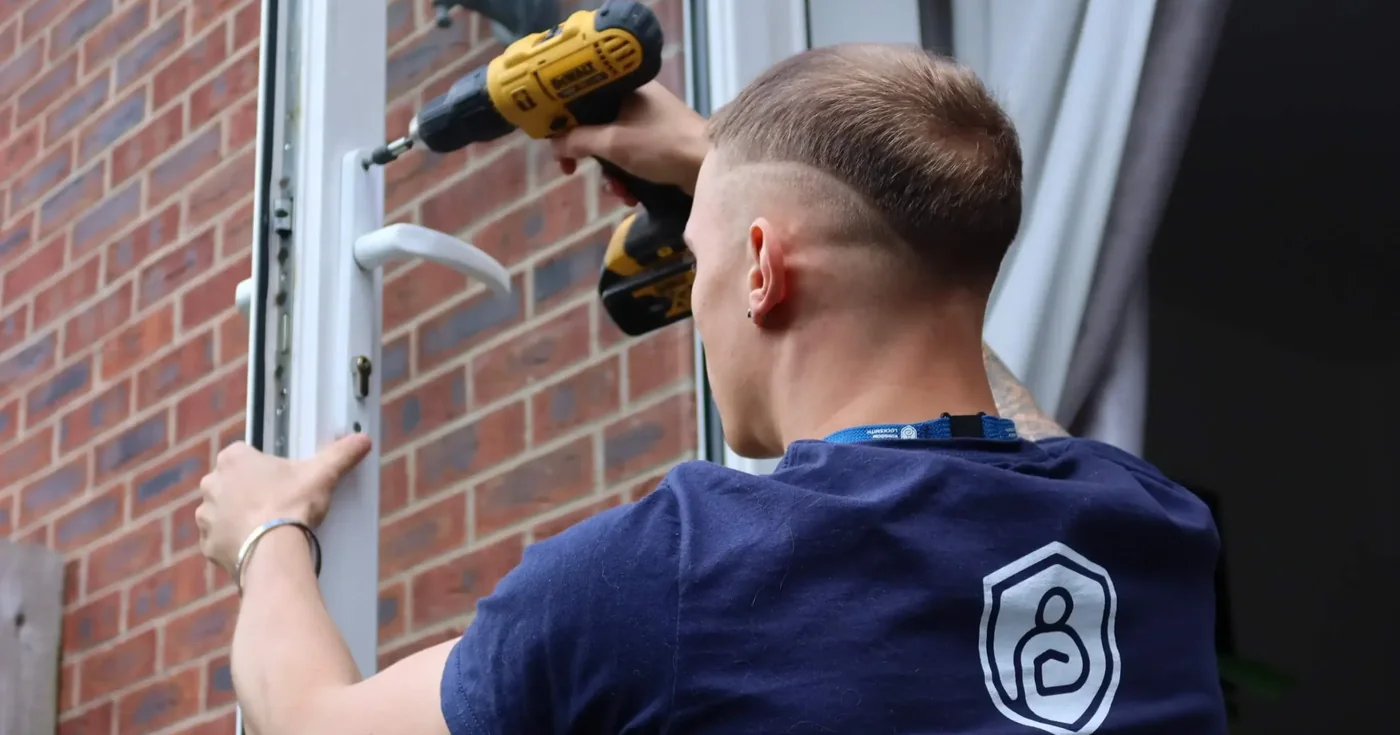
Safe DIY work is therefore limited to observation, checking accessible fixings where manufacturer instructions permit, and following exact maintenance guidance. Internal diagnosis, opening a lock case or replacing mechanism parts generally needs professional assessment. The door mechanism repair page provides background on that category of work.
Make the situation safe first
If the door is open, keep it open and prevent it from slamming. Do not close it to reproduce a fault. If it is locked shut, do not force the handle, twist the key with tools or drill the lock. If it cannot secure, control access to the property and arrange suitable temporary precautions without blocking a required escape route.
Stop using the door if hardware is loose enough to detach, the leaf or glazing appears unstable, or operation could trap someone. Fire doors, communal doors, powered access systems and emergency-exit hardware have additional requirements and should be assessed by a person competent for that system. If authorised access is the immediate problem, see the general scope of a locked-out service.
Identify the system before considering work
“Door lock mechanism” may refer to a mortice latch or deadlock, a tubular latch, a night latch, a cylinder-operated lock case, or a multipoint strip with a centre case and several locking points. Parts and procedures are not interchangeable.
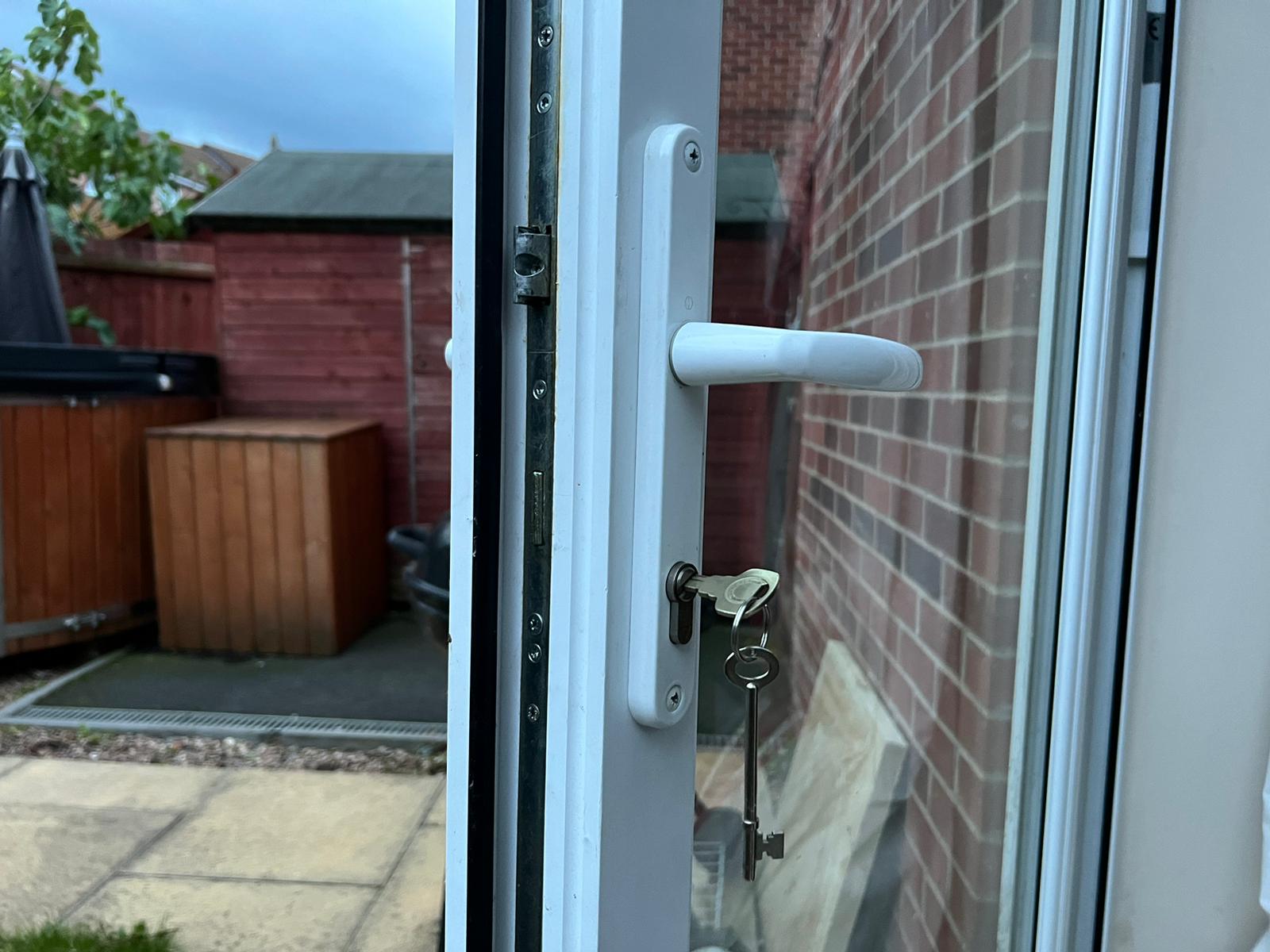
Record the door material, visible manufacturer markings, faceplate text, handle arrangement and what the key, thumbturn and handle each do. Take photographs without removing security hardware. Do not assume a euro cylinder is the whole mechanism: on many doors it operates a separate case and strip. Equally, not every mortice lock uses the same lever arrangement.
Safe external checks
With the door already open and supported, inspect for loose furniture, obvious rubbing marks, displaced keeps, hinge movement and damage around the lock edge. Use only normal operating force. If the key or handle begins to bind, stop.
Check the key for cracks, bending or marked wear and compare an authorised spare only if it enters normally. Do not file or reshape keys. Note whether the latch moves freely when gently pressed with a finger while the door is open, keeping fingers clear of pinch points. Do not probe the case or defeat any safety feature.
A difference between open-door and closed-door operation may suggest alignment or load, but it is not conclusive. Internal wear can coexist with a dropped door. Randomly moving hinges or keeps can reduce bolt engagement or affect sealing, security and fire performance. Door or frame defects may require a door specialist.
Maintenance is product-specific
Do not treat general lubrication as a repair. Identify the exact manufacturer and product, then follow only its current instructions for cleaning, lubrication and accessible screw checks. Use the stated product in the stated quantity and location. Do not soak components, mix lubricants, inject household oil into a keyway or spray unknown products around seals and finishes.
If instructions cannot be found, the mechanism is enclosed, or access requires removing load-bearing, security or fire-door components, stop. Internal cases can contain springs and small parts under tension. Incorrect disassembly or reassembly can cause immediate failure, prevent locking, or leave apparent engagement without dependable security.
What professional assessment may involve
A competent assessment can examine:
- key and cylinder condition;
- handle furniture, spindle, return springs and fixings;
- latch, deadbolt or multipoint operation;
- keeps, hinges, door position and frame condition;
- the lock case or centre case where safely accessible; and
- compatibility, dimensions and specification of any proposed part.
The finding may be adjustment outside the lock, replacement of compatible furniture or cylinder, repair supported by the manufacturer, or replacement of a case or larger assembly. A symptom alone does not identify which component is defective. General door lock repair guidance should not be read as confirmation that a particular repair is available or suitable.
Repair versus replacement
Repair can be reasonable where a fault is identifiable, compatible parts and instructions exist, and the resulting mechanism can operate reliably. Replacement may be more appropriate after fracture, severe wear or corrosion, repeated unreliable operation, unsupported modification, unavailable parts or a mismatch with the door’s requirements. Inspection must decide.
Any replacement should match handing, backset, centres, faceplate, spindle, cylinder and locking-point positions as applicable. Security ratings, escape needs, door certification and insurer requirements may affect selection. Do not enlarge door preparation or substitute a “near match” without competent evaluation. The lock replacement page explains the broader considerations.
After work, operation should be checked in a controlled way with the door open before carefully checking engagement with the frame. Fire, escape or access-control functions may require formal testing or documentation by the relevant competent person.
For professional assessment, use the contact page and include visible markings, door material, whether the door is open or shut, and a precise description of what changed.