
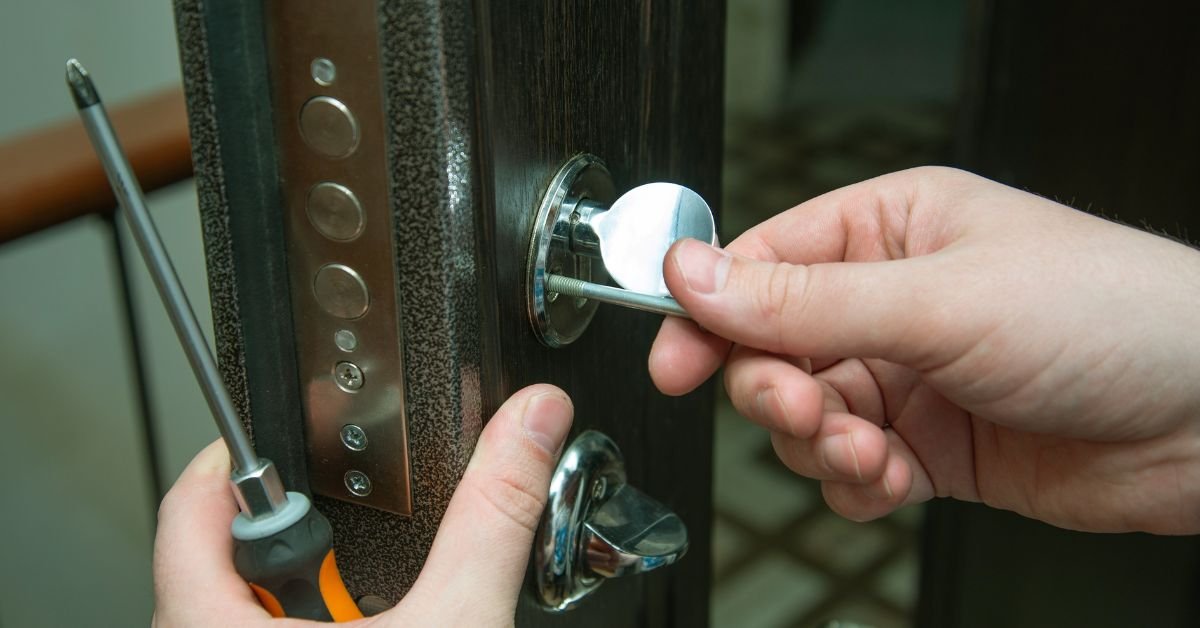
A Yale lock not catching is usually down to a set snib holding the bolt back, a misaligned keep, or a worn latch spring. Release the snib, line the bolt up with the keep, and lubricate the latch.
A night latch that will not catch leaves your door unsecured every time you pull it shut, but most causes are quick to fix. The faults are nearly always the snib, the alignment of the keep, or a tired spring. This guide explains why a night latch will not latch, how to adjust the keep, and when to repair or replace the lock.
Why won’t my night latch catch?
A yale lock not catching is usually caused by the bolt being unable to spring fully into the keep on the frame. The common causes are a set snib holding the bolt back, a misaligned or loose keep, a worn latch spring, dirt in the mechanism, or a door that no longer closes fully.
A night latch is a lock fitted to the inside face of the door, often called a Yale lock. Its sprung bolt catches automatically in a metal keep, also called a staple, on the frame when the door closes. The bolt has to spring out cleanly and meet the keep squarely, so anything that holds it back or knocks the alignment out stops it catching. When a yale lock not catching problem occurs, it is usually because something is preventing the bolt from extending fully or the keep is no longer correctly aligned with the latch.
| Cause | What is happening |
| Snib (button) set to hold | The snib holds the bolt back, so it cannot catch |
| Misaligned keep | The bolt hits the keep instead of sliding in |
| Worn latch spring | The bolt does not spring out fully to catch |
| Dirt or stiffness | The bolt sticks and does not return |
| Loose or bent keep | The keep has shifted out of line with the bolt |
| Door not closing fully | The bolt never reaches the keep |
Matching your symptom to the table points you to the right fix, from a simple snib release to a keep adjustment.
How to fix a night latch that won’t catch
You can fix most night latches in a few minutes. Check the snib is not holding the bolt back, lubricate the latch, then line the bolt up with the keep. Tighten loose screws and make sure the door closes fully. Replace the latch if the spring is worn.
What you will need:
- A dry graphite or silicone (PTFE) lubricant
- A screwdriver
- A pencil to mark the keep position
Then work through these steps:
- Check the snib. The small button or lever on the inside case can hold the bolt back. Release it so the bolt springs out freely.
- Test the bolt by hand. Press it in and let go. A healthy bolt springs straight back. A sluggish bolt points to dirt or a worn spring.
- Lubricate. Apply dry graphite or silicone to the bolt and into the case.
- Check alignment. Close the door slowly and watch where the bolt meets the keep. If it strikes the edge or sits too high or low, the keep needs adjusting.
- Tighten loose screws on the lock case and the keep.
- Check the door closes fully. A swollen or dropped door, or a tight weather seal, can stop the bolt reaching the keep.
“The first thing we check on a night latch that will not catch is the little snib button, because half the time it is simply holding the bolt back,” says a Kingdom Locksmith locksmith. “After that it is nearly always the keep being a few millimetres out of line, which is a quick adjustment.”
How to adjust the keep so the latch catches
Adjusting the keep lines the bolt up so it springs in cleanly. Loosen the two screws holding the keep to the frame, close the door, and shift the keep until the bolt sits opposite the opening. Mark the new position, retighten the screws, then test the latch.

Work through it in order:
- Mark where the bolt currently strikes the keep with a pencil.
- Loosen the keep screws so it can move.
- Close the door and note where the bolt naturally sits.
- Reposition the keep so the bolt lines up with the opening, then nip the screws up.
- Test by closing the door several times. The bolt should catch with a firm click.
- If the screw holes are worn, fill and redrill them, or pack behind the keep to bring it forward.
A keep set square to the bolt is what gives a night latch its reassuring click, so take the time to get it right.
When to repair or replace a night latch
Replace a night latch if the bolt stays sluggish after cleaning, the spring has weakened, or the case is worn. A night latch is inexpensive to replace, and a fault is a good moment to fit a deadlocking model for better security. Call a locksmith if you are locked out or unsure.
A worn spring will not push the bolt out with enough force to catch, and no amount of lubrication fixes a tired spring. A basic non-deadlocking night latch can also be slipped open from outside, so many home insurers will not accept one on its own. Fitting an auto-deadlocking night latch to British Standard BS3621, or adding a mortice deadlock, improves both security and your insurance position. A replacement night latch costs from around £15 to £40 for a basic unit, more for a BS3621 model, plus labour. Prices vary by lock and location, so ask first. If the latch is worn or you want it fitted to a security standard, a professional night latch repair can replace it and check the door at the same time. The Master Locksmiths Association recommends using an approved, vetted locksmith for the work.
Frequently asked questions
Question: Why is my Yale lock not catching when I close the door?
Answer: The snib is often set, holding the bolt back, or the keep is out of line so the bolt strikes the edge. Release the snib and check the alignment first. A worn spring is the next likely cause.
Question: How do I stop my night latch sticking?
Answer: Clean the bolt and lubricate it with dry graphite or a silicone spray, not oil. If the bolt still returns slowly after lubrication, the spring is worn and the latch needs replacing.
Question: My night latch won’t spring back, what is wrong?
Answer: A bolt that does not spring back points to dirt in the case or a worn spring. Lubricate it first. If it stays sluggish, replace the night latch, because a slow bolt will not catch reliably.
Question: How do I adjust a night latch keep?
Answer: Loosen the two keep screws, close the door to see where the bolt sits, then shift the keep so the bolt lines up with the opening. Retighten the screws and test that it catches.
Question: Is a Yale night latch secure enough on its own?
Answer: A basic non-deadlocking night latch can be slipped, so it is not ideal as a sole lock. Fit a deadlocking BS3621 model, or add a mortice deadlock, to meet most insurance requirements.
Getting your night latch catching again
A Yale lock not catching is nearly always a set snib, a keep a few millimetres out of line, or a tired latch spring, and each one is a quick fix. Sorting it matters, because a latch that will not catch leaves your door unsecured every time you close it. At Kingdom Locksmith, we adjust, repair, and replace night latches for homes and businesses across the UK, and we fit deadlocking, insurance-approved models that close with a reassuring click. A few minutes now keeps your door secure tonight. If the latch still will not catch, book a night latch repair and have it adjusted or upgraded properly.