
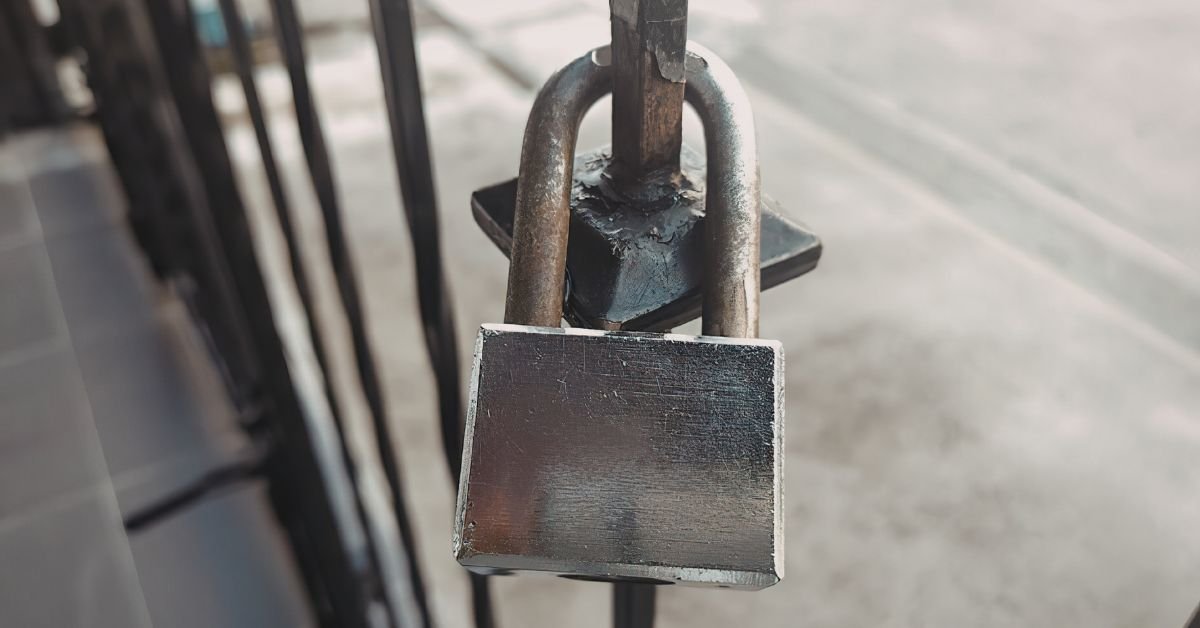
A padlock stuck won’t open is usually jammed by rust, dirt, or a worn mechanism stopping the shackle from releasing. Lubricate it, tap it gently, and work the key. Never force the key, because it can snap inside the lock.
A seized padlock is a common problem on sheds, gates, and outbuildings that face the weather. Most cases free up with a little lubricant and patience. The few that do not can be cut off safely once you know how. This guide explains how to free a stuck padlock, what to avoid, and when cutting it off is the right call.
Why won’t my padlock open?
A padlock will not open when the shackle cannot release from the body, or the key cannot turn the mechanism. The common causes are rust and corrosion, dirt inside the keyway, a dry mechanism, a worn or bent key, or a frozen lock in cold weather.
A padlock is a portable lock with a U-shaped shackle that springs open when the key turns the internal mechanism. The shackle, the keyway, and the locking pins all have to move freely. Outdoors, rain and grit work into all three, so corrosion is the usual reason a padlock seizes.
| Symptom | Likely cause |
| Key turns but shackle won’t release | Rusted or sticking shackle spring |
| Key won’t turn at all | Corrosion or dirt in the keyway |
| Key turns stiffly, then stops | Dry or worn internal mechanism |
| Lock seized after cold weather | Ice inside the mechanism |
| Spare key works, usual key does not | Worn or bent key |
Matching your symptom to the table shows whether a clean and lubricate will free it, or whether the padlock has reached the end of its life.
How do you free a stuck padlock?

You can free most stuck padlocks with lubricant, gentle taps, and patience. Spray a penetrating or dry lubricant into the keyway and around the shackle, tap the lock to spread it, then work the key gently. Press down on the shackle as you turn. Never force the key.
What you will need:
- A penetrating release spray, or dry graphite or silicone lubricant
- A small hammer or mallet
- A cloth and an old toothbrush
- A hairdryer, if the lock is frozen
Then work through these steps:
- Clean the keyway. Brush off surface rust and grit, and clear the keyhole.
- Apply lubricant. Spray a penetrating release into the keyhole and where the shackle meets the body. Let it soak for a few minutes.
- Tap the lock. Gently tap the body and the shackle with a mallet to help the lubricant work in and shock the mechanism free.
- Work the key. Insert the key and rock it gently while pressing down on the shackle, which takes tension off the locking pin.
- Warm a frozen lock. If ice is the cause, use a hairdryer on low or warm the key first.
- Repeat and clean. Reapply lubricant, work the key, then wipe away the loosened rust.
- Stop if it stays jammed. A padlock corroded solid may need cutting off.
“Pressing down on the shackle while you turn the key frees more stuck padlocks than anything else,” says a Kingdom Locksmith locksmith. “It takes the load off the locking pin. People force the key instead, snap it, and turn a £10 padlock into a cutting job.”
When should you cut a padlock off?
Cut a padlock off when a padlock stuck won’t open after lubricating, the key has snapped, or you have lost the key and the lock is worthless. Cutting is the practical last resort for a cheap, corroded padlock, but think twice on a high security lock, where a locksmith can often open it without damage.
For a standard padlock, bolt croppers cut through the shackle quickly, and an angle grinder handles a hardened shackle. Always wear eye protection and gloves, secure the lock so it cannot spin, and keep clear of the cutting line. A hardened or boron shackle resists bolt croppers, which is exactly what a Sold Secure rated padlock is designed to do.
If the padlock is securing something valuable, or it is a quality lock worth keeping, a locksmith can pick or decode many padlocks and save the lock. Cutting is final, so weigh the cost of the padlock against the value of saving it.
| Padlock type | Best removal method |
| Cheap brass or standard padlock | Bolt croppers on the shackle |
| Hardened or boron shackle | Angle grinder, with safety gear |
| High-security or Sold Secure lock | Call a locksmith to open it |
| Lock worth saving | Locksmith picks or decodes it |
Once a padlock is off, replacing it with a weather-resistant, rated lock prevents a repeat seizure.
When should you call a locksmith?
Call a locksmith if the padlock secures something valuable, the lock is high-security, or you would rather not cut it off. A skilled locksmith can often open a jammed padlock without destroying it, and can advise whether the lock is worth saving or replacing.
A padlock is usually cheap to replace, so the decision comes down to access and value. If you are locked out of a unit, a store, or anything where damage matters, professional padlock help is the safer route. The Master Locksmiths Association recommends using an approved, vetted locksmith for security hardware. Padlock work is quick, and prices vary by lock and location, so ask first.
Frequently asked questions
Question: Why won’t my padlock open with the key?
Answer: The shackle or the mechanism is jammed, usually by rust or dirt. Lubricate the keyway and shackle, tap the lock gently, then work the key while pressing down on the shackle. Avoid forcing the key.
Question: What is the best lubricant for a stuck padlock?
Answer: Use a penetrating release spray to free rust, then a dry graphite or silicone lubricant to maintain it. Avoid leaving wet oil inside, because it attracts dirt and gums up the mechanism.
Question: How do I free a rusty padlock?
Answer: Brush off the rust, soak the keyway and shackle with penetrating lubricant, tap the lock to work it in, then gently turn the key. Repeat until the shackle releases, then clean and re-lubricate.
Question: Can I cut a padlock off myself?
Answer: Yes, with bolt croppers for a standard shackle or an angle grinder for a hardened one. Wear eye protection and gloves. For a high-security or valuable lock, a locksmith can often open it without cutting.
Question: How do I stop my padlock seizing again?
Answer: Lubricate it with dry graphite or silicone a few times a year, fit a weatherproof or shuttered padlock outdoors, and keep a cover over it. A rated, weather-resistant lock lasts far longer outside.
Getting a stuck padlock open again
A padlock stuck won’t open is nearly always rust or dirt jamming the shackle, and lubricant, a few gentle taps, and pressure on the shackle free most of them. Knowing when to stop and cut it off saves you from snapping the key and making the job harder. At Kingdom Locksmith, we free, open, and replace jammed padlocks, and fit weather-resistant, rated locks for homes and businesses across the UK. Sort a sticking padlock before it seizes solid and leaves you locked out of your shed or gate. If the lock will not budge, get fast padlock help and have it opened safely.