
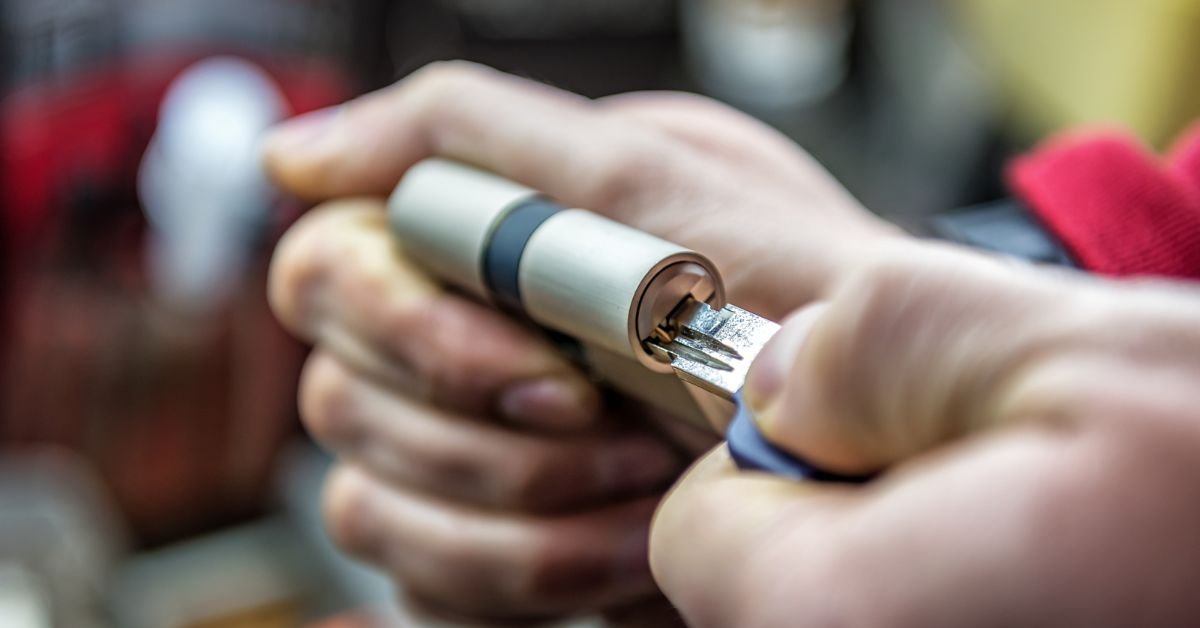
A loose lock cylinder wobbly is nearly always caused by a loose fixing screw on the edge of the door. Tightening that single screw fixes most cases in a couple of minutes. Do not ignore it, because a wobbly barrel wears the lock and weakens security.
A lock barrel should sit firm in the door with no play. When it wobbles or spins slightly, one small screw has usually worked loose. This is one of the easiest lock faults to fix yourself, but left alone it strains the mechanism and makes the door easier to attack. This guide shows why barrels loosen and how to tighten one safely.
Why does a lock barrel become loose or wobbly?

A lock barrel becomes loose when the fixing screw that holds it in the door works loose or strips. The common causes are the screw vibrating loose over time, a screw that is too short or wrong, wear inside the lock, or a barrel that was not fitted flush when installed.
A lock barrel, or cylinder, is the part that reads the key and drives the bolt. A single long fixing screw runs through the edge of the door, below the latch, into a threaded hole in the centre of the cylinder. That one screw is all that holds the barrel firmly in place, so when you have a loose lock cylinder wobbly in the door, the barrel moves.
| Cause | What is happening |
| Fixing screw vibrated loose | Daily use has worked the screw out |
| Wrong or short fixing screw | The screw does not grip the cylinder fully |
| Stripped screw thread | The screw no longer bites, so the barrel moves |
| Worn cylinder | Internal wear lets the barrel shift |
| Barrel fitted proud, not flush | A protruding cylinder wobbles and invites attack |
Matching your situation to the table shows whether a quick tighten will fix it or the cylinder needs attention.
Why does a wobbly lock barrel matter?
A wobbly lock barrel matters because it wears the lock faster and weakens your security. A loose cylinder makes the key harder to turn, can eventually jam the lock, and, on a euro cylinder, a barrel hat sticks out is far easier for an intruder to snap.
A loose barrel puts the internal parts out of line, so the pins and cam wear unevenly and the key starts to stick. Left long enough, the movement can cause the lock to fail. If you have a loose lock cylinder wobbly in the door, the security risk is greater, because a barrel that protrudes past the handle gives a burglar something to grip and snap.
“A wobbly barrel is usually one loose screw, but we still take it seriously,” says a Kingdom Locksmith locksmith. “If the cylinder is sticking out and loose, that is exactly what a snap attack targets, so we tighten it and check it sits flush.”
Sorting a loose barrel early protects both the lock and the door.
How do you tighten a loose lock barrel safely?
You tighten a loose lock barrel with the single fixing screw on the edge of the door. Open the door, find the screw below the latch, and turn it clockwise until the barrel sits firm. If the loose lock cylinder wobbly movement remains, do not overtighten, because too much force can bind the cylinder and stop the key turning.
What you will need:
- A screwdriver that fits the fixing screw, usually a Phillips or flat head
- A replacement fixing screw, in case the thread has stripped
- A dry graphite or silicone lubricant
Then work through these steps:
- Open the door and look at the edge, below the latch, for the long fixing screw.
- Check the barrel sits flush. If it sticks out, loosen the screw, push the cylinder level, then retighten.
- Turn the screw clockwise until the barrel is firm with no wobble.
- Test the key. It should turn smoothly. If it binds, back the screw off slightly.
- If the screw spins without tightening, the thread has stripped. Fit a new fixing screw of the correct length.
- Add a little dry lubricant to keep the key turning cleanly.
“On the tools, the fault we see most with a wobbly lock is simply a fixing screw that has vibrated loose over the years,” says a Kingdom Locksmith locksmith. If the barrel still moves after tightening, the cylinder or its housing may be worn, and correct lock fitting will secure it properly.
When should you call a locksmith?
Call a locksmith if the barrel still wobbles after tightening, the fixing screw thread has stripped, or the cylinder sticks out and you are worried about security. A barrel that will not sit firm, or one that protrudes, is a weak point that needs correcting before it wears out or is targeted.
A loose barrel is a small job, but a protruding or worn cylinder is worth a professional eye, because it affects security as well as function. If you have a loose lock cylinder wobbly after tightening, the Master Locksmiths Association recommends using an approved, vetted locksmith, who can refit the cylinder flush, replace a stripped screw, or fit a correctly sized anti-snap cylinder. Sorting it early keeps the job small.
Frequently asked questions
Why is my lock barrel loose?
The fixing screw on the edge of the door has worked loose or stripped. That single screw holds the barrel in place, so tightening it usually fixes the wobble. A worn cylinder can also cause movement.
How do I stop my lock cylinder wobbling?
Open the door, find the long fixing screw on the edge below the latch, and turn it clockwise until the barrel is firm. Do not overtighten. If the screw will not grip, replace it with the correct length.
Is a wobbly lock a security risk?
Yes, especially on a euro cylinder. A loose barrel wears the lock and, if it sticks out, is easier for a burglar to snap. Tighten it so it sits flush, and fit an anti-snap cylinder if it protrudes.
Can I overtighten a lock barrel?
Yes. Too much force can bind the cylinder so the key will not turn. Tighten the screw until the barrel is firm, then test the key. If it sticks, back the screw off slightly.
Why does my lock barrel stick out?
The cylinder is the wrong size for the door, or was fitted proud. A protruding barrel is a snap risk, so it should be measured and replaced with one that sits flush.
Keeping your lock barrel firm and secure
A loose or wobbly lock cylinder is nearly always one loose fixing screw, and tightening it takes a couple of minutes with a screwdriver. Acting quickly matters, because a wobbly barrel wears the lock, makes the key stick, and, if it protrudes, gives a burglar something to snap. At Kingdom Locksmith, we tighten, refit, and replace loose and protruding cylinders, and fit correctly sized anti-snap locks for homes and businesses across the UK. A firm, flush barrel keeps your door working and secure. If the barrel still moves after tightening, book proper lock fitting and have it secured the right way.