Emergency Locksmith Checklist for When You're Locked Out

The short version: stay calm, check every access point, avoid forcing entry, and only then call an emergency locksmith. Before any work begins, confirm who you are dealing with, how the pricing works and what happens if the lock needs replacing.
Being locked out of your home or business is more than an inconvenience. It is a stressful, vulnerable moment, and it can happen to anyone.
A clear checklist helps reduce rushed decisions during a lockout. The Kingdom Locksmith link is included as one contact option, but the checks below should be applied to any provider.
Use the steps to protect yourself, compare pricing and avoid unnecessary damage while arranging suitable help.
First Steps When You Realise You Are Locked Out
Before you pick up the phone, take a breath. It is easy to panic and miss an obvious solution. Work through these steps first to make sure you really are stuck.
- Check every single entrance. It sounds obvious, but back doors, side gates and conservatory windows are left unlocked more often than you would think. Walk the whole perimeter of the property.
- Think about spare keys. Did you give a set to a neighbour, a nearby friend or a family member? Even a twenty-minute drive is often cheaper than a professional call-out.
- Contact your landlord or building manager. If you rent a flat or live in a managed building, the caretaker or landlord may hold a master key. They might charge a small fee for their time, but it is a valid way back inside.
- Assess what is happening inside. Is a pan on the hob? Is the bath running? Are young children or pets alone in the house? If there is an immediate risk to life or property, this is no longer a standard lockout, it is a genuine emergency.
The Emergency Locksmith Selection Checklist
If you have exhausted the other options and need professional help, the next step is choosing who to call. Locksmithing in the UK is not a regulated trade, which means rogue traders do operate. Use this checklist to vet any company before you give them your address.
Are They Genuinely Local?
Plenty of companies present themselves as local when they are actually national call centres. Ask, "Where are you based right now?" If they cannot name a specific nearby landmark or neighbourhood, you are probably talking to a middleman who will add a commission to your bill.
Will They Give You a Firm Price?
Be wary of anyone who says "prices start from" a suspiciously low figure. That is a common tactic to get a foot in the door before the price balloons. Ask for a total cost that includes:
- The labour charge for gaining entry.
- The cost of replacement parts if the lock has to be drilled.
- VAT.
- Any out-of-hours or weekend premiums.
Do They Use Non-Destructive Entry?
This is a vital question. A skilled locksmith can open the vast majority of standard locks with picking or bypass tools. If the first suggestion is to drill the lock out, they are either inexperienced or trying to sell you a new lock you do not need.
Are the Locksmiths DBS Checked?
Whoever attends will have full access to your home and will see your security setup. Ask whether they have been through a Disclosure and Barring Service check, and only let someone work on your property if you are comfortable with the answer.
Understand Your Lock Type Before You Call
The first thing a locksmith will ask is what kind of lock you have. Describing it accurately gets you a more accurate quote and means the right tools arrive on the van. The most common UK lock types are below.
| Lock Type | Common Usage | Security Level |
|---|---|---|
| Mortice sashlock | Traditional wooden doors | High (look for 5-lever BS3621) |
| Yale / night latch | Front doors (top lock) | Medium (often paired with a mortice) |
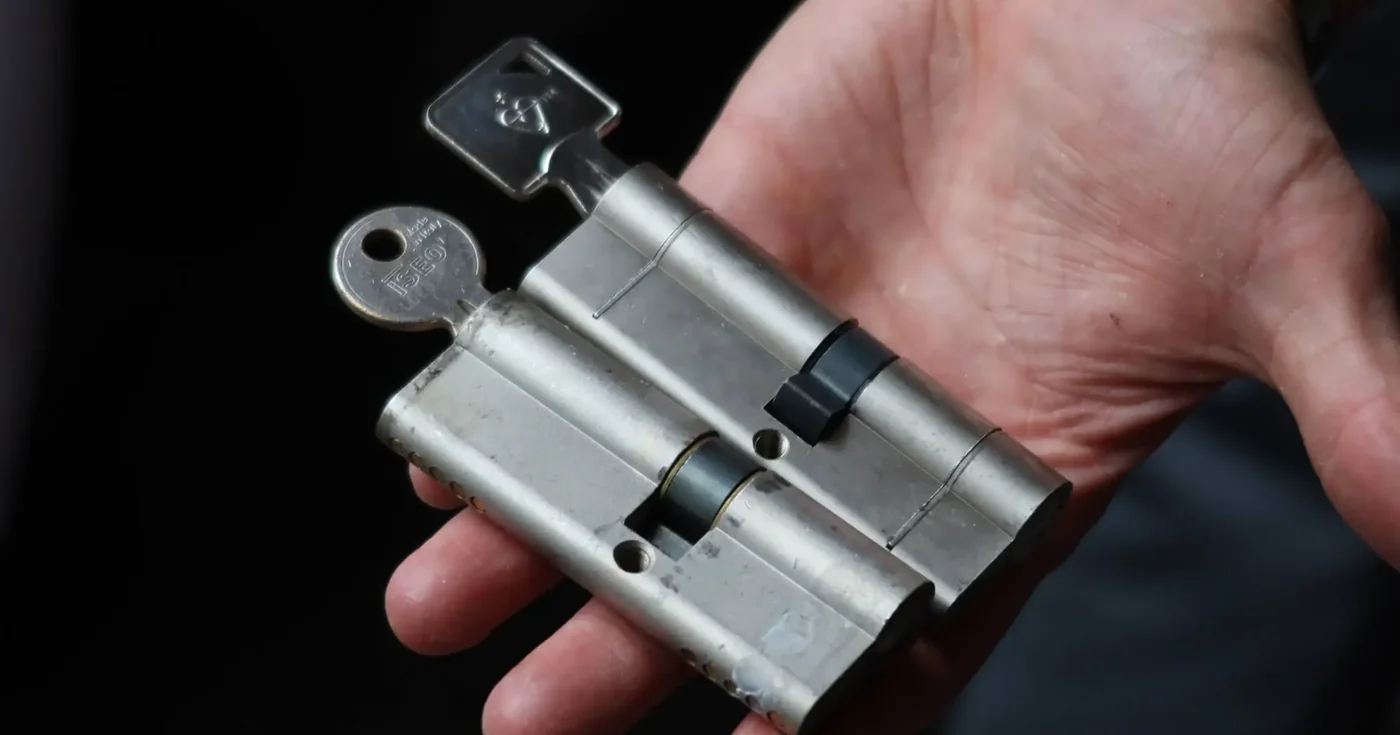
| Euro cylinder | uPVC and composite doors | Variable (look for anti-snap) |
| Multi-point lock | uPVC and patio doors | High (locked by lifting the handle) |
| Rim cylinder | Older wooden doors | Basic (usually the circular keyhole) |
If you are not sure, look at the edge of the door while it is open (if you can) or at the shape of the keyhole. A long, thin key usually belongs to a mortice lock, while a smaller, flat, jagged key usually belongs to a cylinder lock.
What Information Should You Have Ready?
To keep things smooth, have these details ready when you ring an emergency locksmith. It helps whoever attends to prepare for your particular door.
- Your exact location. Do not just give the street name. Provide the postcode and any directions if the property is hard to find or a new build that sat-navs miss.
- The door type. Wood, uPVC, metal or composite? uPVC doors have complex internal mechanisms that need different expertise from a standard wooden door.
- The problem. Is the key lost? Snapped in the lock? Or does the key turn while the door stays shut? A failed mechanism is a different job from a lost key.
- Identification. A professional will ask you to prove you live at the address when they arrive. Have a driving licence, a utility bill or a banking app ready to show you have the right to enter.
How to Spot a Rogue Locksmith: Red Flags to Watch For
Most locksmiths are honest, but a minority take advantage of people in distress. Watch for these warning signs:
- Unmarked vans. Some sole traders use plain vans, but a completely unmarked vehicle with no contact details can point to a fly-by-night operator.
- Refusal to give any price. If they insist on seeing the job before naming any figure at all, they may be planning to overcharge you once you feel committed.
- No identification. A legitimate locksmith should be happy to show ID or trade credentials on arrival.
- Aggressive tactics. If they start drilling immediately without trying to pick the lock, or push hard to replace your entire setup on the spot, you are entitled to tell them to stop.
Safety Tips While You Wait for Your Locksmith
Waiting outside your own home can feel awkward, and late at night it can feel unsafe. Look after yourself while help is on the way.
- Stay in a lit area. After dark, wait under a streetlight or near a busy road where you are visible.
- Wait in your car. If you can get into your vehicle, sit inside with the doors locked until the locksmith arrives.
- Tell a friend. Send a message to a friend or family member so someone knows where you are and who you are waiting for.
- Save your phone battery. If it is running low, limit your usage so the locksmith can ring you when they are outside.
What a Good Emergency Locksmith Will Do
When you hire a professional locksmith, you are not just paying for an open door. You are paying for a standard of ethics and technical skill, and there is a recognisable pattern to how a good one works. Here is what you should expect on arrival:
- Identity checks before entry. Before touching the lock, a professional will ask for proof that you live or work at the property. A photo ID with the address, a digital utility bill or a neighbour vouching for you all work. It is a critical safeguard against letting the wrong person in.
- Non-destructive entry first. The first aim is to get you inside without damaging the door or the existing lock, using picks, bypass shims and letterbox tools. In most cases the original lock survives intact and fully functional.
- Repair or replacement only where needed. The drill is a last resort. If a lock has physically failed, or is a high-security model that cannot be picked, you should be told exactly why destructive entry is necessary. A good locksmith will not replace a healthy lock just to pad the bill.
- A clear explanation at the end. Once the door is open, you should be walked through what was wrong, shown how any new parts work and left with the door operating smoothly. You should come away knowing more about your own security than before.
How to Prevent Future Lockouts: A Proactive Plan
Once you are back inside, the goal is to make sure this never happens again. A few simple habits go a long way.
- The trusted neighbour strategy. Give a spare set of keys to someone you trust who lives within walking distance.
- Key safes. Consider a high-quality, police-approved key safe. Models such as the Supra C500 are tested against physical attack.
- Smart lock upgrades. Modern smart locks open with a PIN, a fingerprint or your phone, which removes the lost-keys problem entirely.
- Regular maintenance. If a lock feels stiff or the handle is hard to lift, do not ignore it. These are early warnings that the mechanism is failing, and a service now is cheaper than an emergency call later.
- Duplicate keys. Keep at least three sets of keys for every lock in the house.
Why Professional Locksmith Services Matter
It is tempting to climb through a window or try a bank card on the latch, but modern UK doors are built to resist exactly those tricks. Forcing entry usually ends in broken glass or a warped frame, which costs far more to put right than a locksmith visit.
A professional keeps the structure of your home intact. There is an insurance angle too: damage your own locks and your insurer may refuse related claims. Using a locksmith who provides a proper invoice, and asking what warranty applies to any parts fitted, is the sensible way to protect your home.
Questions to Ask Any Locksmith When You Are Locked Out
Before booking any provider, including Kingdom Locksmith, ask how the particular lockout would be handled:
- Which entry methods are suitable for the lock and when drilling might be necessary
- Whether anyone is available for the address and the estimated attendance time
- What the quoted figure includes, including parts and VAT
- What evidence of authority to enter the property the provider may require
- Why a replacement would be needed and which lock would be fitted
- Which British Standard or anti-snap options suit the particular door
- Whether the provider accepts the specific type of premises and lock involved
- What checks should be completed before the door is closed and locked again
Final Thoughts on Dealing with a Lockout
Being locked out tests your patience, but it does not have to be a nightmare. Check your surroundings, vet your locksmith and understand your locks, and you stay in control of the situation.
For general information on emergency openings, repairs, alignment and security options, see Kingdom Locksmith and compare the details with another vetted provider.
If help is needed, use the contact page or call +44 (333) 006 9691 to ask about current availability and the specific job.
Frequently Asked Questions About Lockouts
Will a locksmith damage my door?
A good locksmith aims for non-destructive entry, and most standard locks can be opened without a mark on the door. If the lock is high-security or has physically failed, drilling may be necessary, and that should always be explained to you first.
How long does it take to get back inside?
Once the locksmith is at the door, a standard lockout often takes around 10 to 20 minutes to resolve. Complex multi-point locks on uPVC doors can take longer.
Do I need to replace the lock if I lost my keys?
If there is any chance the lost keys could be linked to your address (for example, they were in a bag with your ID), a lock change is strongly recommended. Your security is only as good as the number of people who hold your keys.
Can a locksmith open a door from the inside?
Yes. Locksmiths carry tools that can operate handles and thumbturns through a letterbox or other small gaps, which often makes this kind of entry straightforward.