How to Adjust a Multipoint Door Lock for Smooth Closing

When a multipoint door lock stops closing smoothly, the cause is usually door alignment, hinge position or locking point compression rather than a broken mechanism. If the door feels stiff, needs a shove to close, or the handle takes real effort to lift, the lock often needs adjustment, not replacement.
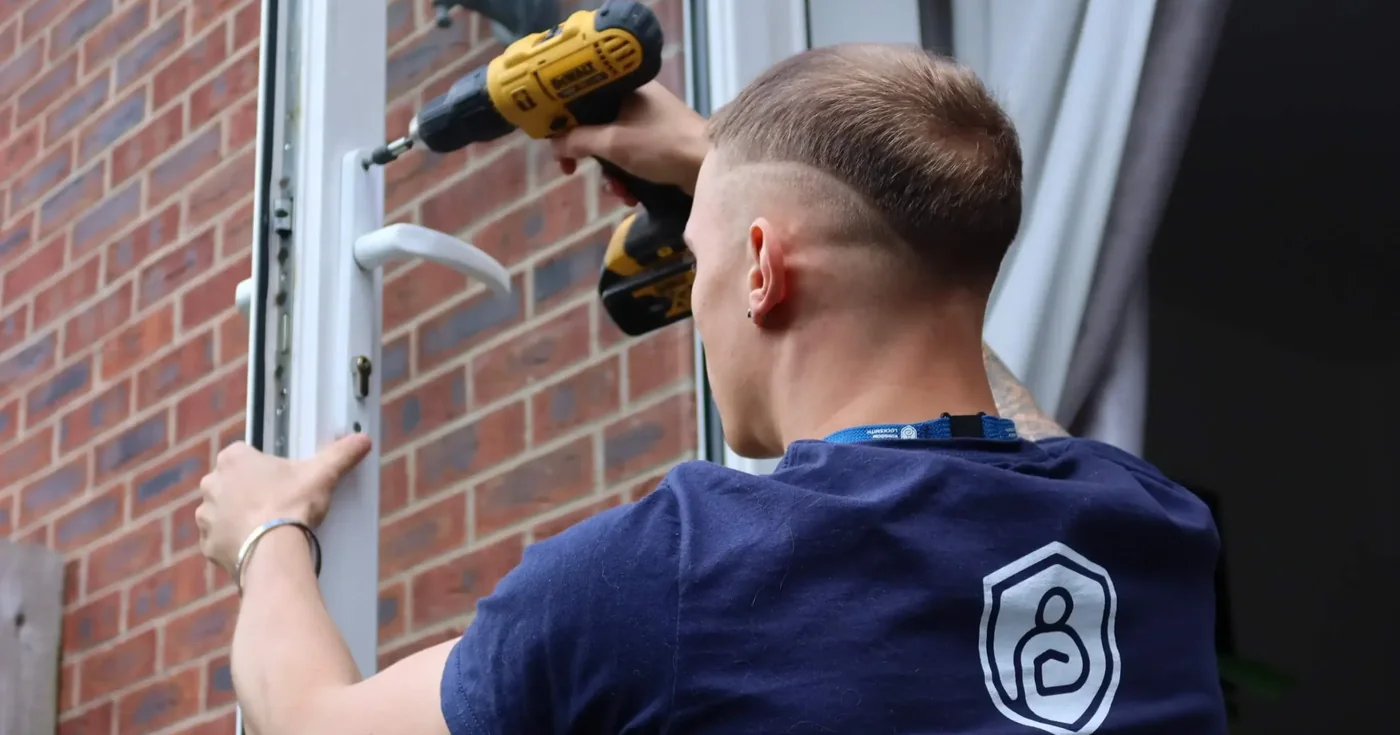
Doors can drop slightly over time through weather, everyday use and seal pressure, pulling rollers, hooks and keeps out of line. This Kingdom Locksmith guide sets out a generic diagnostic sequence; smooth closing may be restored with careful adjustment and basic tools such as an Allen key and screwdriver.
This guide explains what adjusting a multipoint lock actually involves, when it works and when it will not. You will learn how to identify the real cause, adjust the hinges, realign the keeps and fine tune the locking points, plus the warning signs that mean it is time to put the tools down and call a professional.
What a Multipoint Door Lock Is and How It Works
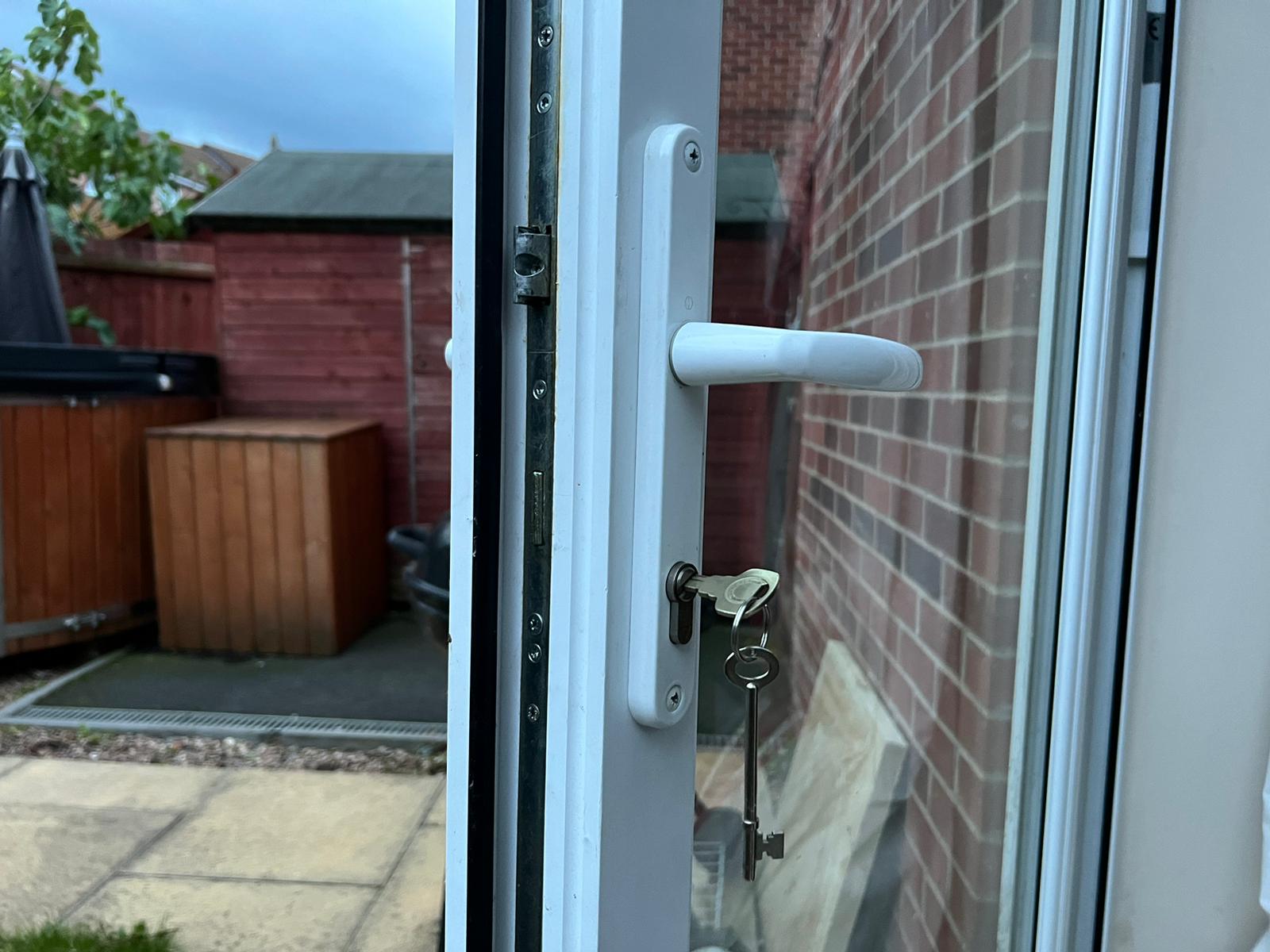
If you have ever lifted a door handle and felt several locking points engage at once, you already use a multipoint lock. Understanding how it works makes adjustment easier and safer. Instead of relying on a single latch, a multipoint lock secures the door at several points along the frame. That spreads pressure evenly, improves security and helps the door seal tightly against draughts and noise, which is why it is now standard on most modern doors.
How a multipoint locking system secures your door
When you lift the handle, the multipoint locking system moves several components at once, and each one has a specific job.
- Central gearbox: the heart of the system. It connects the handle to every locking point and controls their movement.
- Locking points along the door edge: hooks, rollers or mushroom cams that slide into metal keeps fixed to the frame as the handle lifts.
- Compression control: rollers and cams pull the door tight against the seals. Too much compression makes the handle stiff, too little causes draughts and loose locking.
- Key locking: once the handle is fully lifted, turning the key deadlocks the gearbox and holds every point in place.
A common cause of stiffness is a slight door drop or uneven compression. Adjustment therefore starts with alignment rather than the lock itself; the residential locksmith page provides related service information.
Doors that commonly use multipoint locks in the UK
Multipoint locks are fitted widely in the UK because they meet modern security and insulation standards. You will find them on four main door types.
- uPVC doors: the most common type. Almost every uPVC front or back door uses a multipoint lock, which is why uPVC door repair and adjustment are such frequent jobs.
- Composite doors: heavier doors that rely on multipoint locking for strength and weather resistance. Correct adjustment matters here because the extra weight accelerates wear.
- Aluminium doors: common on modern homes and commercial buildings. The locking systems are similar but the tolerances are tighter, so adjustments need to be precise.
- Patio and French doors: multi panel doors usually run a slim multipoint mechanism the full height of the door.
In short, a multipoint lock secures the door at several points through a central gearbox. When it plays up, the fault is usually alignment or compression rather than outright failure, and knowing that shapes how you approach the fix.
Why Multipoint Door Locks Stop Closing Smoothly
If a door used to close quietly and now needs force, something has changed. Doors rarely fail suddenly, they drift. Most multipoint problems build up gradually through daily use, weather and pressure on the frame, and understanding the cause makes any adjustment safer and more effective.
Door misalignment from daily use and weather
Every open and close puts small forces through the hinges and frame, and over months and years that adds up. UK weather does the rest. Rain, wind and temperature swings make doors and frames expand and contract, and uPVC and composite doors are especially sensitive to it. A drop of just a few millimetres is enough to throw the locking points out of line.
Typical signs of a dropped door include:
- The door rubbing at the top or bottom corner
- A handle that lifts smoothly with the door open but stiffens once it is closed
- Locking points that just miss their keeps
Misalignment is the most common fault behind a stiff multipoint lock, and as our guide to adjusting a uPVC door locking mechanism explains, it is usually fixable without replacing any parts.
Seal compression and seasonal movement
Modern doors are designed to seal tightly for insulation and security, and trouble starts when that compression becomes uneven. In cold months the seals stiffen and the frame contracts. In warm weather everything expands. That seasonal movement increases the pressure between door and frame and makes the lock heavy to operate. Adjusting the compression on the rollers and cams will:
- Reduce handle resistance
- Restore smooth closing
- Take long term strain off the gearbox
Excess compression is one of the main reasons a multipoint handle grows stiffer over time.
Locking points and keeps falling out of alignment
The locking points rely on precise alignment with the keeps fixed to the frame. Once the door shifts, they no longer enter cleanly, which causes:
- Grinding or resistance as you lift the handle
- Hooks or rollers that only partly engage
- A door that has to be forced shut before it will lock
In most cases this is not a lock failure. It is a positioning problem, and careful adjustment corrects it.
Quick Answers for Common Multipoint Lock Problems
If your door feels harder to close than it did last month, you are in good company. Most uPVC and composite doors drift out of alignment gradually, and in the majority of cases the lock itself is fine. It simply needs setting up again.
Checkatrade lists door misalignment and compression problems among the most common causes of stiff handles and poor locking on uPVC doors. That means many homeowners can restore smooth closing without full lock replacement, provided the adjustment is done in the right order. Here is the short version.
The most reliable order for adjusting a multipoint lock
On a typical door, use the following diagnostic sequence rather than adjusting several parts at once.
- Check alignment first: open the door slightly and lift the handle. Smooth open but stiff closed means the door has probably dropped, a classic finding on uPVC door repair jobs.
- Adjust the hinges, not the lock: small hinge adjustments cure a large share of stiff handle problems by bringing the locking points back in line with the keeps.
- Then adjust the compression: roller or mushroom cams turn with an Allen key. Backing off excess compression removes hard closing and heavy handle lift.
- Test before changing anything else: close the door gently, lift the handle and turn the key. If everything moves smoothly, stop there.
The order matters because changing lock settings before the door is aligned can introduce a second problem. The steps are generic and should be matched to the door manufacturer’s adjustment instructions. Kingdom Locksmith is one provider reference.
Signs your door needs adjustment, not replacement
Plenty of people assume they need a new lock. These signs usually mean adjustment will do:
- The handle is stiff but not loose or floppy
- The key turns smoothly when the door is open
- The door closes but the handle needs force to lift
- The locking points nearly engage but feel tight
- The problem crept in gradually rather than appearing overnight
Grinding noises, a dropped handle or a key that spins without resistance are a different matter. Those point to gearbox failure or a lock that needs replacing, and after forced entry you may also need burglary repair work to make the door safe. Caught early, though, a simple adjustment restores smooth closing, keeps the door secure and avoids an urgent call to a Coventry locksmith or an engineer elsewhere in the UK.
Before You Start Adjusting the Lock
Preparation matters. Plenty of doors are damaged not by faults but by rushed adjustments, and a few minutes of setup prevents expensive mistakes and unnecessary callouts.
Tools you need to adjust a multipoint door lock
Most adjustments need nothing more than basic household tools. Have these ready:
- Allen keys, usually 4mm or 5mm
- Flathead and Phillips screwdrivers
- A silicone based lock lubricant, not grease
- A cloth or a marker pen for spotting contact points
Use the correct size of Allen key. A rounded screw head can turn a simple adjustment into a replacement job.
Important safety checks before adjusting
Before touching the lock or hinges, run through these checks:
- Never force the handle or the key
- Support the door's weight while adjusting hinges
- Make small adjustments only, a quarter turn at a time
- Test the door after every change
- Stop immediately if you hear grinding or cracking
If the handle drops, spins freely or the key will not engage at all, adjustment is unlikely to be enough. Have a professional look at it, particularly after a break in.
Diagnose the Problem First (the Step Most People Skip)
A stiff door often becomes worse when the wrong screw is adjusted first. Hinges, keeps, cams and hooks all depend on alignment, so test the handle and key with the door open and then closed before changing anything.
If the handle is stiff but the door closes
This is the most common scenario on uPVC and composite doors. What it usually means:
- The door is slightly misaligned, so the locking points drag into their keeps.
- The compression is too tight, so the rollers or cams are hauling the door too hard against the seals.
Checks to run:
- Handle test: lift the handle with the door open. Smooth open but stiff closed points to alignment or compression.
- Paper test: close the door on a strip of paper near the locking edge. If the paper is very hard to pull out, the compression is probably too high.
- Witness marks: look for shiny rub marks on the keeps. They show exactly where the friction is.
If the door catches at the top or bottom
If the door physically rubs on the frame, focus on the hinges first. The lock is often innocent. What it usually means:
- The door has dropped or shifted on the hinge side.
- Seasonal movement has changed the gaps around the door.
Checks to run:
- Study the gap around the door. Tight at the top latch side and wide at the bottom means the door has dropped.
- Open and close slowly and note exactly where it catches, top corner, bottom corner or latch side.
- Note whether it worsens in winter. Stiff seals add resistance in cold weather.
If the key turns poorly after lifting the handle
A key that resists turning can be a simple alignment issue or a warning of internal damage, so treat it carefully. What it usually means:
- The handle is not lifting fully because the locking points are binding.
- The cylinder is under stress because the cam is not lining up cleanly.
- In some cases, gearbox wear is beginning.
Checks to run:
- Lift the handle fully, hold it up, then try the key gently.
- Try locking with the door open. Smooth open but not closed means alignment.
- If the key is stiff even with the door open, stop forcing it. You risk snapping it in the cylinder.
Symptom to cause quick reference
| Symptom you feel | Most likely cause | Best first adjustment |
|---|---|---|
| Handle stiff only when the door is closed | Misalignment or excess compression | Hinges, then roller or cam compression |
| Door rubs at the top or bottom | Door dropped on its hinges, frame movement | Hinge alignment |
| Key hard to turn after the handle lifts | Locking points binding, cylinder under stress | Hinges and keeps, then compression |
| Hooks or rollers do not engage | Keeps misaligned or door not pulling in | Keeps and alignment |
| Draughts or a rattling door | Compression too loose, worn seals | Roller cams, then check the seals |
Diagnose first, adjust second. It saves time, avoids damage and is the shortest route back to a smooth closing door.
Step by Step: How to Adjust a Multipoint Door Lock
The sequence below is a generic approach to restoring alignment so the locking points can engage without friction. Check the manufacturer’s instructions for the exact hardware.
Step 1: adjust the hinges for alignment
Hinge alignment is the foundation. If the door is not sitting square, every other adjustment becomes guesswork. What you are fixing:
- Door drop
- Uneven gaps around the frame
- Rubbing corners
- Locking points missing their keeps
How to do it:
- Inspect the gap around the door. You want it even on all sides.
- Find the hinge adjustment points. Most modern uPVC hinges take an Allen key for height, side to side and compression adjustment.
- Make small changes only, starting with a quarter turn.
- Test after each change by closing the door and lifting the handle.
Step 2: adjust the keeps and strike plates
Keeps and strike plates guide the latch, hooks and rollers home. If they sit a few millimetres out, the handle stiffens. What you are fixing:
- Locking points rubbing on the way in
- Hooks that will not enter cleanly
- A door that needs a shove before it will lock
How to do it:
- Find the witness marks. The shiny rub points on each keep show exactly where it catches.
- Loosen the keep's screws slightly. Do not remove them.
- Nudge the keep a small amount in the required direction, usually 1 to 2mm.
- Tighten and test after every small adjustment.
Step 3: adjust the roller cams for compression
Roller or mushroom cams control how tightly the door pulls into the frame. Too tight is stiff, too loose is draughty. What you are fixing:
- Hard closing
- A heavy handle lift
- Poor sealing or a rattling door
How to do it:
- Locate the rollers or cams along the lock strip.
- Rotate them in small increments with an Allen key.
- Test the closing pressure. You want firm contact without force.
This is the safest way to change the compression on a multipoint lock without disturbing anything else.
Step 4: adjust the hooks and locking points
Hooks and locking points must enter their keeps smoothly. When they scrape, the handle feels heavy and the gearbox wears out sooner. What you are fixing:
- Hooks that do not engage
- Grinding during the handle lift
- Locking that feels half done
How to do it:
- Close the door gently and lift the handle slowly.
- Watch and listen for the exact point where resistance begins.
- Adjust only the keep for the hook that is catching, not all of them.
- Retest until the hook engages without scraping.
When Adjustment Will Not Fix the Problem
Most alignment and stiffness problems respond to careful adjustment, but not all of them. Knowing when to stop matters just as much, because forcing a failing lock turns a small job into an urgent one.
Signs of gearbox failure
The gearbox is the core of the system, and once it fails no amount of adjustment will bring back smooth operation. Warning signs include:
- The handle lifts halfway and then jams
- Grinding or crunching noises as the handle lifts
- The handle moves but the locking points do not
- The key turns but the door does not lock
- Sudden failure rather than gradual stiffness
Gearbox failure often follows months of operating a stiff lock, which is why early adjustment matters. Once the gear teeth are damaged, replacement is the only safe fix.
Dropped handles and broken spring cassettes
A handle that flops down and does not spring back is usually not an alignment problem. It typically means:
- A broken spring cassette inside the handle
- Strain from long term misalignment or over compression
- Wear from the handle being forced over time
Adjusting the hinges or keeps will not help here, and continuing to use the door risks damaging the gearbox or the cylinder. A new handle or lock is usually needed to restore safe operation.
When to call a professional locksmith
Stop adjusting and call a professional if you notice any of the following:
- The key is very hard to turn or feels close to snapping
- The handle spins freely or will not lift at all
- The door will not lock even when it is perfectly aligned
- There are signs of forced entry and the door needs securing
- The door protects a rental, commercial or higher security property
If these signs appear, stop adjusting and seek a professional diagnosis. Use Kingdom Locksmith or another vetted provider only after confirming availability and the scope for the particular door.
Maintenance Tips to Keep the Door Closing Smoothly
Once the door closes properly again, a little routine care keeps it that way. Treat a multipoint lock like any other mechanical system. Small attention prevents big problems.
How often to lubricate a multipoint lock
Lubrication cuts friction and protects the internal components.
- Lubricate every 6 to 12 months
- Do it more often in coastal or damp locations
- Lubricate straight away if the handle starts to feel dry or squeaky
Focus on the locking points, the latch area and the cylinder keyway, and use the right product.
Products to avoid using on locks
The wrong lubricant is one of the surest ways to ruin a multipoint lock. Avoid:
- WD-40 and other penetrating oils
- Thick grease and petroleum based products
- Household oils
These attract dirt and gum up the gearbox over time. Stick to silicone or PTFE lubricants made for door locks.
How often to check the alignment
A practical maintenance schedule is:
- A visual gap check every 6 months
- A handle smoothness test as the seasons change
- An immediate check after extreme weather or heavy use
Spot changes early and a simple hinge or compression tweak usually heads off stiffness, gearbox strain and emergency callouts.
Conclusion
Adjusting a multipoint door lock is mostly about understanding the cause rather than forcing a fix. Get the alignment, compression and locking points right and the door closes smoothly, the handle lifts easily and long term damage is avoided. Early adjustment saves homeowners and landlords money and stress, so diagnose carefully, adjust in small steps and bring in a professional only when the signs genuinely call for it.
If the door remains stiff, the handle drops or the lock will not engage after these checks, seek a professional diagnosis. Contact Kingdom Locksmith only to ask about current availability and the proposed scope before agreeing to work.
Frequently Asked Questions
Can I adjust a multipoint lock without removing it?
Yes, in most cases. Standard adjustments are made with the lock fully installed, since the hinges, keeps and compression points are all designed to be adjusted in place. If a lock has to come out, that usually signals a deeper mechanical fault rather than simple misalignment.
Why is my door worse in cold weather?
Cold weather makes frames, seals and door materials contract, which increases the pressure between the door and the frame. Handles feel heavier and locking points bind, which is why stiff multipoint locks are such a common winter complaint in the UK.
Should I adjust the lock or replace it?
If the problem developed gradually and the handle and key work smoothly with the door open, adjustment is usually enough. Replacement is more likely if the handle drops, the lock jams suddenly or the key will not turn even with the door open.
Is adjusting a multipoint lock a DIY job?
Basic alignment and compression adjustments are within reach of a careful DIYer with the right tools. Forcing components or guessing at adjustments causes damage, though. If you are unsure, or you spot the warning signs of internal failure, hand the job to a professional.