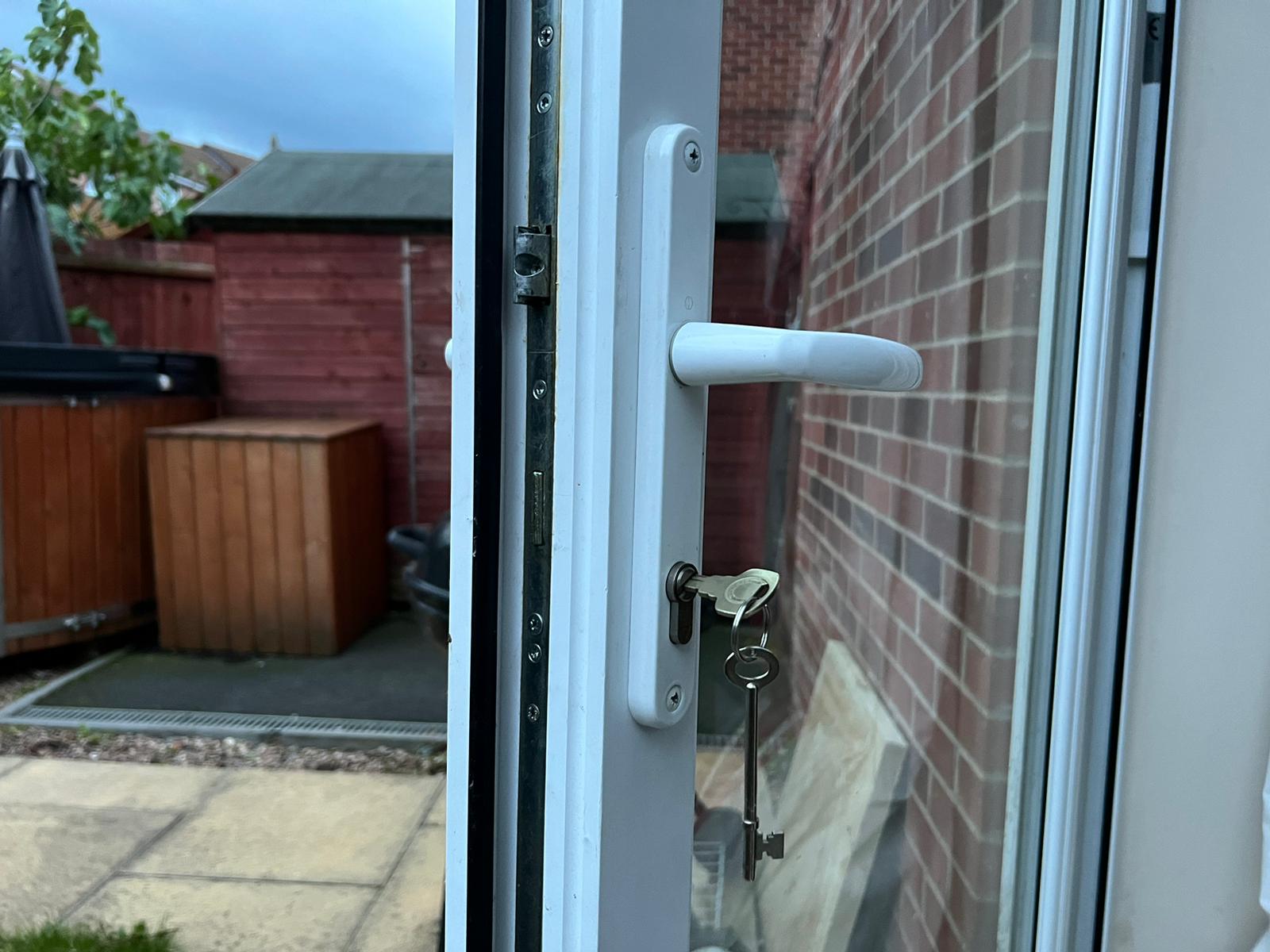
Key Turns But the Door Won't Open

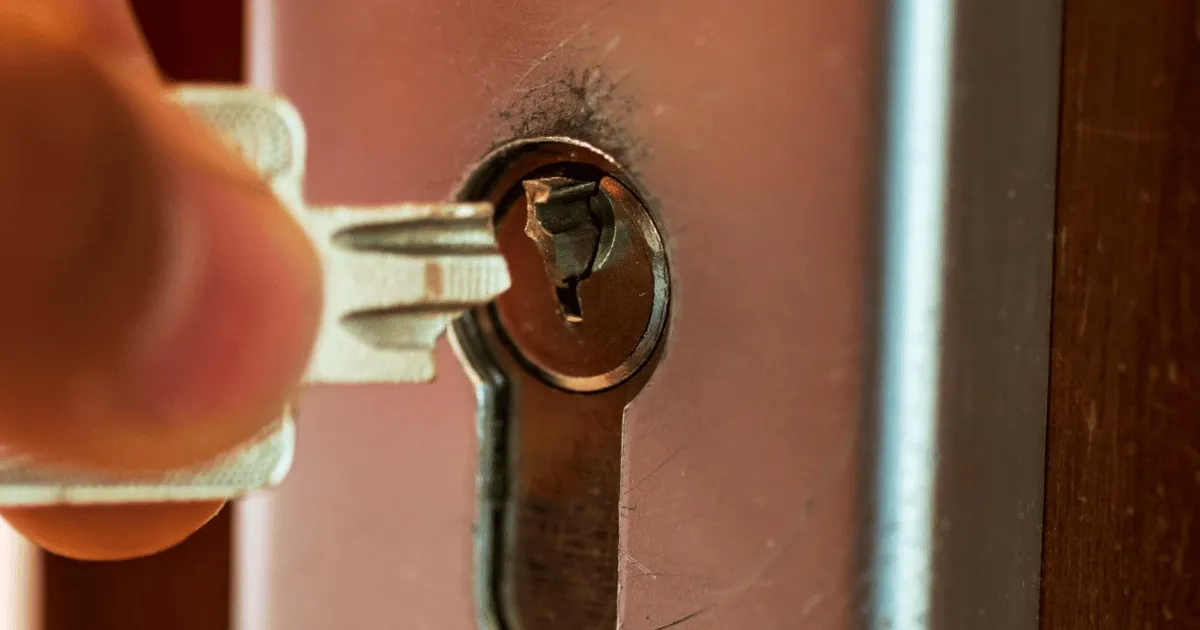
If your key turns but the door won't unlock, the lock itself is rarely the problem. The fault is almost always a misaligned door blocking the bolt, or a worn multipoint gearbox that no longer drives the latch.
This is one of the most common door faults we get called to, and the good news is that many cases are a quick fix. The trick is working out whether the door or the lock is at fault before you touch anything. This guide shows you how, with the safe checks to try first and the point at which forcing it will cost you far more.
Why does the key turn but the door won't unlock?
A key turns but the door won't unlock when the cylinder works fine but the bolt or latch cannot retract. The common causes are a dropped or misaligned door binding the bolt, a worn multipoint gearbox, a broken latch spring, or debris sitting in the keep.
A door lock mechanism is the set of moving parts, including the cylinder, cam, latch, bolt, and on uPVC doors a gearbox, that turns key movement into a bolt that locks or releases the door. When you turn the key, the cylinder rotates the cam, and the cam should pull the bolt clear of the frame. If the cam turns but the bolt stays put, the link between the two has failed or something is physically holding the bolt in place.
| Symptom | Likely cause |
|---|---|
| Key turns freely, nothing moves | Worn cylinder cam or failed uPVC gearbox |
| Door only releases when lifted or pushed | Dropped or misaligned door |
| Handle turns but the latch stays out | Broken latch spring or worn follower |
| Stiff only in hot or cold weather | Door expansion or contraction, misalignment |
| Grinding or crunching feel | Failing gearbox or worn internal parts |
Matching your symptom to the table tells you whether you are dealing with a door problem you can adjust, or a mechanism fault that needs a repair.
Why does the bolt not retract?
The bolt does not retract when the part that should pull it back has failed or jammed. On a timber door that points to a broken latch spring or a seized mortice bolt. On a uPVC or composite door it often means a worn gearbox or a snapped follower inside the multipoint mechanism.
There are two bolts to know about. The latch is the sprung, angled bolt that holds the door shut and pulls back when you turn the handle. The deadbolt is the square bolt thrown by the key for security. If the handle turns but the latch stays out, the latch spring or the follower (the part the spindle drives) has worn. If the key spins with no resistance and nothing moves, the cylinder cam or the gearbox has given up.
uPVC and composite doors fail this way most often, because the gearbox carries the whole lift-and-lock system. The Master Locksmiths Association notes that uPVC doors not working in hot or cold weather is a very common call-out, since the door moves with the weather and strains the mechanism. Once a follower or spring snaps inside the gearbox, adjustment will not help and the part needs replacing.
Is it the lock or the door? A quick alignment test
!Key Turns But Door Won't Unlock
You can separate a lock fault from a door fault in under a minute. Open the door fully, then turn the key and work the handle while the door hangs in mid-air. If the bolt moves freely with the door open but jams when the door is shut, the lock is healthy and the door has dropped out of alignment.
This single test saves a lot of money. A dropped door is a labour-only adjustment, while a failed mechanism means parts. If the bolt jams even with the door wide open, the fault is inside the lock, not the frame.
Door alignment fixes
Most alignment faults clear with small hinge and keep adjustments. Lift or drop the handle slightly as you turn the key, tighten loose hinge and strike-plate screws, then nudge the keeps so the bolt meets them squarely. Lubricate with a silicone or dry graphite spray, and never use standard WD-40, which leaves an oily film that attracts grit.
Work through these safe checks in order:
- Lift or drop the handle gently as you turn the key, to take pressure off the bolt.
- Check the gaps around the door. An uneven gap or a corner catching the frame points to a dropped door.
- Adjust the hinges. uPVC flag and butt hinges have screws that raise, lower, or shift the door a few millimetres.
- Tighten loose screws on the hinges, handle, and faceplate, then adjust the keeps so the bolt enters cleanly.
- Clear any debris from the keep and lubricate the mechanism with a lock-safe spray.
- Stop if the bolt still jams or the handle feels gritty. Forcing it can shear the gearbox.
Done early, a quick realignment keeps a healthy lock working for years. Pushed too hard, the same misalignment is what destroys the mechanism in the first place.
Should you fix it yourself or call a locksmith?
Try the alignment checks yourself, but call a locksmith if the bolt still will not retract, the gearbox feels gritty, or the door is your only way in. Forcing a jammed bolt can shear the cam, which turns a simple adjustment into a full mechanism replacement.
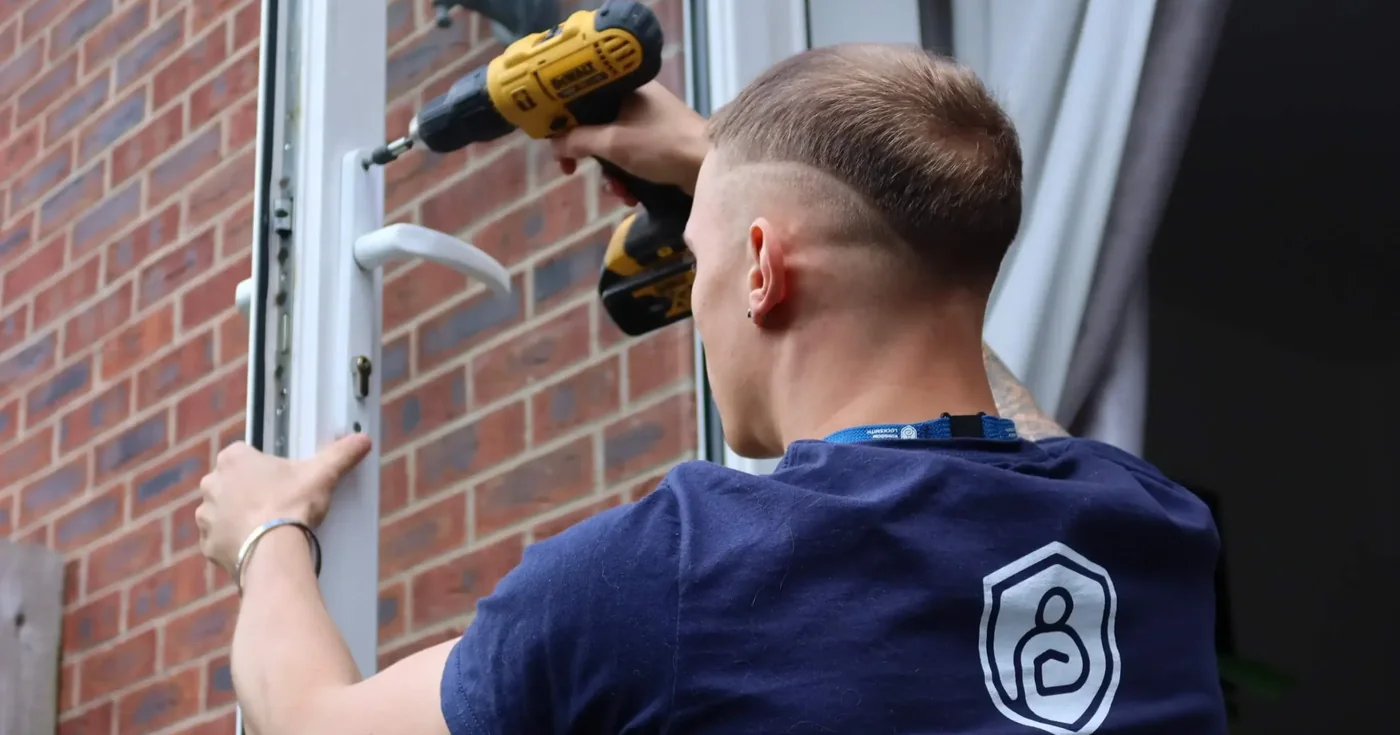
A professional has the spare gearboxes, followers, and keeps to fix the fault on the spot, and can open a jammed door without damaging it. "As locksmiths, the first thing we check is whether the bolt moves freely with the door open," says a Kingdom Locksmith locksmith. "If it does, the lock is fine and the door has dropped, so we adjust the hinges and keeps before going near the mechanism." If the safe checks have not freed the door, a professional door lock repair visit will diagnose the gearbox or alignment without guesswork. For your own protection, choose a locksmith approved by the Master Locksmiths Association, the trade body for the UK industry.
How much does it cost to fix in the UK?
Fixing a door where the key turns but it won't unlock costs from around £80 to £150 in the UK. A simple realignment is often a single hour of labour, while a worn gearbox or a full multipoint mechanism costs more once parts are added.
| Repair | Typical UK cost (guide) |
|---|---|
| Door realignment, hinge and keep adjustment | from £80-£96 (about one hour labour) |
| Locksmith labour, standard hours | £65-£96 per hour |
| Emergency or out-of-hours call-out | £85-£200 |
| uPVC gearbox replacement | from £100 plus parts |
| Full multipoint mechanism (locking strip) | £70-£240+ depending on the make |
These are guide prices. The final cost varies by lock type, location, time of day, parts, and complexity, so ask your locksmith to confirm the price before work starts. A door fitted with an insurance-approved lock to British Standard BS3621 may use a costlier mortice case, so always check what your lock takes.
Frequently asked questions
Why does my key turn but the door won't open?
The cylinder is working, but the bolt cannot retract. The usual reasons are a dropped door binding the bolt, a worn uPVC gearbox, or a broken latch spring. Test the lock with the door open to see which it is.
Can I force the door open if the key just spins?
No. Forcing a spinning key or a jammed handle can shear the cam or snap the follower. That changes a labour-only adjustment into a parts-and-labour mechanism replacement, and can leave you locked out completely.
My uPVC door only locks when I lift it slightly, what is wrong?
The door has dropped on its hinges, so the locking points no longer meet the keeps. This is an alignment fault, not a broken lock. Hinge and keep adjustments normally put it right.
Does a key turning freely mean the lock is broken?
Often, yes. A key that spins with no resistance points to a worn cylinder cam or a failed gearbox. The mechanism can usually be repaired or replaced rather than fitting a whole new lock.
How long does the repair take?
A realignment takes around an hour. A gearbox or mechanism swap takes roughly 30 to 60 minutes once the locksmith has the matching part.
The bottom line on a key that turns without opening
When your key turns but the door won't unlock, the lock is rarely broken. The real fault is almost always a dropped door or a worn gearbox stopping the bolt from retracting. Acting early matters, because forcing the door can shear the mechanism and leave you locked out or unable to secure your home overnight.
At Kingdom Locksmith, we realign dropped doors, replace worn gearboxes and multipoint mechanisms, and repair stubborn latches for homes and businesses across the UK, often on the first visit. Catch it at the first sign of resistance and you usually avoid a far bigger bill.
If the safe checks have not worked, book a door lock repair and get your door working safely again.