Lock Stiff or Hard to Turn: Causes and Safe Checks

A stiff key is an early warning to pause, not proof that the lock simply needs lubricant. Resistance can come from a worn key, contamination, a cylinder fault, pressure on a latch or bolt, loose hardware, door alignment or another connected mechanism. More than one factor may be present.
Do not compensate with greater force. Repeated hard turns can bend or snap a key and transfer load into the cylinder, lock case or multipoint mechanism. If the door cannot be secured, is the only safe exit or has signs of attempted entry, prioritise safety and competent assessment. General door lock repair information can help you frame the problem.
Observe exactly when stiffness occurs
Useful details include whether the problem affects inserting, turning or removing the key; whether it happens from one side or both; and whether handle movement changes at the same time. Note whether the resistance is new, intermittent or associated with wet weather, temperature change or recent work to the door. These observations narrow the inspection but do not establish a diagnosis.
If the door is already open, keep it open and make only a gentle check using normal force. Easier operation while open may indicate load between a latch, bolt or locking point and its keep. It does not exclude wear in the lock. Never shut a suspect door just to compare its operation, because it may not reopen.
Check the key without altering it
Confirm that it is the correct key. Look for bending, cracks, burrs, heavy wear or obvious damage. An authorised spare in good condition can be compared, but stop if it also resists. Do not straighten, file or reshape a key, and do not use pliers or a key-turning extension.
A copied key can differ from the original, while an old key and lock may have worn together. That means the result of trying another key must be interpreted carefully. A locksmith may need to assess both key and lock rather than assume one is at fault.
Door alignment and connected hardware
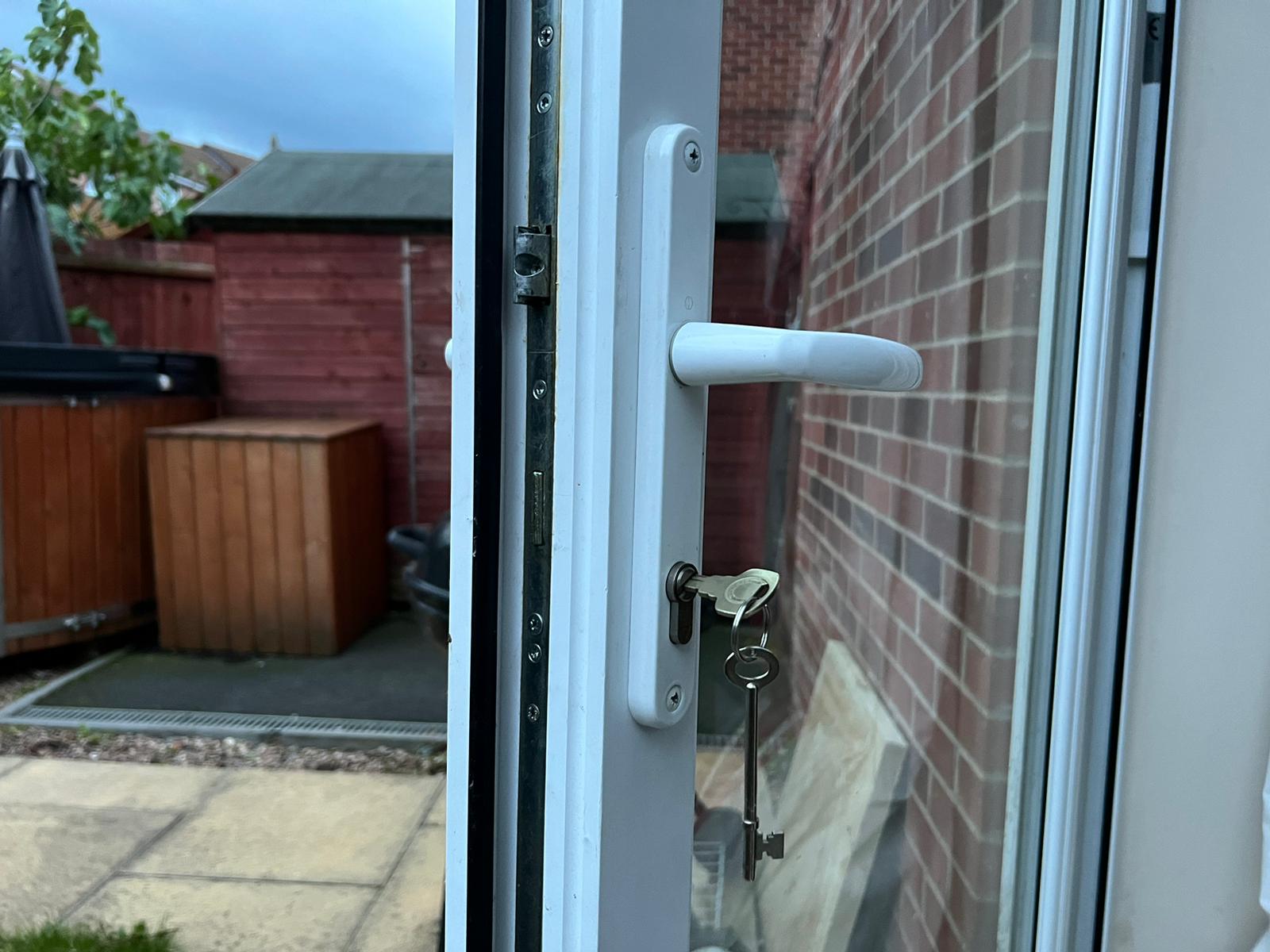
Look for fresh rubbing marks, loose handles or escutcheons, hinge movement, a door that needs lifting or pulling, and keeps that appear displaced. On a multipoint door, the cylinder, handle, centre case, strip, hooks or rollers and keeps interact. Stiff key movement may reflect load elsewhere rather than a cylinder defect.
Do not adjust hinges, keeps or locking points at random. Incorrect adjustment can reduce engagement, damage weather seals or affect security and fire performance. If the frame, hinges or door leaf are damaged, a competent door specialist may be needed alongside or instead of a locksmith. Information about door mechanism repair gives context for connected systems.
Use only product-specific maintenance
There is no universal lubricant for every lock. Cylinders, mortice cases, night latches and multipoint systems can have different instructions. Do not soak a keyway, inject general oil, mix graphite with another product, or use household sprays without exact manufacturer approval. Excess product can retain dirt or move contamination further inside.
Identify the make and model from markings or documents. Use only the manufacturer-specified product, amount, location and procedure for that exact unit. Keep any product away from door finishes, seals and electrical parts unless its instructions confirm compatibility. If the product cannot be identified or instructions are unavailable, leave internal maintenance to a competent professional.
When to stop testing
Stop immediately if:
- the key twists, cracks, sticks or will not withdraw normally;
- resistance increases or movement becomes rough or intermittent;
- the handle fails to return or feels loose;
- the lock works only while the door is lifted, pushed or pulled;
- a bolt or multipoint element does not fully engage or retract; or
- there is visible impact damage, corrosion or movement around fixings.
A door that seems to lock but does not fully engage should not be treated as secure. If it has closed and will not reopen, the relevant starting point may be an authorised locked-out service, rather than further DIY testing.
Repair or replacement follows inspection
A sound lock loaded by a misaligned door may need door or keep correction. A damaged key may be the main issue. A serviceable cylinder or case may need product-approved maintenance or a compatible component, while internal wear, fracture, severe corrosion or unreliable operation may justify replacement. None of those outcomes can be selected from stiffness alone.
Replacement specification depends on the doorset, dimensions, connected hardware, use and applicable security or fire requirements. The lock replacement page explains the category; it is not evidence that a stiff lock must be replaced.
For assessment, use the contact page and provide photos of visible markings where safe, plus the door material, when stiffness occurs and whether the door is currently open, closed or insecure.