uPVC Door Handle Won't Lift to Lock? What It Means and What to Do

If your uPVC door handle will not lift to lock when the door is shut, but lifts easily with the door open, the door has dropped out of line with its frame and the mechanism inside is still healthy. If the handle is stiff or stops short even with the door open, the mechanism itself is failing. The first is an adjustment. The second is a repair, and a dropped door that keeps being forced usually turns into the second.
This is the check we run on every one of these calls, in the same order, so you can see what is going on before you ring anyone.
Why a uPVC door handle gets hard to lift
Lifting the handle turns a gearbox inside the door. The gearbox slides a long metal strip along the door edge, and the strip throws hooks, rollers and bolts into the metal keeps on the frame. When the door sits square in its frame, they slide in cleanly and the handle lifts with one hand.
When the door drops, even by a few millimetres, the hooks and rollers meet the keeps at the wrong height and scrape against them. You feel that metal rubbing on metal as a stiff handle. Doors drop for ordinary reasons: hinges wear, houses on newer estates settle in their first five to eight years and move the frame, and uPVC expands in the heat.
Check 1: look at the top of the door
With the door shut, look along its top edge. A door that has dropped sits very close to the frame at the top, or touches and rubs it. That is the biggest tell, and you can usually see it from inside without any tools.
Check 2: look for rub marks on the keeps
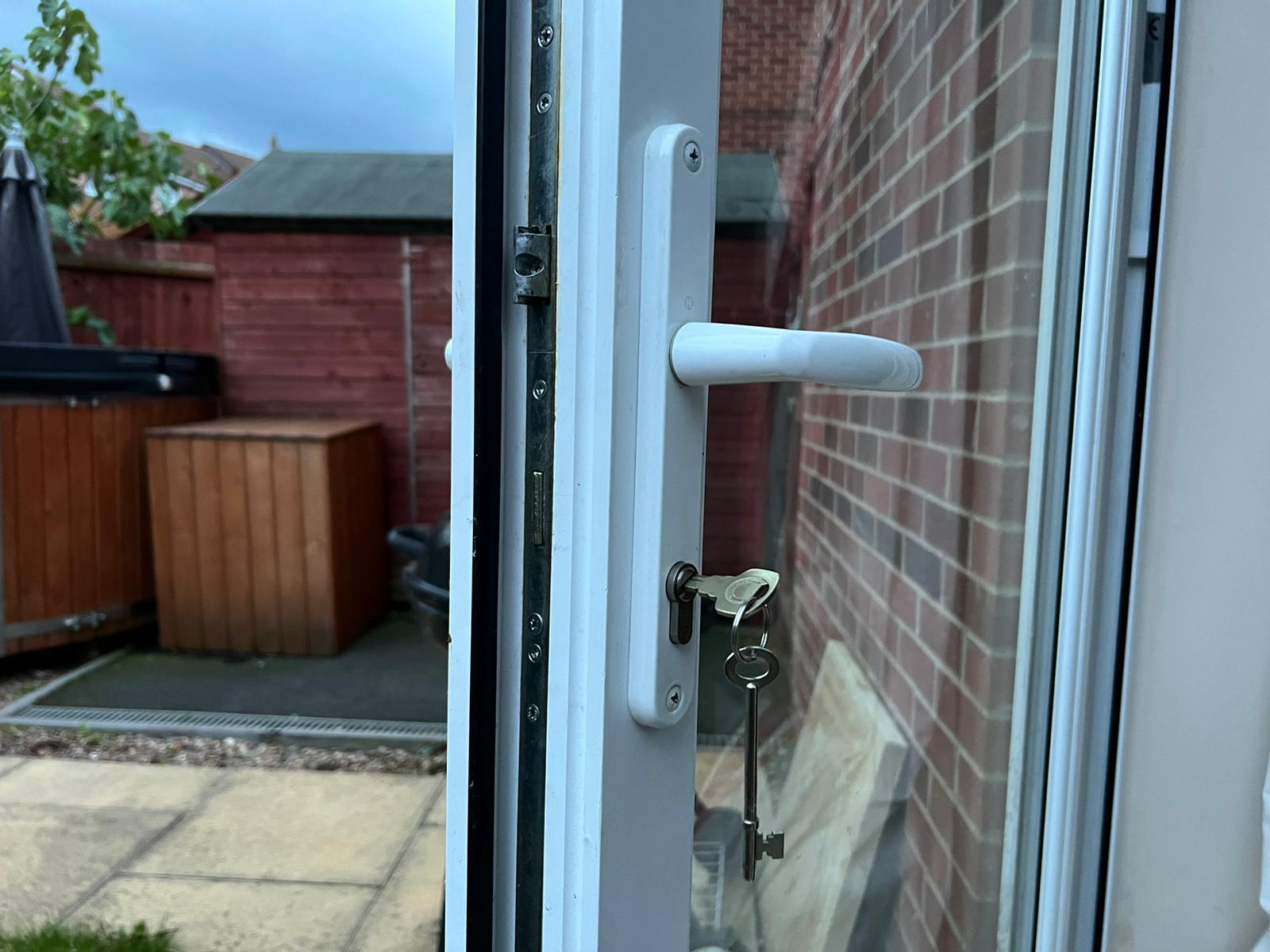
If the top looks fine but the handle is still stiff, open the door and look at the metal keeps on the frame, the plates the hooks and rollers lock into. Metal rubbing on metal leaves a bright, worn patch. Marks on the bottom of the keeps show where the door is binding and which way it has moved.
Please do not clean those marks off before a locksmith arrives. They show us which keep is binding and which way to adjust.
Check 3: the open-door test
This is the check that tells an alignment problem from a broken mechanism.
- Open the door.
- Lift the handle all the way up.
- Turn the key to lock, then unlock.
If the handle lifts fully and the key locks smoothly with the door open, the mechanism is healthy and the problem is alignment: the door and the keeps no longer meet properly.
If the handle lifts but the key will not turn, or the handle will not go all the way up even with the door open, the mechanism is failing. That is a door mechanism repair, not an adjustment.
How we fix a dropped door
We put the door back where it should be first, and only move the keeps as a last resort.
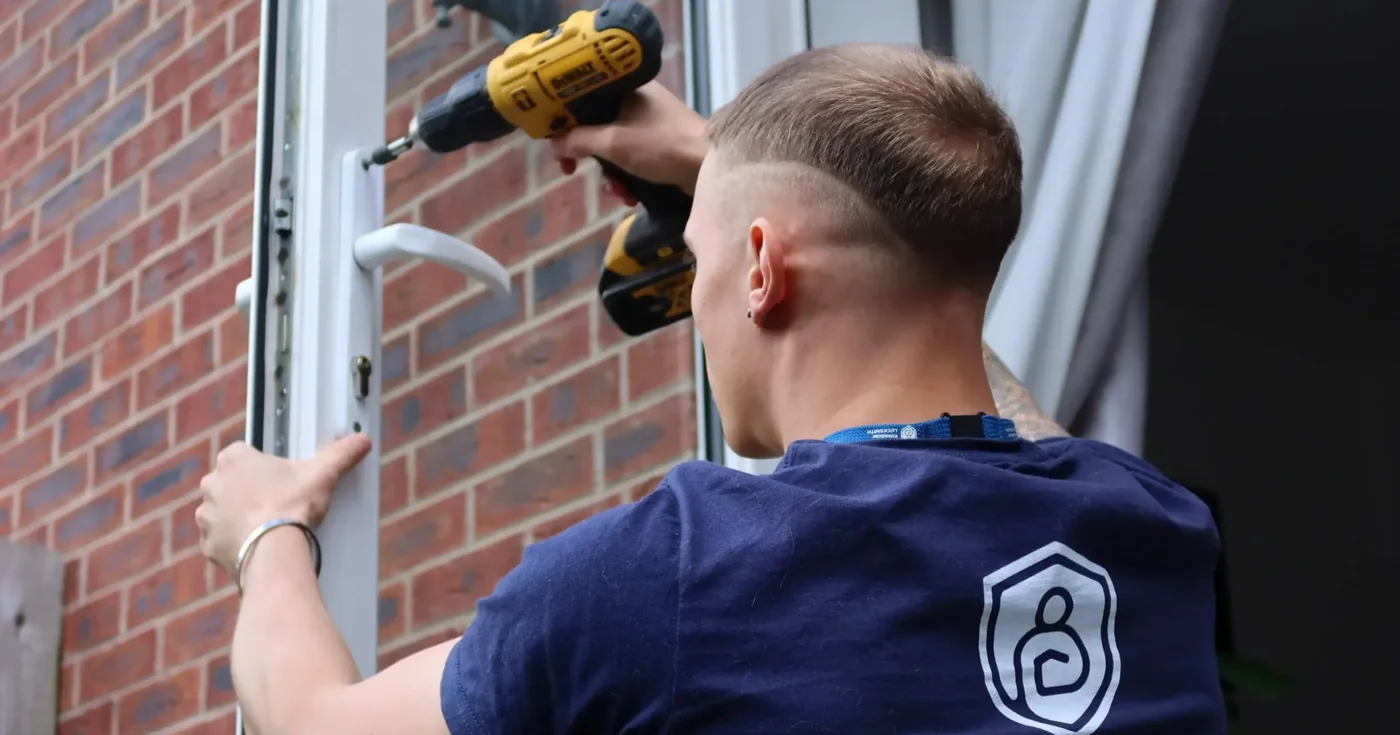
- Hinge adjustment. Most modern uPVC door hinges adjust for height and side to side, which lifts the door back into line. Screwfix's guide to adjusting uPVC door hinges shows the common hinge types. This is our preferred fix.
- Heel and toe. If the hinges alone cannot square the door, we repack the glass or panel inside the door so it holds its shape. This is called a heel and toe adjustment.
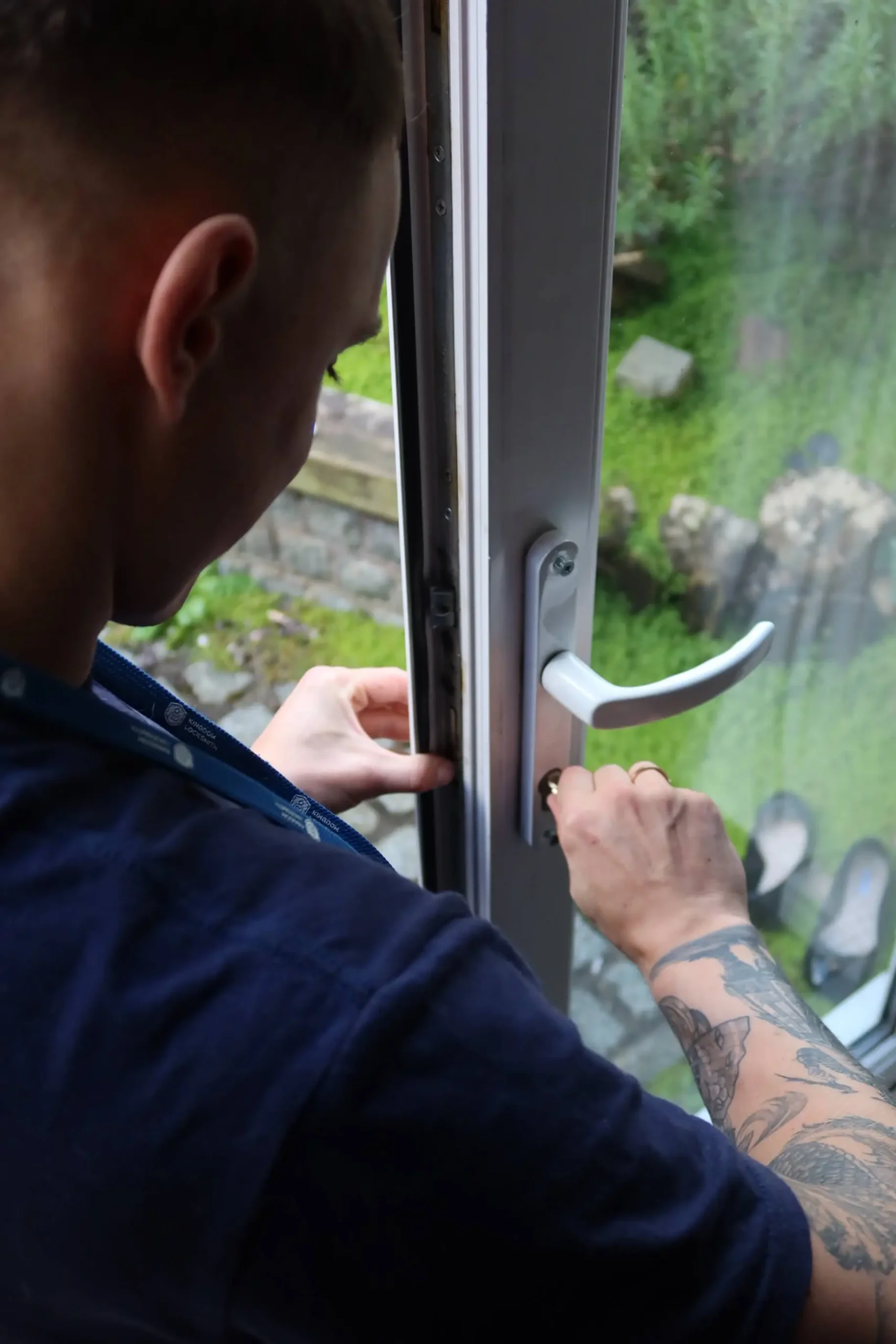
- Moving the keeps. If neither is enough, we move the keeps from their original position to meet the hooks where they now sit.
Then we lubricate the hooks, rollers and gearbox, check every locking point travels fully out and fully back, and test that the door locks with one hand. If you would like to try a small adjustment yourself first, our guide on how to adjust a uPVC door locking mechanism walks through it.
Why you should not keep forcing it
Forcing a stiff handle is how most broken gearboxes start. A gearbox is not built to drag hooks past keeps they are hitting, and after six to twelve months of being forced it wears out. My estimate is that around eight in ten of the broken gearboxes we replace come from a handle that had become hard to lift and was forced. When the gearbox finally fails, the door can seize shut, and then the gearbox has to be drilled to get the door open.
The difference in cost is real:
- Fixing the alignment in time: usually £50 to £120 + VAT, depending on the door.
- Replacing a failed mechanism: usually £200 to £400 including parts, labour and VAT, depending on the mechanism.
People very often force the door instead of getting it looked at, and end up paying for the mechanism. Our locksmith prices page shows how we price both.
Why it gets worse in summer
A stiff handle often gets worse in hot summer weather. uPVC expands as the temperature rises, so a door that was only slightly out of line in winter starts binding on its keeps in the heat. If yours only stiffens on hot days, it is still alignment, and it is worth sorting before it does the gearbox any damage.
Patio and French doors
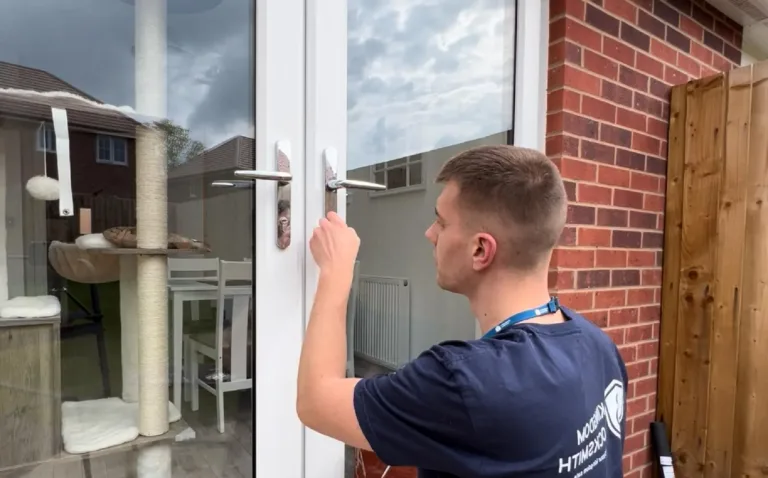
Patio and French doors work the same way and go wrong the same way. The difference is that there are two doors. On French doors we sometimes adjust both the same way so they meet evenly and lock smoothly, because squaring one on its own can push the other out of line. Our guide to how the French door locking mechanism works covers the extra bolts on the second door.
A composite door uses the same kind of mechanism. See our composite door lock problems guide.
Keep it working
Once the door is back in line, a little care keeps the handle light:
- A light spray of silicone on the hooks and rollers, and into the gearbox through the latch, keeps them moving freely. Work the handle a few times afterwards.
- Use a graphite lubricant in the key cylinder, never oil or WD-40. Ultion, for example, asks owners to apply its lubricant every six months to keep its guarantee valid. Our guide to the best lubricant for door locks explains why.
- If the handle starts to stiffen again, get it adjusted rather than forcing it.
When to call a locksmith
Call us if the handle is getting harder to lift, if the open-door test points to the mechanism, or if the door will not lock at all. Kingdom Locksmith adjusts and repairs uPVC doors, and the price is agreed with you before any work starts. See our uPVC door repair service.
Frequently asked questions
Why do I have to lift my door handle to lock it?
Because that is how a multipoint lock works. Lifting the handle throws the hooks and rollers into the frame, and the key then locks them in place. It only becomes a problem when the lift gets hard, which usually means the door has dropped.
Why doesn't my uPVC door lock when I close it?
A uPVC door does not lock just by closing. The latch holds it shut, and it is only locked once you lift the handle and turn the key. If the handle will not lift when the door is closed, run the three checks above.
Is a stiff uPVC door handle a problem if it still locks?
Not today, but it is on its way to a failed gearbox. Forced for months, the gearbox can break with the door shut, and then the door has to be opened before it can be repaired. Caught early, it is an adjustment.
Can a locksmith fix a door that has dropped?
Yes. We adjust the hinges first, do a heel and toe adjustment if the door needs one, and only move the keeps if neither is enough. Then we lubricate the mechanism and test it before we leave.