
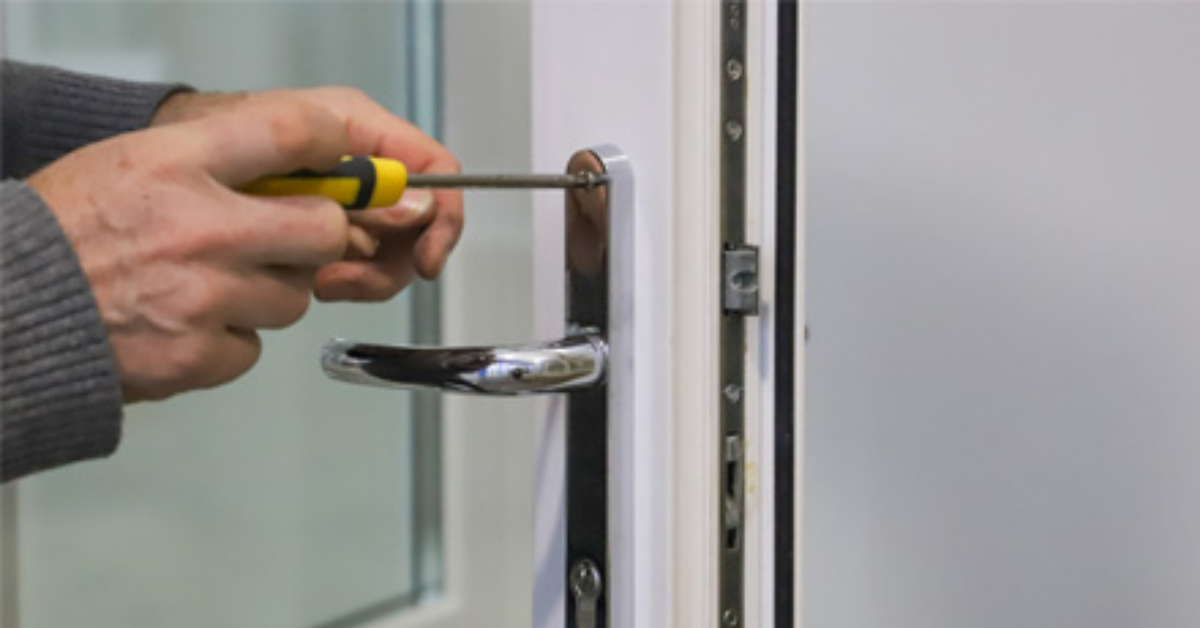
How to replace the upvc door lock mechanism is a common question when a uPVC door becomes stiff, will not lock when closed, or fails completely. The short answer is yes, it can be replaced safely, but only if you identify the correct fault and fit the right mechanism in the right way.
At Kingdom Locksmith, we see many UK homeowners struggle with uPVC multipoint door locks that stop working because of wear, misalignment, or internal gearbox failure. A uPVC door lock mechanism is a full length system made up of a gearbox, locking points, keeps, handles, and a euro cylinder. When one part fails, replacing the mechanism correctly restores smooth locking and keeps the door secure.
In this guide, we explain how to replace a uPVC door lock mechanism step by step, using safe checks that prevent door and frame damage.
Do You Need to Replace the Whole Mechanism?
We hear this question almost every day at Kingdom Locksmith. A door stops locking properly and the first thought is, “Do I need a full replacement?” In reality, many uPVC lock problems look serious but do not always mean the whole mechanism has failed. The key is knowing what the symptoms are really telling you.
When replacing the mechanism is necessary
Replacing the full uPVC door lock mechanism is the right choice when the internal parts can no longer work safely together. Replacement is usually necessary if
- The handle lifts but the locking points do not move
- The gearbox grinds, slips, or feels loose inside the door
- Locking points only engage sometimes, even after alignment
- The mechanism has already failed once and keeps returning
In our UK service work, repeated stiffness or failure after adjustment often points to internal gearbox wear. At that stage, continuing to force the handle risks snapping the spindle or leaving the door stuck closed.
When a cylinder or adjustment is enough
Many faults are simpler than they appear. You may not need full replacement if
- The door locks when open but not when closed
- The handle feels stiff only at certain points
- The key turns roughly but the handle works normally
These issues are often caused by door drop, keep alignment, or a euro cylinder fixing screw that is too tight. A cylinder change or careful adjustment can restore smooth locking without removing the full lock strip. At Kingdom Locksmith, we always check these first before recommending replacement.
What Is a uPVC Door Lock Mechanism
A uPVC door lock mechanism is the full locking system inside the door, not just the key cylinder you see from the outside. When someone at Kingdom Locksmith inspects a faulty door, this is the part we focus on first because it controls everything. In simple terms, the mechanism is a multipoint lock system that runs the length of the door. When you lift the handle, the mechanism activates several locking points at once, then the key secures them.
A standard uPVC door lock mechanism includes
- A gearbox in the centre that transfers handle movement
- Hooks, rollers, or bolts that lock into the frame
- A full metal lock strip holding all parts together
- A spindle and handle spring cassette
- A euro cylinder that locks and unlocks the system
Diagnose First to Confirm Replacement Is Needed
Before removing anything, diagnosis matters. We always say at Kingdom Locksmith that replacement should be the last step, not the first.
Open door vs closed door test
This quick test tells you a lot. How to test
- Open the door fully
- Lift the handle and turn the key
- Close the door and repeat
If the lock only fails when closed, the mechanism itself may still be fine.
Door drop and alignment confirmation
uPVC doors naturally move over time. Signs of misalignment
- Door catching at the top or bottom
- Locking points scraping the keeps
- Handle becoming heavy to lift
Even a small drop puts stress on the mechanism and mimics failure.
Gearbox failure signs vs handle issues
Not every stiff handle means a broken gearbox. Likely gearbox failure
- Grinding or crunching sounds
- Handle lifts but locking points do not move
- Lock suddenly slipping under pressure
Likely handle issue
- Handle does not return to horizontal
- Different resistance between inside and outside handles
This distinction prevents unnecessary replacement.
Cylinder fixing screw and spindle checks
A small screw can cause big problems. Check for
- Cylinder fixing screw overtightened
- Loose or worn spindle
- Excess play in the handle
These issues are quick to fix and often mistaken for mechanism failure.
Tools and Safety Checks Before You Start
Replacing a uPVC lock mechanism is precise work. Preparation prevents damage.
Tools needed for uPVC lock replacement
You will usually need:
- Phillips and flat screwdrivers
- Allen key for handles if required
- Tape measure for backset and centres
- PTFE or silicone lubricant
- Marker or phone camera for reference
Safety checks to avoid door damage
Before removing the lock:
- Keep the door open at all times
- Support the door so it cannot move
- Never force the handle or key
- Test everything before closing the door again
These steps reduce the risk of the door becoming stuck.
When not to continue DIY
Stop and call a professional if:
- The door is stuck closed
- The key snaps inside the lock
- The gearbox grinds loudly
- The door cannot be secured safely
At Kingdom Locksmith, our professional locksmith services are designed to step in at this point and prevent costly door or frame damage.
Measure the Lock Mechanism Correctly Before Buying
Getting the measurements right is the difference between a smooth replacement and a wasted purchase. At Kingdom Locksmith, incorrect sizing is the number one reason DIY replacements fail in UK homes. Take a few minutes here and you save hours later.
- Backset measurement explained: The backset is the distance from the front edge of the door to the centre of the spindle hole. It decides how deep the uPVC lock mechanism sits inside the door. If the backset is wrong, the handle and gearbox will not line up, which can cause stiffness or stop the lock working at all. Most UK uPVC doors use 35 mm or 45 mm backsets, but you should always measure the existing lock to be sure.
- PZ centres and why they matter: PZ centres measure the distance between the spindle and the euro cylinder. This controls how the handle and key align inside the door. If this measurement is incorrect, the cylinder may not sit properly and the handle may not engage smoothly. Common UK sizes are 68 mm, 72 mm, and 92 mm, but exact measurement is essential for proper operation.
- Faceplate width and lock length: The faceplate width is the width of the metal strip on the door edge, and the lock length is its total height. Both must match the door channel exactly. If the faceplate is too wide or too narrow, the lock can move or fail to sit flat. Correct lock length also ensures the locking points align with the frame keeps, allowing smooth and secure locking.
Step by Step: How to Replace uPVC Door Lock Mechanism
Follow these steps carefully and never rush. Keep the door open throughout.
Step 1: Remove handles and euro cylinder safely
- Unscrew and remove both handles
- Loosen the cylinder fixing screw on the door edge
- Turn the key slightly and slide the cylinder out
Step 2: Remove the old lock strip without bending
- Remove all fixing screws along the door edge
- Slide the lock strip out gently from the top or bottom
- Keep it straight to avoid bending
Step 3: Fit the new lock mechanism correctly
- Slide the new mechanism into position
- Ensure it sits flat and centred
- Insert fixing screws loosely at first
Step 4: Refit cylinder and handles with correct tension
- Reinsert the euro cylinder and secure it snug, not tight
- Fit handles and tighten evenly
- Check handle return and movement
Step 5: Test operation with door open and closed
- Test the lock fully with the door open
- Close the door and repeat
- Lift the handle slowly and turn the key
Gearbox Only vs Full Lock Strip Replacement
This is one of the most common decision points we walk homeowners through at Kingdom Locksmith. Choosing the right option affects cost, security, and how long the repair will last.
When replacing the gearbox only is safe
A gearbox-only replacement works when the rest of the mechanism is still in good condition.
Gearbox-only replacement is usually safe if
- Locking points move freely and are not worn
- The lock strip is straight with no cracks or bends
- Failure is centred at the handle area only
- The mechanism is a known brand with matching gearboxes available
This option is often quicker and cheaper, especially when the door alignment has already been corrected and the failure is isolated.
When a full lock strip is the better choice
A full lock strip replacement is the safer long-term option when wear is spread across the system.
Full replacement is recommended if
- Hooks or rollers stick or fail to move
- The strip is bent or damaged
- Multiple repairs have already been attempted
- The lock model is old or discontinued
In these cases, replacing only the gearbox may lead to repeat failure within months.
Cost, reliability, and long-term safety
From our experience across UK homes:
- Gearbox-only replacement costs less upfront
- Full lock strip replacement offers better long-term reliability
- Replacing worn components together reduces stress on the new parts
At Kingdom Locksmith, we focus on the option that keeps the door secure and avoids repeat callouts.
Common Mistakes That Cause Repeat Failure
Even a correct replacement can fail if basic mistakes are made. These are issues we see regularly during callouts.
Buying the wrong size mechanism
The most expensive mistake. Common errors:
- Incorrect backset or PZ centres
- Wrong faceplate width
- Locking points not matching the original layout
Always measure, never guess.
Over-tightening fixing screws
More force does not mean more security. Problems caused:
- Cylinder binding
- Handle stiffness
- Premature gearbox wear
Fixing screws should be snug, not forced.
Closing the door before full testing
This mistake can leave the door stuck. Correct approach:
- Test the lock fully with the door open
- Check handle return and key movement
- Only close the door once everything operates smoothly
Skipping this step turns small errors into major problems.
When to Call a Professional Locksmith in the UK
There is a point where DIY stops being safe. At Kingdom Locksmith, we often arrive after a small lock issue has turned into a bigger problem simply because help was delayed.
Door stuck shut or cannot be secured
If the door will not open or will not lock at all, do not force it. Why this matters
- Forcing the handle can snap the spindle or gearbox
- The door can jam shut, trapping you inside or outside
- Emergency access may then require drilling
A professional locksmith uses non destructive methods to regain access and secure the door safely.
Snapped key or post-burglary damage
These situations need expert handling.
Call a locksmith if
- A key snaps inside the euro cylinder
- The lock feels loose or damaged after a break in
- The door no longer aligns properly after forced entry
Professional UPVC door repair ensures the door is safe to use again and reduces the risk of repeat entry.
Maintenance Tips After Replacement
A new mechanism will last much longer with simple care. These checks take minutes and prevent repeat problems.
Alignment and handle checks
- Check handle return every 3 to 6 months
- Look for changes in resistance when lifting
- Watch for the door catching the frame
Small alignment changes are easier to fix early.
Correct lubrication schedule
- Light lubrication every 6 to 12 months
- Use PTFE or silicone spray on exposed moving parts
- Avoid spraying inside the cylinder
More lubricant is not better. A light application works best.
Final Advice From Kingdom Locksmith
At Kingdom Locksmith, our final advice is simple: replacing a uPVC door lock mechanism is safe and effective when it is done with the right diagnosis, correct measurements, and careful fitting. In this guide, we showed how to decide whether replacement is truly needed, how to measure properly before buying, and how to fit the mechanism without damaging the door or frame. Following these steps solves the most common problems such as stiff handles, locks that fail when closed, and repeated gearbox issues.
If at any point the lock feels unsafe, the door will not secure, or the job becomes uncertain, the best next step is professional help. Our professional locksmith services in Coventry across the UK are designed to protect your door, restore smooth locking, and keep your home secure.
Frequently Asked Questions
Question: Can I replace a uPVC lock mechanism myself?
Yes, it is possible if the door opens normally and you can measure and fit the mechanism accurately. Many homeowners successfully replace uPVC lock mechanisms by following safe, step by step guidance. However, if the door is stuck, the lock is grinding, or the mechanism keeps failing, calling a professional locksmith is safer and prevents damage.
Question: Why does the lock work when open but not closed?
This almost always indicates an alignment issue. When the door is open there is no resistance, but once closed the locking points no longer line up with the keeps. Door drop, hinge movement, or tight keeps cause this problem rather than a faulty mechanism.
Question: What lubricant should I use after replacement?
Use a light PTFE dry lubricant or a silicone spray on exposed moving parts such as hooks, rollers, and latches. Avoid spraying inside the euro cylinder, as this can attract dirt and lead to sticking over time.
Question: How long should a new uPVC lock mechanism last?
With correct fitting and basic maintenance, a quality uPVC lock mechanism typically lasts 8 to 12 years in normal residential use. Regular alignment checks and light lubrication help extend its lifespan and maintain smooth operation.