How to Repair a Door Lock: A Practical UK Guide

A stiff handle, a key that catches or a latch that misses the strike plate turns an ordinary door into a daily annoyance, and eventually into a security risk. Most lock faults give plenty of warning before they fail outright, and most of that warning gets ignored. Catching the problem early means a simple repair rather than a lockout or a full replacement.
The short version: identify the fault first, then remove the handle and cylinder, inspect the internal parts for wear, clean and lubricate the mechanism, replace anything damaged, then reassemble and test until the action is smooth and secure.
This guide comes from the team at Kingdom Locksmith. These are the same checks and fixes we use on worn latches, jammed cylinders and misaligned uPVC mechanisms, written up so you can handle the straightforward jobs yourself and recognise the point where a fault needs a professional.
Tools and Materials You Will Need
Good tools protect the lock as much as they help the repair. The wrong screwdriver strips a screw head, and the wrong lubricant gums up the pins. Here is what to have to hand and why each item earns its place:
| Tool or material | What it is for |
|---|---|
| Screwdrivers (Phillips and flathead) | Removing faceplates, handles and cylinder screws. Keep several sizes for tight or worn screw heads. |
| Allen keys | Needed for modern lever handles and uPVC multi-point systems with recessed fixings. |
| Variable-speed drill | Speeds up screw removal and hole realignment. A low speed avoids stripping threads or cracking panels. |
| Drill bits (metal and wood) | Metal bits for cylinders, wood bits for frames. Keep 2 to 3 mm pilot bits for accurate starts. |
| Chisel set (6 to 12 mm) | Recessing strike plates and tidying latch housings. A sharp edge gives a clean fit. |
| Hammer or rubber mallet | Seats new latch assemblies without bending metal or marking the finish. |
| Measuring tape | Confirms the backset (typically 44 to 64 mm on standard doors) before you buy parts. |
| Pencil or marker | Marks drilling and alignment points clearly on both the door and the frame. |
| Pliers or adjustable spanner | Grips spindles, tightens nuts and pulls stuck pins from the lock body. |
| Graphite or silicone lubricant | Keeps cylinders moving freely. Avoid oil-based sprays, which attract dust and clog the pins. |
| Masking tape | Protects the door finish while drilling or chiselling, and catches small metal filings. |
| Safety glasses and gloves | Keep metal dust out of your eyes and protect your hands while cutting or drilling. |
| Vacuum or small brush | Clears shavings and dust from mortises before reassembly. |
Diagnose the Fault Before You Repair Anything
Start with the cause rather than the symptom. Watch how the key turns, how the latch moves and how the door sits in its frame. A key that catches points to the cylinder, a handle that flops points to the spindle or spring, and a door that needs a shove points to alignment. Getting the diagnosis right decides every step that follows and stops the same fault coming back.
How to Repair a Loose or Jammed Door Handle
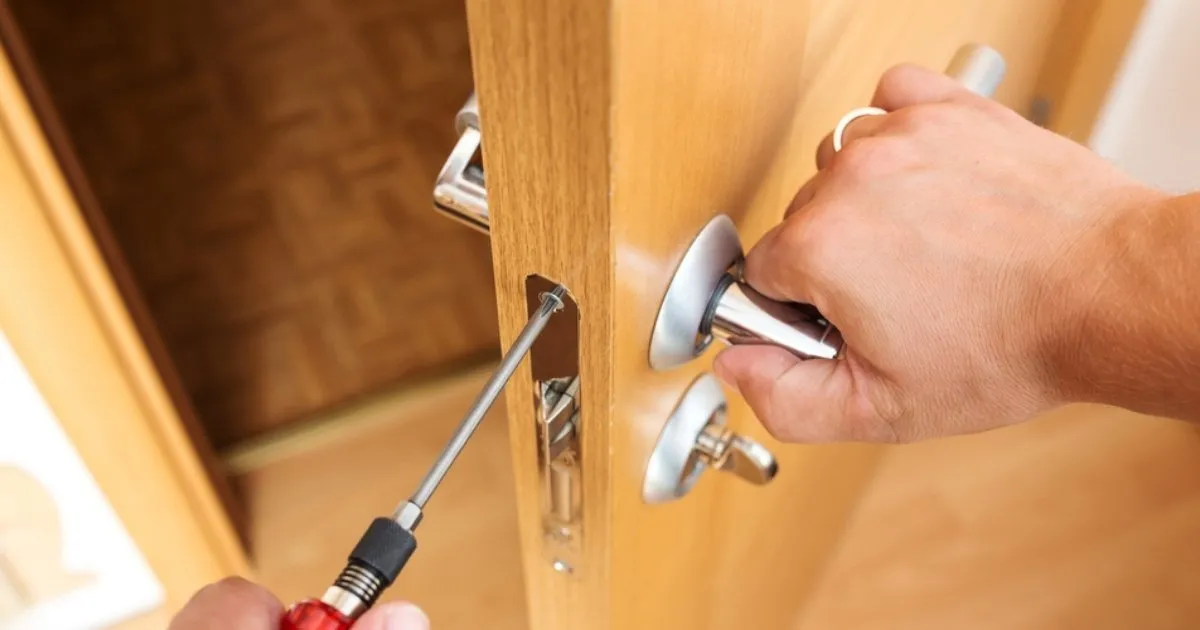
A loose or jammed handle usually means wear in the spindle, the latch spring or the fixing screws. The fix is methodical: strip it down, inspect each working part, then rebuild it with everything aligned.
Step 1: Remove the Handle Screws
Find both retaining screws, usually under the cover plate or on the inner face of the handle. Use a screwdriver tip that fits snugly to avoid burring the heads, and apply even pressure. Uneven force strips threads and can crack the rose plate.
Step 2: Detach the Handle Assembly
Pull both levers straight off in line with the spindle. If one resists, wiggle it gently rather than twisting at an angle. Support the outer handle once it is free so it does not hang on the spindle, and note which way round everything sits for reassembly.
Step 3: Inspect the Spindle and Return Spring
Check the spindle ends for rounding, rust or slack inside the follower; a worn spindle cannot engage the latch properly. Look at the return spring cassette for fatigue or breakage. These two parts control handle stability, so replace either at the first sign of wear.
Step 4: Clean and Lubricate the Internals
Brush out fine metal dust and grit with a dry brush. Skip solvents, which attack nylon and brass components. A light coat of graphite or PTFE lubricant on the spindle, follower and latch cam is enough to restore smooth movement.
Step 5: Reassemble and Tighten Evenly
Slide the spindle through the latch case and line up both handle halves. Start the screws by hand, then tighten them alternately so the pressure spreads evenly. Overtightening pinches the mechanism and causes binding, while undertightening leaves the handle wobbling.
Step 6: Test the Handle
Work the handle through several full movements. It should pull the latch back crisply and spring home without drag. If there is still resistance, recheck the alignment. Even half a millimetre of offset can bind the follower or backplate.
How to Fix a Sticking or Broken Lock Cylinder
A sticking cylinder usually comes down to worn pins, misalignment or internal corrosion. Careful dismantling, a thorough clean and correct realignment will recover most of them, and the rest need replacing.
Step 1: Remove the Cylinder Retaining Screw
Open the door fully and find the retaining screw on the edge of the lock case, level with the cylinder. Use a snug-fitting screwdriver, turn anticlockwise and remove the screw completely so the cylinder is free to come out.
Step 2: Extract the Cylinder
Insert the key halfway and turn it slightly to line the cam up with the slot in the body. Pull the cylinder out with steady pressure. If it sticks, tap the edge gently with a rubber mallet. Never drag it out with pliers, which deforms the plug.
Step 3: Inspect the Core and Cam
Check the cam for wear or twisting, then look into the plug for broken or jammed pins. A torch helps you see into the pin chambers. Discolouration or debris means corrosion or buildup that has to come out before anything goes back together.
Step 4: Clean and Lubricate the Mechanism
Use an air duster or fine brush to shift dust, old graphite and metal filings. Give the keyway and cam a small burst of PTFE or graphite spray. Avoid oil-based lubricants, which trap dust and gum up the pins over time.
Step 5: Refit or Replace the Cylinder
If the action is smooth after cleaning, slide the cylinder back into the case, align the cam and tighten the retaining screw until just snug. If the cam or pins still bind, fit a new cylinder that matches your door's backset and key profile.
Step 6: Test the Key in Both Directions
Turn the key several times in each direction. It should move cleanly without catching. If it sticks, back the retaining screw off a quarter turn, as excess tension can compress the cam alignment. Test both locking and unlocking before you call the job done.
Repairing a Faulty Latch or Bolt
When a door will not close, lock or line up properly, the latch or bolt is the usual culprit, whether through spring fatigue, dirt buildup or misalignment. Work through it in the same order a locksmith would.
Step 1: Watch the Latch and Bolt Move
Turn the handle or key and watch how the latch retracts. Sticking or dragging points to a weakened or jammed spring inside the latch case. Push the latch tongue by hand; it should move freely both ways, with no stiffness or grinding.
Step 2: Remove the Handle and Latch
Unscrew the handle and backplate to reach the latch assembly, using a well-fitting screwdriver to avoid cam-out. Draw the latch mechanism out with needle-nose pliers and keep the screws and plates in order so reassembly is straightforward.
Step 3: Examine the Spring and Housing
Check the return spring for corrosion or lost tension; a weak spring stops the latch retracting fully. Look at the bolt edges too, because rounded corners let it slip out of the strike plate. Replace worn parts with a matching latch kit so the backset and bolt projection stay correct.
Step 4: Clean the Latch Channel and Lubricate
Dust and paint collect in the latch cavity and add friction. Clear it out with a small brush or compressed air, then apply a thin coat of dry graphite or silicone spray inside the channel and along the bolt sides so it snaps back freely.
Step 5: Refit and Align the Latch
Slide the latch back in with the bevelled edge facing the frame, then refit the handle and tighten the screws evenly. A single millimetre of misalignment is enough to bind the latch against the strike plate, so check the line-up before the final tighten.
Step 6: Test Locking and Latching
Close the door slowly and watch the latch enter the strike plate. Work the handle and key several times; the latch should retract fully and spring back cleanly. If the bolt still catches, nudge the strike plate position to refine the fit.
Fixing a Misaligned Strike Plate
When the strike plate sits out of line, the latch or bolt misses its slot and the door either rattles or refuses to close. The cure is careful adjustment, never force.
Step 1: Find the Contact Point
Close the door slowly and watch where the latch meets the plate. If it lands above or below the hole, mark the contact point in pencil. An offset of 2 to 3 mm is enough to stop the latch seating.
Step 2: Loosen the Plate Screws
Slacken the fixing screws slightly without removing them, just enough to let the plate move. Do not overdo it, or you will strip the threads or distort the edge of the plate.
Step 3: Reposition the Plate
Shift the plate up, down or sideways to match your pencil marks. For bigger corrections, open the screw holes out slightly with a round file or drill bit, keeping the slot straight so the screws still bite firmly.
Step 4: Check the Door and Test the Latch
Close the door and test the fit before tightening anything. The latch should click home without extra pressure. If it still drags, look at the hinge screws, because sagging hinges shift the whole door and undo your adjustment.
Step 5: Secure and Reinforce the Plate
Tighten the screws evenly once everything lines up. Longer wood screws (at least 63 mm, or 2.5 inches) give a much stronger grip, especially in softwood frames. Plugging old screw holes with wooden dowels before re-drilling stops the plate working loose again.
Step 6: Final Function Test
Operate the handle repeatedly, with and without the key. The latch should engage crisply and the door should close flush against the frame. A touch of graphite spray on the latch and strike edge finishes the job properly.
Repairing Multi-Point and uPVC Door Locks
Multi-point and uPVC locks run several hooks or rollers off one gearbox, so one worn part can jam the whole strip. They reward patience and precision, and they punish force.
Step 1: Check Operation and Alignment
Lift the handle and watch the hooks or rollers travel. If one section lags or fails to retract, suspect the gearbox or spindle. Mark where each hook meets its keep on the frame; any offset needs correcting before you dismantle anything.
Step 2: Remove the Handle and Cylinder
Undo the handle fixing bolts and the cylinder retaining screw on the door edge. Insert the key halfway, turn it slightly and slide the cylinder out. Keep every screw organised, because uPVC doors use fine threads that strip easily if mixed up.
Step 3: Extract the Gearbox and Rail
With the door fully open, remove the faceplate screws along the lock rail and draw the whole mechanism out of the door cavity. Do not bend the rail; even a slight twist makes the hooks bind later. Check the gearbox section for cracks and heavy grease buildup.
Step 4: Inspect and Service the Gearbox
Open the gearbox if the design allows. Look for worn teeth, loose cams and broken springs, clean the internals with a dry brush and a little light solvent, then apply a small amount of white lithium or silicone grease to the moving parts. Avoid WD-40, which attracts dirt and attacks the plastic parts many uPVC gearboxes rely on.
Step 5: Check Hook and Roller Travel
Move each hook by hand to confirm full travel. If they feel stiff, clean the channels with a cloth wrapped round a screwdriver and re-lubricate the rail evenly. Burrs often form at the corners; smooth them with a fine file so they cannot jam the strip later.
Step 6: Refit and Recalibrate the Mechanism
Feed the rail back into the cavity with the hooks lined up on their keeps. Fit the screws loosely first and test the handle lift, then tighten firmly once the action is smooth. Refit the cylinder and handle, making sure the spindle engages the gearbox cleanly.
Step 7: Final Security and Smoothness Test
Lock and unlock the door several times with both the handle and the key. The motion should feel firm and consistent. If the door still resists, adjust the hinge compression or the frame keeps. When everything is right, the handle lifts easily and all the locking points engage together, exactly as a multi-point system should.
For a deeper walkthrough of these mechanisms, see our full guide on how to repair a uPVC door lock.
Common Causes of Lock Problems
Lock faults rarely arrive overnight. The key starts to catch slightly, or the latch stops retracting quite as cleanly, and the signs go unnoticed until the lock refuses to turn at all. Knowing what causes the decline lets you act early instead of dealing with a failure.
1. Dirt and Dust Buildup
Fine debris works its way into the keyway over months of daily use. Each turn of the key grinds those particles against the pins and springs until the friction builds and the lock starts to resist.
2. Worn Internal Springs
If the handle feels light or the latch no longer springs back, the internal springs are the likely cause. They weaken gradually with use, and once the tension drops, retraction becomes unreliable and the latch only partly engages.
3. A Misaligned Door or Frame
A door that rubs or needs an extra push to close is telling you the frame has shifted. Even slight movement takes the latch out of line with the strike plate, so the lock jams or fails to catch.
4. Corrosion and Moisture Damage
A rough or squeaky action often means moisture is getting at the internals. Corrosion slowly seizes pins and springs, especially on exterior doors exposed to damp or salty air.
5. Key Wear and Deformation
An old or much-copied key loses the sharp cuts that lift the pins. As the cuts blur, the cylinder cannot align cleanly, so you jiggle and force the key, which wears the mechanism out even faster.
6. Poor Installation or Alignment
A lock that was never fitted flush puts stress on the internal cam with every turn of the key. Over time that uneven pressure distorts the gears or shears the spindle, and the action turns stiff and gritty.
7. Overtightened Screws or Distorted Hardware
A faceplate or handle that looks slightly warped often points to overtightened screws. The compression restricts internal movement, so the key sticks and the latch is slow to retract.
8. No Regular Maintenance
Locks need upkeep like any other mechanism. Without occasional cleaning and lubrication, friction, dust and small misalignments stack up until a simple mechanism becomes a stubborn, unreliable one.
Maintenance Tips to Keep Door Locks Working Smoothly
A lock stays reliable when it is treated like the precision tool it is. A few minutes of routine care keeps friction down and stops small issues turning into failures.
- Lubricate the mechanism every six months with dry graphite or silicone spray.
- Clean around the keyway and handle so dust cannot settle inside.
- Tighten screws gently now and then to keep the handle and faceplate aligned.
- Check keys for bends or worn cuts before they damage the cylinder pins.
- Keep hinges balanced so the latch and bolt stay in line with the frame.
- Shield external locks from moisture with seals or weather strips.
- Test each lock monthly for smooth turning and full bolt engagement.
- Book a professional check if you notice grinding, stiffness or partial locking.
For more preventive steps, read our full guide on how to keep your locks in top shape.
Repair, Replace or Upgrade: How to Decide
The right choice depends on the lock's age, the level of damage and how well it still protects the property. Here is how to decide with confidence:
If the lock feels stiff, slightly loose or jammed but the core parts are intact, repair it. Tightening screws, lubricating the cylinder or realigning the strike plate usually restores smooth operation.
If there is visible wear, a cracked casing or a key that slips, replace it. Replacement also makes sense when the internals are obsolete or there are no spare keys left.
If you are raising your security rather than just restoring it, upgrade. Modern anti-snap cylinders and smart locks resist picking, drilling and bumping, and give you far better control over who gets in.
What Door Lock Repairs Cost in the UK
Most door lock repairs in the UK cost between £70 and £150, depending on the lock type and the complexity of the work.
Simple jobs such as loose handles or misaligned latches usually come in around £60 to £80. Multi-point mechanisms and smart locks can exceed £150 because of extra parts and alignment work, and emergency callouts at night or on weekends can add 30 to 50% to the bill.
Location matters too. Rates in large cities such as London tend to run higher than in smaller towns. Most locksmiths include labour and minor materials in the initial quote, but replacement cylinders, gearboxes or electronic components add to the total.
To see how rates compare across different jobs, check our detailed guide on how much a locksmith costs.
What Drives the Total Repair Cost
1. Lock Type
The lock itself sets the baseline. A basic rim or cylinder lock is straightforward to service, while mortice and multi-point systems demand more precision. Smart locks sit at the top of the scale because their electronic components take longer to calibrate, which adds to both parts and labour.
2. Extent of the Damage
Not all faults are equal. A sticking lock may need nothing more than a clean, but snapped springs or a seized gearbox double the repair time. The deeper the damage, the more dismantling, replacement and testing the job needs, and the cost rises with it.
3. Brand and Parts Availability
The brand on the cylinder can change the whole quote. Premium models such as Ultion or ERA use proprietary parts that have to be ordered in, which stretches both the timescale and the expense, while generic brands are cheaper to fix because parts are widely available.
4. Door Material and Construction
The door's build affects every stage of the work. Timber doors give easy access for drilling and adjustment, while uPVC and aluminium need precise handling to avoid warping or cracking. Composite doors resist adjustment, so realigning components takes longer and costs more.
5. Labour Costs and Timing
Timing can double the bill. A standard business-hours job usually runs £60 to £90, but night and weekend calls attract emergency rates that reflect travel, urgency and out-of-hours working.
6. Location and Accessibility
Where you live matters. City locksmiths contend with parking restrictions and heavier demand, which pushes prices up, while rural jobs add fuel and travel time. A door in an awkward spot adds setup time as well.
7. Planned Maintenance vs Emergency Repair
The difference is timing. Routine servicing keeps costs predictable because small faults are caught early. Waiting for the lock to fail outright means paying more for parts, labour and an urgent callout, all under time pressure.
8. Rekeying, Upgrades and Security Extras
What you choose after the repair shapes the final bill. Rekeying is a cost-effective refresh, while stepping up to anti-snap cylinders or a smart lock costs more up front but buys better security and a longer service life.
Why a Professional Repair Pays Off
A professional repair buys more than the immediate fix; it restores the door's mechanical accuracy. A locksmith checks internal wear, cylinder pin alignment and latch tension to find the exact failure point, then recalibrates the torque and re-secures the strike plate so the door closes precisely.
Because every movement is measured, the lock operates like new, and that precision is what prevents repeat faults, repeat bills and unexpected lockouts.
To see the full range of work a professional can take on, read our guide on what services locksmiths provide.
In Closing
Repairing a door lock is about restoring smooth, dependable function, not just tightening a few screws. A repair done properly reduces wear, improves the action and extends the lock's working life.
If the fault runs deeper, into the gearbox or the cylinder, hand it to Kingdom Locksmith. We will look at the fault and explain what it needs before any work starts.
Frequently Asked Questions
Can I repair a door lock myself or should I call a locksmith?
Minor jobs such as tightening loose screws or lubricating the latch are well within reach. Damage to the cylinder, spring or gearbox is a professional job; a locksmith can diagnose the fault accurately and restore alignment without harming the door.
What tools do I need to repair a door lock?
A screwdriver set, drill, lubricant, chisel and any replacement parts cover most jobs. A measuring tape and a level help keep everything aligned during reassembly.
Why does my door lock keep sticking?
Dirt buildup, internal rust or a misaligned strike plate are the usual causes. Cleaning and lubricating the mechanism solves most cases, but friction that keeps returning points to deeper internal wear.
How long does a typical lock repair take?
Most repairs take 30 to 60 minutes, depending on the fault. Multi-point locks and cylinder replacements take longer because they need precise calibration and testing.
When should I replace a lock instead of repairing it?
Replace a lock that is badly rusted, cracked or keeps failing after servicing. Upgrading to a high-security or smart lock at that point often makes more sense than another repair.
How much does a door lock repair cost in the UK?
Expect £70 to £150 on average, depending on the lock type and the fault. Complex mechanisms, brand-specific parts and emergency callouts push the total up.
Why is my uPVC door lock not working properly?
Misalignment and gearbox wear are the usual reasons. Regular lubrication and hinge adjustment help, but a worn gearbox needs a specialist to strip and recalibrate it properly.
Do locksmiths cover their repairs if the fault comes back?
Many reputable locksmiths will put a failed repair right, but practices vary, so ask before you book what happens if the same fault returns, and get the answer in writing with your quote.