What to Do When You Are Locked Out of the House

Being locked out is stressful, and rushing is how a simple lockout turns into a damaged door. First decide whether anyone is in danger. Then check the safe, authorised ways back in, and if you need a locksmith, give them the details that matter.
I have run Kingdom Locksmith for about ten years, and most lockouts I attend are ordinary families trying to get back into their own home. This guide covers what to do first, what to expect when we arrive, and two situations people ask about most: keys visible inside, and a child or vulnerable person inside.
Immediate danger comes first
If there is smoke, fire, a serious medical problem or any threat to life, call 999 and follow the call handler's instructions. Do not wait for a locksmith. The NHS explains when to call 999.
If you smell gas or suspect carbon monoxide, call the National Gas Emergency Service on 0800 111 999. Their emergency contacts page sets out what to do.
If you think there has been a break-in, or someone is threatening you, move somewhere safe and call the police. Try not to disturb anything. The locks can be dealt with once it is safe to do so.
Check simple, authorised options
When nobody is in danger, pause and think about who else has a key. Another resident, a landlord, a managing agent or a trusted neighbour may have a spare.
Only use another door if you have permission and can reach it without climbing. Do not try windows, balconies or tools. Please do not try a card, a screwdriver or glue either. Failed attempts damage seals, frames and lock parts, and can make the professional opening harder and dearer.
A spare key solves most lost-key lockouts, but not all of them. A failed mechanism, a key left in the inside of some locks, or a snapped key in the cylinder can all stop the spare from working.
If your keys are visible inside
Look at exactly where the keys are.
- Lying loose on a table, a worktop or the floor, they are not touching the lock, so a spare key should work normally.
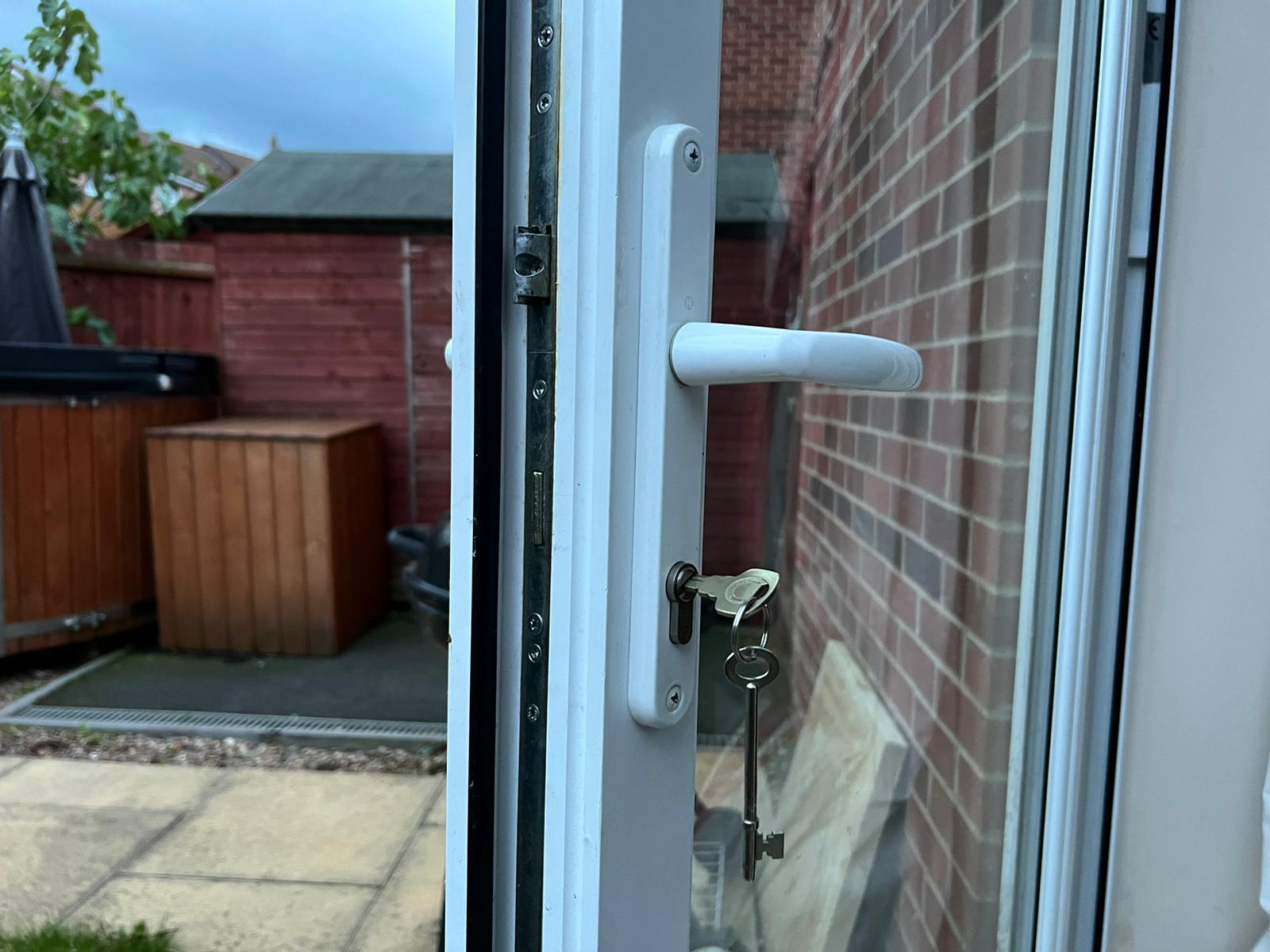
- Left in the inside of the lock, an outside key may or may not turn, depending on the cylinder. If the spare stops, feels stiff or will not turn, stop. Forcing it can turn a lockout into a broken key or a damaged cylinder.
When you call, tell us which it is. Also say whether the door just closed behind you or was locked with a key, and whether the key or handle was already getting stiff before today. That tells us whether we are dealing with a straightforward opening or a lock that has failed.
If a child or vulnerable person is inside
If they are hurt, unwell or at any risk, call 999 straight away.
If they are safe but cannot open the door, for example a toddler who has shut the door or an elderly relative who cannot reach it, call us and say so at the start of the call. We treat it as our most urgent kind of job and send the nearest locksmith. Kingdom's promise is a locksmith with you within 30 minutes, and we call you if that changes. Often we are sooner, because our locksmiths are local to the areas we cover.
We open the door without damage wherever the lock allows. That matters, because a door forced open in an emergency usually needs repairing afterwards.
While you wait, stay by the door and keep talking calmly to the person inside. Do not ask a child to climb on furniture, handle keys in the lock, use tools or go near glass. A safe lockout should not become an injury.
What to tell the locksmith
- Your full address and a phone number that works.
- The type of door: wooden, uPVC or composite, if you know.
- Whether the door is just pulled shut, locked with a key, or stuck.
- Whether a key is inside, lost, stolen or snapped.
- Anything that was going wrong before today, such as a stiff key or a handle that was hard to lift.
A photo can help if you send it through a contact method you trust. Never share alarm codes.
What we will ask you on the phone, and what it costs
We give guide prices on the phone. We cannot give an exact figure before we see the door, because the answer depends on the lock you actually have. After ten years in the trade, a few set questions usually tell us what type of door and lock you have and what the likely problem is. But the exact part and size are sometimes only clear once the handle or cylinder is off, so the final price is confirmed on site, after we have looked, and before any chargeable work starts. There is no separate call-out fee, and you can cancel free of charge before we arrive.
Our pricing page shows what lockouts actually cost across hundreds of recorded jobs, including VAT.
Proof that you live there
A locksmith should be satisfied that you have the right to enter before opening a door. In practice it is usually obvious: people know the property inside out, and neighbours are often around and know them.
If anything does not add up, we will ask to see a driving licence or another document with your name and the address on it, such as a bill or a tenancy agreement, before we open the door. It is good practice, we always do it when there is any doubt, and it helps to know where your ID is.
What happens when we arrive
We look first at whether the door is just latched, properly locked, or held shut by a failed part. That decides the method.
Non-destructive entry is always tried first. Most lockouts are opened without damaging the lock, so you keep using it afterwards. You can read more in our guide to non-destructive entry.
Sometimes drilling is the better option, and we will tell you why. A trained eye can see quickly whether a lock will open in reasonable time without damage. If the keys are lost or stolen, the lock should be changed anyway for your security. If that lock is also a harder one to open, drilling is often quicker, and so cheaper, because you are not paying for time spent on a lock that is being replaced regardless. We explain this and agree it with you before we start.
We will always be straight with you about whether an opening is simple, needs drilling or involves a high-security lock.
A real lockout
One late evening in Derby, a man called us needing to get back into his house. I happened to be driving nearby, answered the call myself and was at his door in about five minutes. He was worried about the bill and about damage. The door had been pulled shut on the latch but not locked, so I opened it with a plastic card in a few seconds. It cost him £84 including VAT, because it was a simple opening, and we will always charge a simple opening as a simple opening.
The lesson for everyone else: a door that is only on the latch is not locked. On a uPVC or composite door, lift the handle and turn the key every time you leave. On a door with a night latch, use the deadlock button or key.
After you are back in
Find out why the lockout happened before changing anything. A lost key with nothing to identify your address is a different risk from keys stolen with your address on them. A worn latch, a tired key or a door that has dropped needs a repair, not always a new lock.
Every job is more than an opening. While we are there we check how the lock and door are working and give you honest advice: a little maintenance, a door that needs adjusting before it fails, or a lock that no longer meets your insurer's standard. Whether you go ahead with anything is always your decision.
If lost keys are a regular problem, a key safe can help, but it will not fix a lock that is failing.
Frequently asked questions
Can a spare key work if another key is inside?
Often, yes. Keys lying loose inside do not affect the lock. A key left in the inside of the lock can stop an outside key working on some cylinders. Try the spare with normal pressure only, and stop if it feels stiff.
Should I call 999 if a child is locked inside?
Call 999 if the child is hurt, unwell or at any risk. If they are safe but cannot open the door, call a locksmith, say a child is inside, and keep talking to them calmly until help arrives.
Will the locksmith have to drill the lock?
Usually not. We try non-destructive entry first. Drilling is kept for locks that are broken, high-security locks that cannot be opened in reasonable time, or locks that need replacing anyway, and we explain it before we start.
Do I need a new lock after being locked out?
Not usually. If the lock works and all your keys are accounted for, it can stay. Replacement makes sense when the lock has failed, a part is damaged, or lost or stolen keys are a real security risk.
How do I get help now?
For a lockout, see our locked out service. For other urgent lock and door problems, see our emergency locksmith page, or contact us with your postcode and what has happened.