How To Repair Bathroom Door Lock: Professional Guide

A bathroom door lock that is stuck, jammed or not working is more than an annoyance, especially if someone ends up locked in. Most problems come down to a few causes, and knowing which type of lock you have tells you what to check and when to stop.
To repair a bathroom door lock, first work out which type you have, then test it with the door open and closed. If it only sticks when the door is shut, the latch or bolt is catching the strike plate and a small adjustment usually fixes it. If a part inside the lock has broken, replace the lock rather than repair it: bathroom locks are inexpensive and a new one lasts for years. If someone is locked in, use the outside emergency release, and if that fails, call a locksmith.
This guide to bathroom lock repair is written from what we see on real jobs, in homes and in public toilets.
Which type of bathroom door lock do you have?
Bathroom locks are not all the same, and they fail in different ways.
Indicator bolts (vacant and engaged)
The red and green "engaged" locks. You find them in pubs, cafes, restaurants and other shared toilets, where people need to see from outside whether the room is free. The indicator and the bolt are linked, so a loose spindle or a broken connection inside can affect both.
Privacy bolts
A small bolt that locks only from the inside, often screwed to the face of the door. They are tiny, cheap and very reliable: there is little in them to fail.
The catch is that they cannot be opened from outside. If someone is taken ill behind a bolted door, there is no way in without forcing it. This is the usual reason people search for a "bathroom door locked from inside, no hole" on the outside. It is worth thinking about before you fit one, especially if an elderly relative or a young child uses the bathroom.
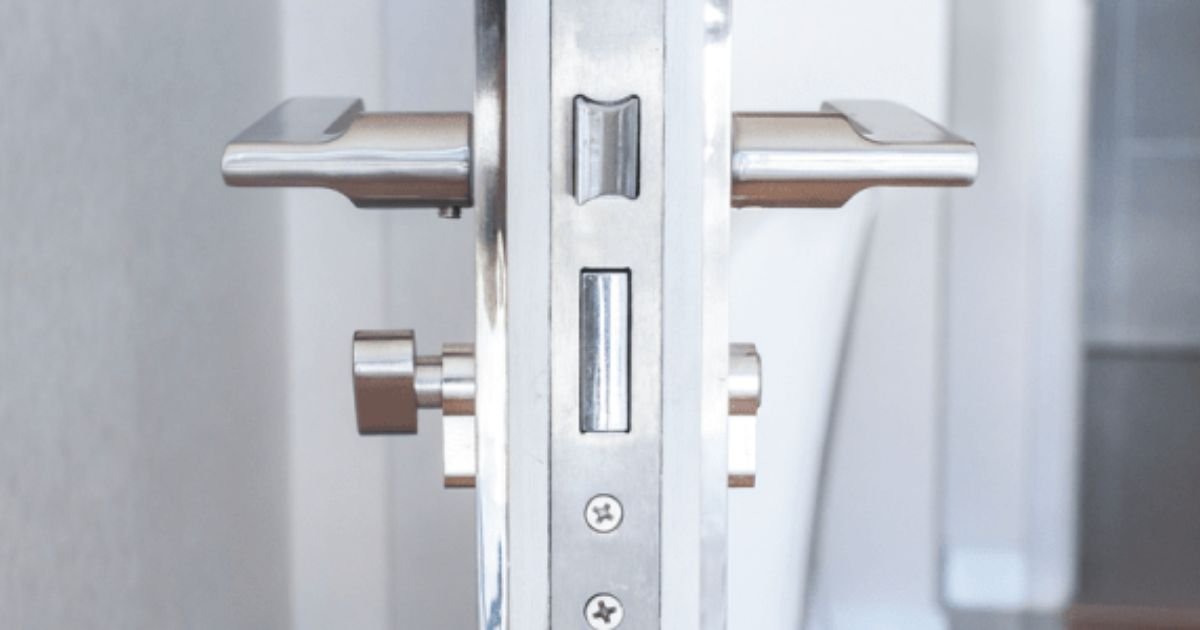
Mortice bathroom lock with a thumbturn and emergency release
A lock case set into the edge of the door, with a normal lever handle for the latch and a thumbturn on the inside for the privacy bolt. On the outside there is an emergency release: a small slot you can turn with a coin or a flat screwdriver to open the lock from outside. Yale's bathroom mortice sashlock is a typical example.
This is the setup we recommend for homes. It gives privacy, it can be overridden from outside if something happens, and it is the one we suggest for elderly people. It also comes in every style, from plain to polished chrome or brass handles, so guests can lock the door smoothly without worrying about getting stuck.
Push-button and tubular latch handles
Cheaper bathroom handles often have a push button, or a simple tubular latch with a small privacy catch. They work, but the internal parts are small and wear out sooner.
For more on how lock cases differ, ASSA ABLOY's guide to lockcase types is a clear explainer.
Bathroom door lock not working? The common problems
Bathroom door lock jammed after a long time unused
We get called out to this one. In many homes the bathroom door is rarely locked, especially in a family home without many guests. Bathrooms are humid, so rust and debris slowly build up inside the lock. Then one day someone locks it, something inside snaps or seizes, and it will not unlock.
Bathroom door not locking
If the thumbturn or button will not engage, the bolt is often hitting the edge of the strike plate rather than going into it. Doors move with humidity and wear, especially wooden bathroom doors. The door open and closed test below tells you whether that is the cause.
The thumbturn is stiff or will not turn
A stiff thumbturn can be the bolt rubbing on the frame, over-tightened handles, or wear inside the bathroom door lock mechanism. Our guide on a thumb-turn lock not working covers the checks in detail.
The handle turns but the door will not open
On a tubular latch, the small part the spindle turns (the follower) can break. The handle then spins or moves, but nothing pulls the latch back, and the door stays shut.
The emergency release does not work
The outside release still depends on the bolt and the parts inside the lock. If the release turns but the bolt does not move, the connection inside has failed. If it will not turn at all, it is usually seized or the bolt is jammed against the frame.
The handle is loose or droops
Often it is just loose screws, but it can be a tired handle spring or a worn spindle. Our door handle repair guide goes through handle faults.
Rust and poor quality locks
Humidity is hard on locks. Cheaper bathroom locks tend to break sooner in a damp room, while a good quality lock copes with it for years.
Start with the door open and closed test
Before you take anything apart, compare how the lock works with the door open and closed.
- With the door open, work the handle, then the thumbturn or bolt, gently several times. Watch the latch and the bolt move in and out.
- Close the door and do the same, without forcing anything.
If everything is smooth with the door open but stiff when it is closed, the latch or bolt is catching the strike plate or the frame. That is an alignment problem, not a broken lock. If it is still stiff with the door open, the fault is inside the handle, thumbturn or lock case.
How to fix a bathroom lock: step by step
These are the safe checks you can do yourself.
Step 1: Identify the lock type
Use the descriptions above. A lever handle with a separate thumbturn is a mortice bathroom lock. A small bolt on the face of the door is a privacy bolt. A red and green indicator is an indicator bolt.
Step 2: Do the open and closed test
This tells you whether you are dealing with alignment or a fault inside the lock.
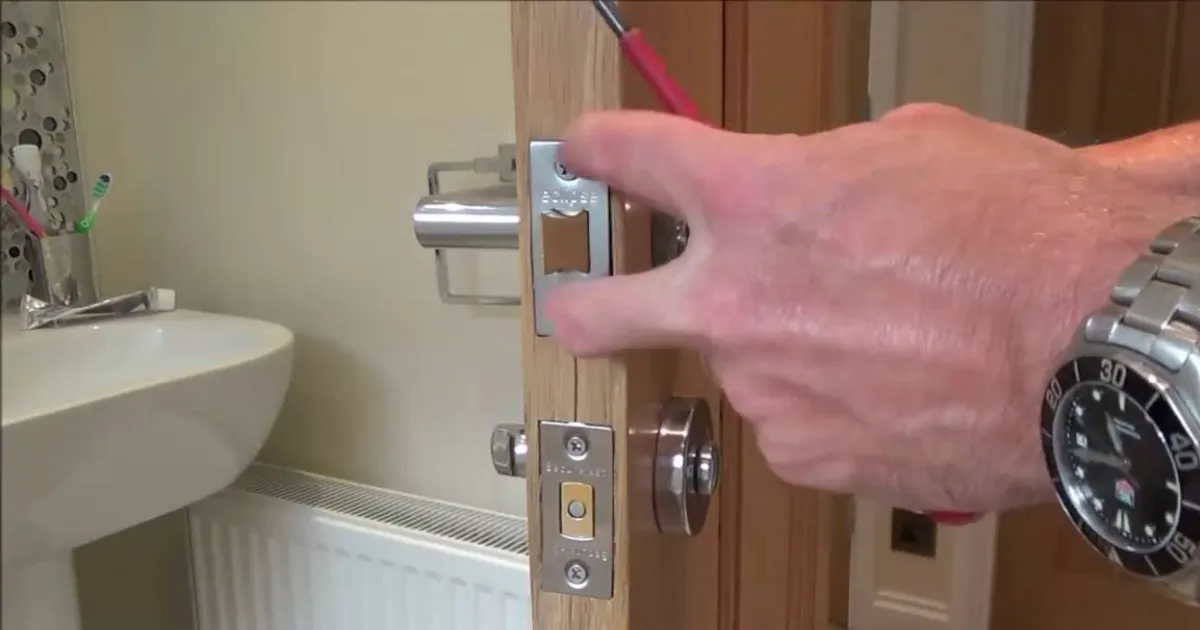
Step 3: Adjust the strike plate if the bolt catches
Look for fresh scrape marks around the strike plate on the frame. If the latch or bolt is hitting its edge, loosen the strike plate screws, move the plate slightly so the bolt enters cleanly, and tighten again. If the door itself has dropped or warped, moving the strike plate only hides the problem.
!How To Repair Bathroom Door Lock
Step 4: Tighten loose handles, gently
Tighten any loose handle screws, but do not overdo it. Over-tightened handles can bind and make the lock stiffer.
Step 5: Lubricate a stiff mechanism
A little silicone spray, such as WD-40 Specialist Silicone, on the latch and bolt can free a stiff lock. Lubricant will not fix a broken part. Our guide to the best lubricant for door locks explains what to use where.
Step 6: If the bathroom door lock is broken inside, replace it
If the handle turns without moving the latch, the thumbturn spins, or something inside has clearly snapped, stop. It is possible to take the lock case apart and repair it, but it is rarely worth it. See the next section.
Step 7: Test it properly
Lock and unlock several times with the door closed, and test the emergency release from outside, so you know it works before you ever need it.
If you are fitting a new lock yourself, our guide to fitting a bathroom door lock safely covers the measurements that matter.
Someone is locked in the bathroom
If the person inside is hurt, unwell or at any risk, call 999 straight away.
Otherwise:
- Keep calm and talk to them. Ask them to try the thumbturn or bolt gently, without forcing it.
- If there is an emergency release on the outside, turn it with a coin or a flat screwdriver.
- If the release turns but nothing happens, or it will not turn, stop. Forcing it usually makes things worse.
Then call a locksmith. When we open a bathroom door, it is usually one of two situations:
- The mortice lock has broken inside. We take the handles off and work on the mechanism through the door to release the bolt.
- A tubular latch has broken where the spindle connects. The handle does nothing, so we take the handles off and use a special tool to hook the latch and draw it back.
If the lock has seized with rust or debris after years of not being used, we may need to drill a small hole to clear it and push the bolt back. Either way, we then fit a new lock so it does not happen again. If you are locked in or out of a bathroom, our locked out service is the place to start.
Bathroom door lock repair or replacement?
If the problem is alignment or loose screws, adjust it and keep the lock.
If a part inside the lock has broken, or the lock is old and stiff, we recommend replacing it. Locks are robust and usually last many years, but once one starts to fail it is not worth the risk of someone getting locked in. Parts for a new bathroom lock are not expensive, and a new lock will last far longer than a repaired old one. Our lock replacement page explains how we replace locks, and our guide to lock repair versus replacement explains the wider decision.
Choosing a new bathroom lock
- For most homes: a mortice bathroom lock with a thumbturn inside and an emergency release outside. It is the most dependable setup.
- For elderly relatives, or anyone with a health condition: always choose a lock with an outside release.
- A small privacy bolt: fine if you accept that nobody can open it from outside.
- Quality matters in a damp room: a better lock copes with humidity for years.
- Style is your choice: chrome, brass and matching handles are all available.
Frequently asked questions
Why is my bathroom lock stuck or not working?
Usually the bolt is catching the strike plate, the lock has seized with rust after a long time unused, or a part inside has broken. Try the door open and closed test. If it is stuck with the door open too, the lock itself has failed.
My bathroom door is locked from the inside and there is no hole on the outside. What can I do?
It probably has a privacy bolt with no emergency release. If anyone inside is at risk, call 999. Otherwise call a locksmith, who can open it with the least damage the lock allows. When you replace it, choose a lock with an outside release.
How do I unlock a bathroom door from the outside?
If it has an emergency release, put a coin or flat screwdriver in the slot and turn it. If it has no release, or the release does nothing, call a locksmith rather than forcing the door.
Why won't my bathroom door lock?
Most often the bolt is hitting the edge of the strike plate because the door has moved. If it locks with the door open but not closed, adjust the strike plate or have the door looked at.
Can I lubricate a stiff bathroom lock?
Yes. A little silicone spray on the latch and bolt often helps. It will not fix a broken spring or a snapped part.
How often should I check my bathroom door lock?
Lock and unlock it every so often, even if you rarely need to, and test the emergency release. Locks that sit unused in a humid room are the ones that seize.
Should I repair or replace a broken bathroom lock?
Replace it. Repairs are possible, but a new bathroom lock costs little and lasts far longer.
What should I do if I'm locked out of my bathroom?
Try the emergency release first, if there is one. If that does not work, call a locksmith to get the door open without unnecessary damage, and fit a better lock afterwards.